ISOFIX Anchorages and Top Tether (ISOFIX Anchoring System) for Child Restraint Systems
With the ISOFIX system, the child restraint system is held securely during driving and in the event of a crash. The system is designed to make child restraint installation easier and to minimize the risk of incorrect installation. The ISOFIX system uses anchorage points in the vehicle and attachment points on the child restraint system. The ISOFIX system does not eliminate the need to secure the child restraint system with the seat belts on the rear seat.
ISOFIX anchorage points are metal bars permanently attached to the vehicle. Each ISOFIX seating position is equipped with two lower anchorage points, which engage the lower attachment points of the child restraint system.
To use a child restraint system with ISOFIX anchorages in your vehicle, you need an ISOFIX-compatible child restraint system. The child seat manufacturer provides instructions on how to secure the child restraint system with the appropriate connectors to the ISOFIX anchorage points.
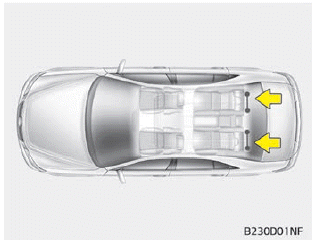
The left and right outer rear seats are equipped with ISOFIX anchorage points. Their installation positions are shown in the illustration.
WARNING
Do not attempt to install a child restraint system with ISOFIX attachments on the center rear seat. This seat does not have ISOFIX anchorage points. If you attempt to do so, the anchorage points on the outer rear seats or the child restraint system installed on the rear seat may be damaged.
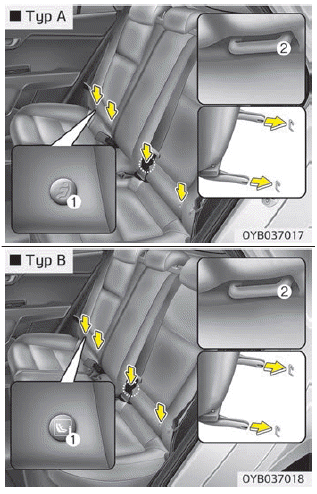
The ISOFIX anchorage points are located at the outer left and right rear seating positions, between the backrest and the seat cushion. The symbols show their installation positions.
❈ (1): Identification of ISOFIX anchorage points (Type- , Type B
 )
(2): ISOFIX anchorage point
Child restraint system with ISOFIX attachment system
To install an i-Size or ISOFIX-compatible child restraint system in one of the outer seating positions, proceed as follows:
1. Slide the seat belt buckle so that the ISOFIX anchorages are free.
2. Remove any other components from the anchorages that connect the child restraint system and could interfere with the ISOFIX anchorages.
3. Place the child restraint system on the vehicle seat, then secure it to the ISOFIX anchorages following the child restraint manufacturer's instructions.
4. Follow the child restraint manufacturer's instructions for proper installation and connection of the ISOFIX connectors of the child restraint system to the ISOFIX anchorages.
WARNING
When using the ISOFIX system, observe the following precautions:
- Read and follow the installation instructions for your child restraint system carefully.
- Close all unused seat belts on the rear seats and route unused seat belts behind the child seat together so the child cannot grab or hold them. Children can be strangled if the shoulder belt wraps around their neck and the seat belt stretches.
- Never attach more than one child restraint system to an anchorage. Otherwise, the attachment or connection may loosen or break.
- Always have the ISOFIX system removed by your dealer after an accident. An accident may damage the ISOFIX system, so the child restraint system may no longer be properly secured.
Child restraint system with top tether strap; secure anchorage point in vehicle
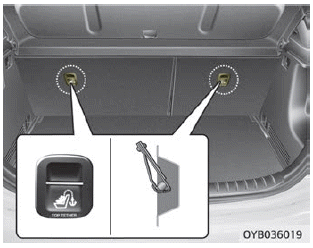
The top tether anchorage points for the child restraint system are located on the rear of the rear seatbacks.
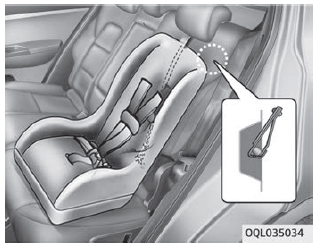
1. Route the top tether strap of the child restraint system over the rear seatback. Follow the child seat manufacturer's instructions for top tether strap routing.
2. Attach the top tether strap to the top tether anchorage point and tighten the strap according to the child seat manufacturer's instructions so the child restraint system is firmly secured to the seat.
WARNING
Note the following safety instructions when attaching the top tether strap:
- Read and follow the installation instructions for your child restraint system carefully.
- NEVER install more than one child restraint system on the same top tether anchorage point. This may loosen or break the anchorage point or the lead fastener.
- Attach the top tether strap only to the correct top tether anchorage point. Otherwise, correct operation is not guaranteed.
- Child restraint anchorage points are designed to bear only the load of a properly secured child restraint system.
Under no circumstances should they be used for seat belts for adults or for attaching objects or vehicle equipment.
Suitability of each seating position for ISOFIX child restraint systems according to UNECE regulations

IUF = Suitable for forward-facing ISOFIX child restraint systems in the universal category approved for use in this age group.
IL = Suitable for certain ISOFIX child restraint systems (CRS) listed in the enclosed list. These ISOFIX child restraint systems are in the vehicle-specific, restricted use, or semi-universal category.
IL* = Suitable for certain ISOFIX child restraint systems (CRS) listed in the enclosed list.
Driver's seat: Seat height should be adjusted as high as possible. Front passenger seat: Seat should be moved as far forward as possible.
X = ISOFIX position is not suitable for ISOFIX child restraint systems in this age group and/or this size group.
Child restraint system with three-point seat belt; attach the three-point belt
If the ISOFIX system is not used, secure all child restraint systems on the rear seat with the lap/shoulder three-point seat belt.
Securing a child restraint system with the three-point seat belt
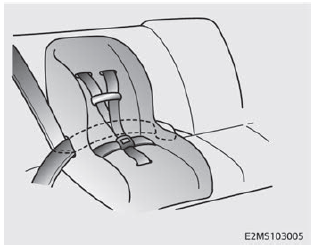
Follow these steps to secure a child restraint system on a rear seat:
1. Place the child restraint system on the rear seat and route the three-point seat belt according to the manufacturer's instructions through or around the child restraint system. Make sure the belt is not twisted.

2. Insert the latch plate of the three-point seat belt into the buckle. Make sure you hear a distinct click. Position the buckle release button so it is easily accessible in an emergency.
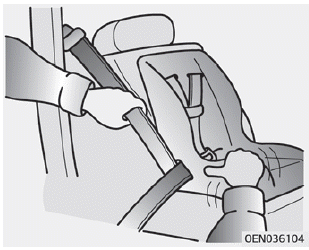
3. Ensure the seat belt is as tight as possible around the child restraint system by pressing down on it while pulling the shoulder belt.
4. Move the child restraint system back and forth to make sure the seat belt holds it securely.
If the manufacturer of your child restraint system recommends using a top tether strap in addition to the three-point seat belt, refer to the corresponding section.
To remove the child restraint system, press the release button on the buckle, pull the three-point seat belt out of the child restraint system, and allow the seat belt to retract fully.
Suitability of individual seating positions for child restraint systems in the universal category according to UNECE regulations (Europe only)
Use child restraint systems officially approved and suitable for your child. Refer to the following table when using child restraint systems:
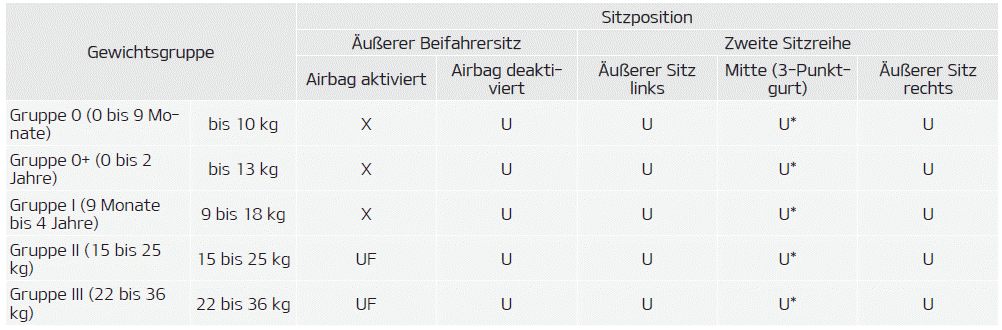
U = Suitable for child restraint systems in the universal category approved for use in this weight group.
U* = Seat is not suitable for installing a child restraint system with a support leg.
UF = Suitable for forward-facing restraint systems in the universal category approved for use in this group.
L = Suitable for certain child restraint systems listed in the enclosed list. These child restraint systems may be classified as vehicle-specific, restricted use, or semi-universal.
B = Built-in restraint system approved for this group.
X = Seat is not suitable for children in this weight group.
i-Size child restraint systems in accordance with ECE regulations

i-U = Suitable for i-Size child restraint systems in the universal category facing rearward and forward
X = Seat position is not suitable for i-Size child restraint systems.
Recommended child restraint systems — Europe only
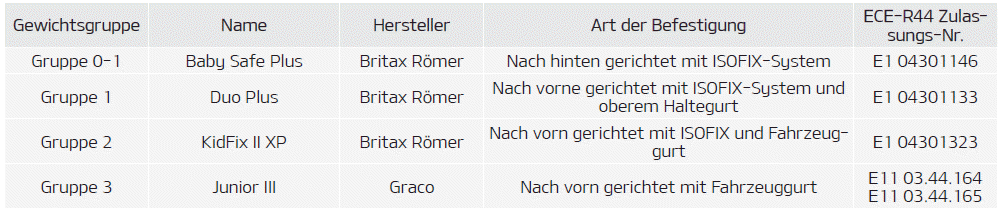
❈ Graco Junior III is used without a backrest.
Test yourself
A quick Kia Stonic quiz: every answer comes with an explanation and a link to the manual page.