Tongue Weight
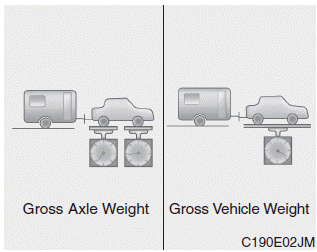
Trailer tongue load is an important weight to measure because it affects the gross vehicle weight (GVW) of your vehicle. This weight includes the curb weight of the vehicle, any cargo you may carry in it, and the people who will ride in the vehicle. If you are towing a trailer, you must add the tongue load to the GVW, because your vehicle will also carry this weight.
The trailer tongue should weigh no more than 10% of the total loaded trailer weight, within the maximum allowable trailer tongue load. After you have loaded your trailer, weigh the trailer and then the tongue, separately, to check whether the weights are correct. If they are not, you can correct them by simply moving some items within the trailer.
WARNING! Trailer
- Never load the trailer with more weight at the rear than at the front. The front should be loaded with approximately 60% of the total trailer load; the rear should be loaded with approximately 40% of the total trailer load.
- Never exceed the maximum trailer weight limits or trailer towing equipment ratings. Improper loading may cause damage to your vehicle and/or personal injury. Check weight and loading on commercial scales or at a highway patrol station equipped with scales.
- An improperly loaded trailer can cause loss of vehicle control.
✽ NOTICE
Engine power decreases with increasing altitude. From 1,000 m above sea level and for every additional 1,000 m thereafter, 10% of the vehicle/trailer weight (trailer tongue weight + gross vehicle weight) must be deducted.
Test yourself
A quick Kia Cee'd quiz: every answer comes with an explanation and a link to the manual page.