Collision diagnosis
Before carrying out body repair on a vehicle, even one that appears only slightly damaged, it is necessary to perform a series of checks:
VISUAL CHECK
This check consists of examining the underbody around the mechanical mountings and in the crumple or vulnerable zones in order to detect the presence of deformation creases.
GAUGE CHECK
The visual check may be supplemented by a gauge check, which allows certain deformations to be measured by symmetrical comparison (for more detail on each point to be checked, refer to the repair bench section below).
CHECKING THE WHEEL ALIGNMENT GEOMETRY
This is the only check that determines whether the impact sustained by the vehicle has or has not affected its road handling.
Important: in borderline cases, do not neglect to check the running gear components, which may also have been deformed.
As a rule, no welded element forming part of the body shell must be replaced without first making sure that the underbody has not been affected by the impact.
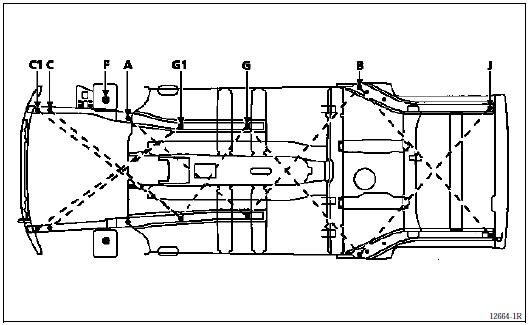
GAUGING POINTS
Point G1:
Rear section of front side member.
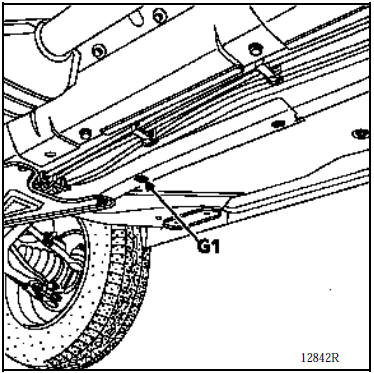
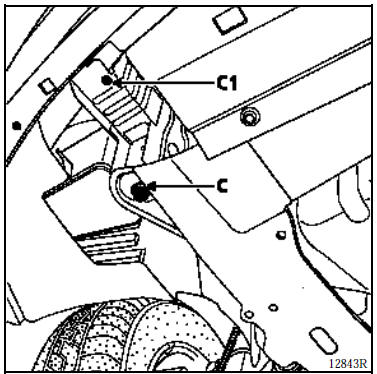
The reference point for checking points (C) and (C1).
Points C and C1:
Front subframe mounting and front end of side member.
Point G:
Rear end of front side member.
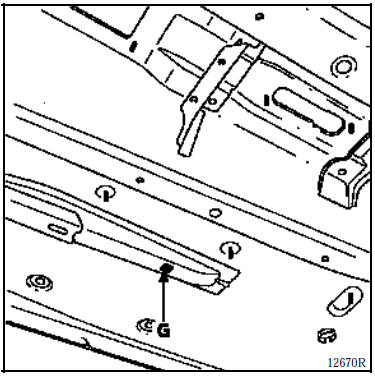
The reference point for checking points (A) and (B).
Point B:
Front point of rear axle.
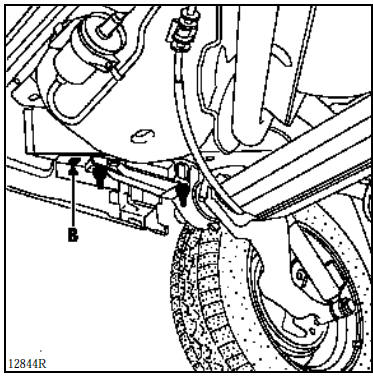
Point J:
Rear end of rear side member.
Right-hand side
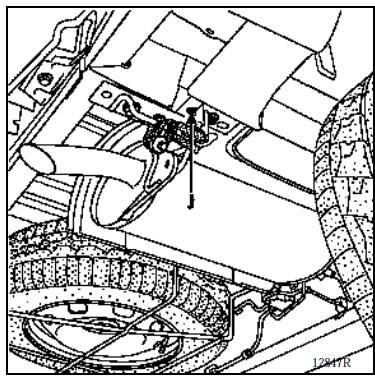
Requires partial removal of the exhaust silencer mounting clamp.
Left-hand side
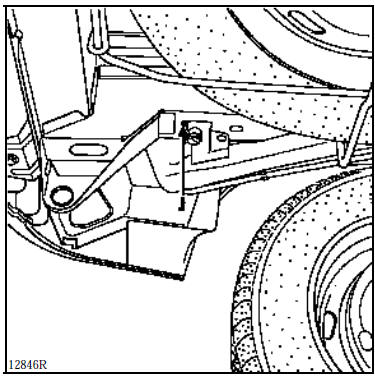
Requires partial removal of the fuel filler neck mounting.
Test yourself
A quick Renault Kangoo quiz: every answer comes with an explanation and a link to the manual page.