Exhaust gas recirculation
K9K
I - CIRCUIT OVERVIEW
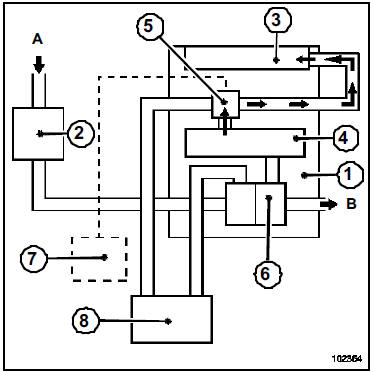
- Engine
- Air filter housing
- Air distributor
- Exhaust manifold
- Exhaust gas recirculation housing with solenoid valve
- Turbocharger
- Injection ECU
- Cooler
- Air intake
- Exhaust gas outlet
II - PURPOSE OF THE EXHAUST GAS RECIRCULATION SYSTEM
Exhaust gas recirculation is used to reduce the nitrogen oxide (NOx) content of the exhaust gases.
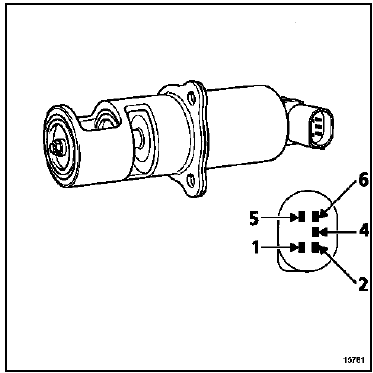
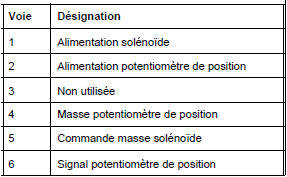
The ECU allows gas to flow by controlling a solenoid valve.
III - OPERATING PRINCIPLE
The solenoid valve is controlled by an opening duty cycle signal sent by the injection ECU.
The opening duty cycle signal modulates the opening of the solenoid valve and therefore the amount of exhaust gas diverted to the intake manifold.
The ECU continuously runs a test to determine the position of the exhaust gas recirculation solenoid valve.
Note: The position of the exhaust gas recirculation solenoid valve is a determining factor in calculating the amount of air admitted by the engine.IV - OPERATING CONDITIONS
The parameters that determine activation of the exhaust gas recirculation solenoid valve are:
- coolant temperature,
- intake air temperature,
- atmospheric pressure,
- accelerator pedal position,
- injected diesel flow,
- engine speed.
Operating point for checking the exhaust gas recirculation solenoid valve. The exhaust gas recirculation solenoid valve is activated when:
- intake air temperature is between -30 °C and 67 °C,
- or coolant temperature is between 0 °C and 127 °C,
- engine speed is above 500 rpm,
- injected diesel flow is between 10 and 31 mg/stroke,
- atmospheric pressure is above 421 mbar.
In this case, the diagnostic tool will show a duty cycle value for the exhaust gas recirculation solenoid valve position equal to 4 and 60%.
Exhaust gas recirculation is cut off if:
- battery voltage is below 9 V,
- engine speed is below 500 rpm,
- the engine speed-load map is above a threshold,
- the air conditioning compressor is switched on.
The exhaust gas recirculation solenoid valve is not powered for 2 seconds after starting.
The exhaust gas recirculation solenoid valve is no longer powered in the event of a fault with:
- the exhaust gas recirculation solenoid valve,
- the boost pressure sensor.
F9Q
I - CIRCUIT OVERVIEW
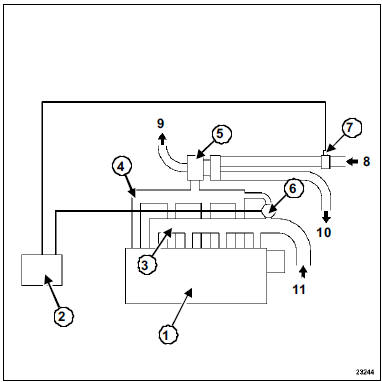
- Engine
- Injection ECU
- Intake manifold
- Exhaust manifold
- Turbocharger
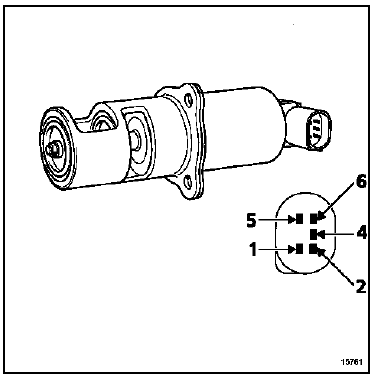
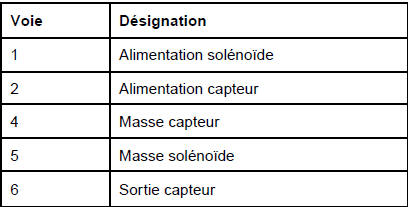
- Exhaust gas recirculation (EGR) solenoid valve
- Air flow meter
- Air intake
- Exhaust outlet
- Cooler inlet
- Cooler outlet
II - PURPOSE OF THE EXHAUST GAS RECIRCULATION SYSTEM
Exhaust gas recirculation is used to reduce the nitrogen oxide (NOx) content of the exhaust gases.
The injection ECU allows gas to flow by controlling a solenoid valve.
III - OPERATING PRINCIPLE
The solenoid valve is controlled by an opening duty cycle signal sent by the injection ECU.
The opening duty cycle signal modulates the opening of the solenoid valve and therefore the amount of exhaust gas diverted to the intake manifold.
The ECU continuously runs a test to determine the position of the exhaust gas recirculation solenoid valve.
IV - OPERATING CONDITIONS
The parameters that determine activation of the exhaust gas recirculation solenoid valve are:
- coolant temperature,
- intake air temperature,
- atmospheric pressure,
- injection flow,
- engine speed.
Exhaust gas recirculation is cut off:
- if battery voltage is below 9 V,
- if engine speed is above 2850 rpm when the accelerator is released (low pedal value),
- if the engine speed-load map is above a threshold,
- after a 40-second delay if
- vehicle speed is below 12 km/h,
- engine speed is below 1000 rpm,
- coolant temperature is above 60 °C.
After starting, the exhaust gas recirculation solenoid valve is controlled according to a coolant temperature map.
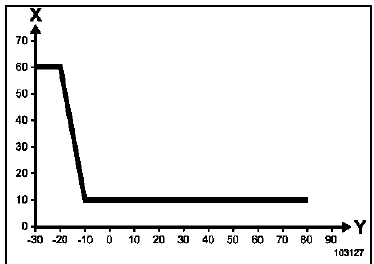

The exhaust gas recirculation solenoid valve is no longer powered in the event of a fault with:
- the coolant temperature sensor,
- the intake air temperature sensor,
- the boost pressure,
- the atmospheric pressure sensor.
Test yourself
A quick Renault Megane quiz: every answer comes with an explanation and a link to the manual page.