Checking and Replacing Fuses
If an electrical component stops working, a fuse has probably blown. If this happens, check the fuse and replace it if necessary.
1. Set the ignition switch to off.
2. Open the fuse box cover.
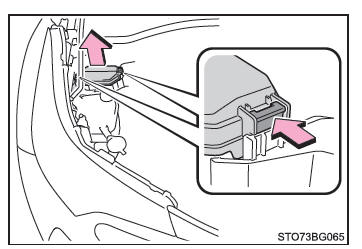
Type A fuse box in the engine compartment (if equipped)
While pressing the 2 tabs, pull the cover upward.
When closing the cover, make sure to engage the 2 tabs.
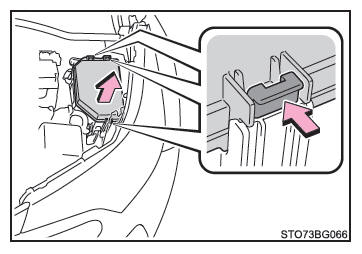
Type B fuse box in the engine compartment
While pressing the 3 tabs, pull the cover upward.
When closing the cover, make sure to engage the 3 tabs.
Type C fuse box in the engine compartment
While pressing the 2 tabs, pull the cover upward.
When closing the cover, make sure to engage the 2 tabs.
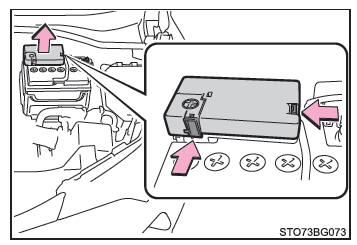
Type C fuse box in the engine compartment
While pressing the 2 tabs, pull the cover upward.
When closing the cover, make sure to engage the 2 tabs.
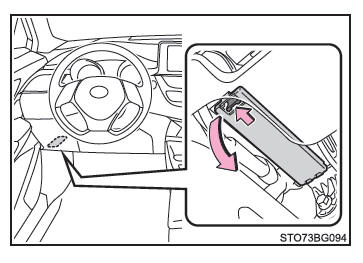
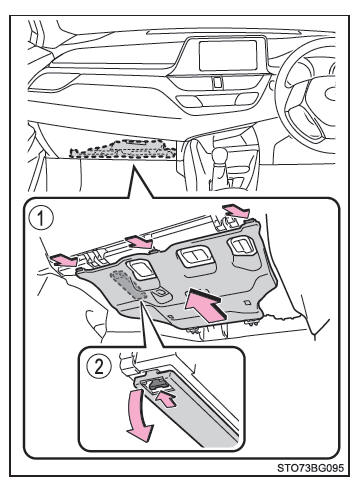
Instrument panel, left side (right-hand drive vehicles)
- Press the tab and remove the cover.
- Remove the cover.
Be sure to press the tab when removing or installing the cover.
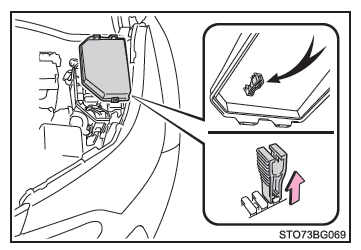
3. Remove the fuse using the fuse puller.
Only Type A fuses can be removed with the fuse puller.
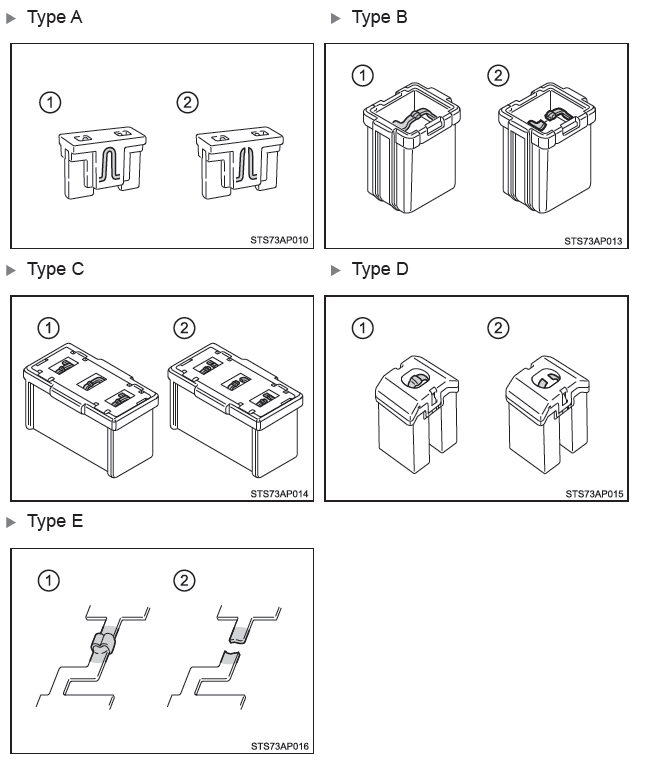
4. Check whether the fuse is blown.
- Normal fuse
- Blown fuse
Except Type E: Replace the blown fuse with a new one of the same amperage. The amperage is indicated on the fuse box cover.
Type E: Contact a Toyota dealer, a Toyota-approved repairer, or any reliable repairer.
■ After replacing a fuse
- If the light does not come on after the fuse has been replaced, a bulb may need to be replaced.
- If the new fuse also blows, have the vehicle inspected by a Toyota dealer, a Toyota-approved repairer, or any reliable repairer.
■ If a circuit is overloaded Fuses are designed to melt in order to protect the wire harness from damage.
■ When replacing bulbs Toyota recommends using genuine Toyota parts designed for your vehicle. Some bulbs are part of circuits designed to prevent overload; any part other than genuine parts or parts not designed for this vehicle may be unusable.
WARNING■ To prevent malfunction and fire Observe the following precautions.
Otherwise, you may damage the vehicle, and possibly cause a fire or injure yourself.
- Never use a fuse with a higher amperage than specified, and never replace a fuse with any other object.
- Always use a genuine Toyota fuse or an equivalent.
Never replace a fuse with electrical wire, even as a temporary repair.
- Do not modify fuses or fuse boxes.
■ Before replacing fuses Have the cause of the electrical overload identified and eliminated as soon as possible by a Toyota dealer, a Toyota-approved repairer, or any reliable repairer.