Sicurezza dei bambini
I bambini devono sempre viaggiare seduti in sicurezza a bordo del veicolo.
Informazioni generali
Volvo recommends the proper use of restraint systems for all occupants including children. Remember that, regardless of age and size, a child should always be properly restrained in a vehicle.
Your vehicle is also equipped with ISOFIX/LATCH attachments, which make it more con- venient to install child seats.
Some restraint systems for children are designed to be secured in the vehicle by lap belts or the lap portion of a lap-shoulder belt. Such child restraint systems can help protect children in vehicles in the event of an accident only if they are used properly. However, children could be endangered in a crash if the child restraints are not properly secured in the vehicle. Failure to follow the installation instructions for your child restraint can result in your child striking the vehicle's interior in a sudden stop.
Holding a child in your arms is NOT a suitable substitute for a child restraint system. In an accident, a child held in a person's arms can be crushed between the vehicle's interior and an unrestrained person. The child could also be injured by striking the interior, or by being ejected from the vehicle during a sudden maneuver or impact. The same can also happen if the infant or child rides unrestrained on the seat. Other occupants should also be properly restrained to help reduce the chance of injuring or increasing the injury of a child.
Tutti gli stati e le province hanno una normativa che disciplina come e dove i bambini devono essere trasportati in un veicolo. Informarsi sulle norme vigenti nel proprio stato o provincia. Le recenti statistiche sugli incidenti hanno dimostrato che i bambini sono più sicuri nei posti posteriori che in quelli anteriori, se correttamente trattenuti. Un sistema di ritenuta per bambini può contribuire a proteggere il bambino a bordo del veicolo. Ecco cosa considerare nella scelta di un sistema di ritenuta per bambini:
It should have a label certifying that it meets applicable Federal Motor Vehicle Safety Standards (FMVSS 213) - or in Canada, CMVSS 213.
Make sure the child restraint system is approved for the child's height, weight and development - the label required by the standard or regulation, or instructions for infant restraints, typically provide this information.
In using any child restraint system, we urge you to carefully look over the instructions that are provided with the restraint. Be sure you understand them and can use the device prop- erly and safely in this vehicle. A misused child restraint system can result in increased injuries for both the infant or child and other occupants in the vehicle.
Quando il bambino è cresciuto oltre il seggiolino di sicurezza, utilizzare il sedile posteriore con la cintura di sicurezza standard allacciata. Il modo migliore per proteggere il bambino in questo caso è farlo sedere su un cuscino in modo che la cintura di sicurezza sia posizionata correttamente sui fianchi. La normativa del proprio stato o provincia può prescrivere l'uso di un seggiolino o di un cuscino insieme alla cintura, a seconda dell'età e/o della statura del bambino. Verificare le norme locali.
Un cuscino rialzatore e uno schienale appositamente progettati e testati possono essere acquistati presso il rivenditore Volvo. Vedere anche l'articolo «Cuscino rialzatore integrato».
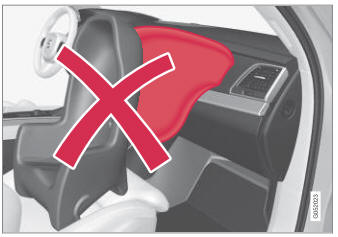
- Do not use child safety seats or child booster cushions/backrests in the front passenger's seat. We also recommend that children under 140 cm (4 feet 7 inches) in height who have outgrown these devices sit in the rear seat with the seat belt fastened.
- Nelle giornate calde, la temperatura dell'abitacolo può salire molto rapidamente. L'esposizione a queste alte temperature anche per un breve periodo può causare lesioni o morte correlate al calore. I bambini piccoli sono particolarmente a rischio. Non lasciare mai i bambini incustoditi nel veicolo.
I seggiolini per bambini devono sempre essere registrati.
Raccomandazioni Volvo
Perché Volvo ritiene che nessun bambino debba sedere sul sedile anteriore del veicolo? La risposta è davvero semplice. L'airbag anteriore è un dispositivo molto potente progettato, per legge, per proteggere un adulto.
A causa delle dimensioni dell'airbag e della sua velocità di gonfiaggio, un bambino non deve mai essere collocato sul sedile anteriore, anche se è correttamente allacciato con la cintura o fissato in un seggiolino di sicurezza. Volvo è stata un'innovatrice nel campo della sicurezza sin dalla sua fondazione. E non intendiamo riposare sugli allori. Ma abbiamo bisogno del vostro aiuto. Ricordate di far sedere i vostri figli sul sedile posteriore e di allacciare loro la cintura.
- Il veicolo è stato coinvolto in un urto, indipendentemente dalla sua gravità
- La sua storia è sconosciuta
- È più vecchio della data di scadenza stabilita dal produttore
Volvo ha raccomandazioni molto specifiche
- Indossare sempre la cintura di sicurezza.
- Gli airbag sono un dispositivo di sicurezza SUPPLEMENTARE che, se usato insieme a una cintura di sicurezza a tre punti, può contribuire a ridurre le lesioni gravi in determinati tipi di incidenti. Volvo raccomanda di non disattivare il sistema airbag del veicolo.
- Volvo raccomanda vivamente che tutti i passeggeri del veicolo siano correttamente trattenuti.
- Volvo recommends that ALL occupants (adults and children) shorter than 140 cm (4 feet 7 inches) be seated in the rear seat of any vehicle with a front passenger side airbag.
- Viaggiate in sicurezza!
Mettiti alla prova
Un breve quiz sulla Volvo XC90: ogni risposta ha una spiegazione e un link alla pagina del manuale.