Safety
Correct driver seating position
In this manual: Safety
~3min read
The driver must be seated correctly in order to drive safely and comfortably.
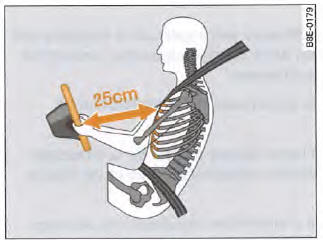
Fig. 164 Minimum distance of driver from steering wheel
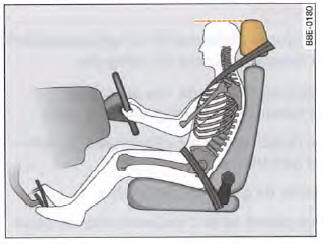
Fig. 165 Correct adjustment of driver's head restraint
For your own safety and to reduce the risk of injury in an accident, we recommend the driver make the following adjustments:
- Adjust the steering wheel so that the distance between it and your chest is at least 25 cm => fig. 164.
- Adjust the seat longitudinally so that you can fully depress the accelerator, brake and clutch pedals with your legs slightly bent.
- Make sure the top of the steering wheel can be reached.
- Adjust the head restraint so that its top edge is level with the top of your head => fig. 165.
- Adjust the seat backrest so that it is upright and fits the shape of your back.
- Fasten the seat belt correctly =>
- Always keep your feet on the floor to maintain control of the vehicle, whatever the circumstances.
Adjusting the driver's seat, « Seats and storage ».
CAUTION!
If you drive with an incorrect seating position, you risk serious injury.
- Adjust the seat so that the distance between your chest and the centre of the steering wheel is at least 25 cm => page 174, fig. 164. If the distance is less than 25 cm, the airbag no longer provides optimal protection.
- If your build does not allow you to maintain the minimum distance of 25 cm, contact a specialist workshop. They will advise you on whether special devices can be fitted.
Test yourself
A quick Audi A4 quiz: every answer comes with an explanation and a link to the manual page.
Was this page helpful?