General
PREAMBLE
The airbag, whether front or side, supplements the protection provided by the seat belt. Its purpose is to prevent occupants from striking the vehicle interior in a frontal or side impact.
The airbag is a polyamide fabric bag, folded and packed tightly.
Note: Wearing the seat belt is required for the airbags to be effective.
AIRBAG SYSTEM OVERVIEW
The system comprises:
- a central detection and control unit, which deploys the airbag(s) when the impact reaches a certain severity and angle,
- two front airbags,
- two side airbags,
- two curtain airbags,
- two side airbag crash sensors, one on each side of the vehicle, which deploy the side airbags and the curtain airbags when required,
- seat belts with pyrotechnic pretensioners and load limiters.
AIRBAG CONTROL UNIT
The airbag control unit manages the deployment of the pyrotechnic seat belt pretensioners and the airbags. The airbag control unit is located under the centre console.
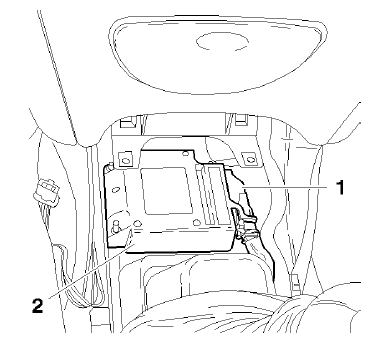
Airbag control unit
Key:
- Connector
- Airbag control unit
FRONTAL AIRBAGS
The frontal airbag is a supplementary restraint to the seat belt, designed to deploy in the event of a severe frontal impact. Its role is to cushion the front occupant(s) against the dashboard, reducing the forward movement of the occupant(s) in a severe frontal collision and thereby limiting the risk of head and chest injuries.
It will not deploy in a minor frontal impact or collision, in a rear or side collision, or in a rollover, as it would serve no purpose.
The driver frontal airbag is located in the steering wheel.
The passenger frontal airbag is located in the dashboard on the passenger side.
Note: In a very severe frontal impact, the side airbags may also be deployed.
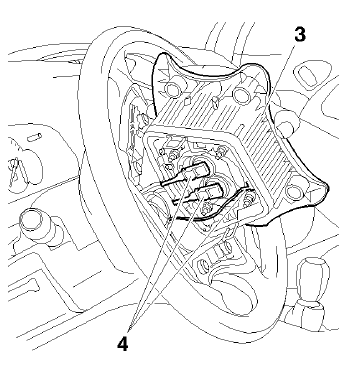
Frontal airbags
Key:
3 - Frontal airbag
4 - Connectors
ADAPTIVE FRONTAL AIRBAGS
The frontal airbags are of the adaptive type. The output of the frontal airbag modules is controlled according to the severity of the frontal impact.
The driver and passenger frontal airbags each have a dual-stage inflator and two connectors. As a result, the frontal airbags deploy in 2 stages, separated by a variable delay (on the order of one millisecond) depending on the severity of the impact. The airbag ECU decides the firing strategy according to the type of impact.
SIDE AIRBAGS AND CURTAIN AIRBAGS
They are designed to deploy in the event of a severe side impact. They deploy on the side of the vehicle where the impact occurs.
Side and curtain airbags are not designed to deploy in a minor impact or collision on the side of the vehicle, in a rear or frontal collision, or in a rollover, as they would serve no purpose.
The role of the side airbag is to cushion the occupant (driver or passenger) against the door panel. This limits the risk of abdominal and chest injuries. The side airbags are integrated into the outer side bolsters of the driver and passenger seats.
The role of the curtain airbag is to cushion the front or rear occupant against the windows. This limits the risk of head injuries. The curtain airbags are integrated under the roof trim, on each side of the vehicle.
The side airbags and curtain airbags on the same side of the vehicle always deploy simultaneously.
Note: In a very severe side impact, the frontal airbags may also be deployed.
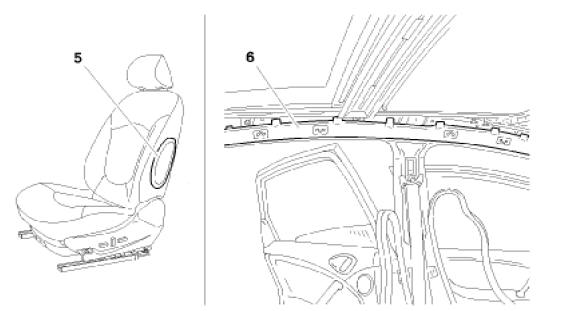
Side airbags and curtain airbags
Key:
5 - Side airbag
6 - Curtain airbag
SEAT BELTS WITH PYROTECHNIC PRETENSIONERS AND FORCE LIMITERS
The pretensioners tighten the front seat belts so as to firmly press the occupants' bodies back against the seat and increase their effectiveness. Tightening is achieved by firing a pyrotechnic cartridge. In a minor impact, the seat belts may be triggered on their own.
Key:
7 – Pyrotechnic retractor
Seat belts with force limiters increase protection in a frontal impact by limiting the load the seat belt applies to the body.
SIDE AIRBAG CRASH SENSORS
The side airbag crash sensors (8) are located in the side members, on each side of the vehicle. The side airbag crash sensors measure the level of lateral deceleration and send the information to the airbag ECU.
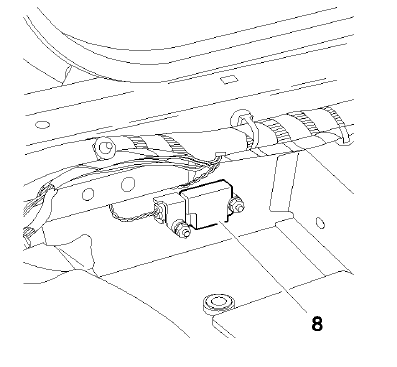
Side airbag crash sensors
Passenger airbag deactivation
Passenger airbag deactivation allows the use of a rear-facing child seat. The passenger airbag is deactivated using the passenger airbag deactivation switch (9), located in the driver's glovebox/storage tray.
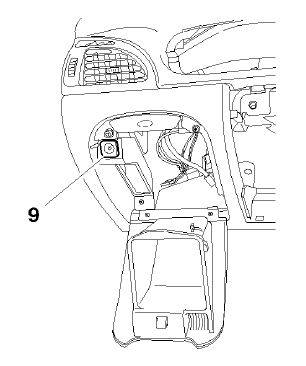
Passenger airbag deactivation
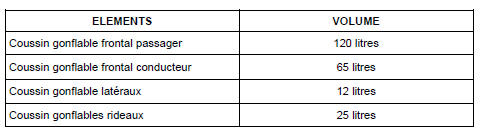
Airbag volumes
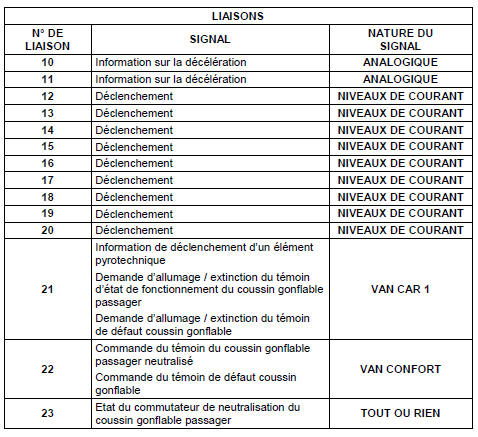
DIAGRAM
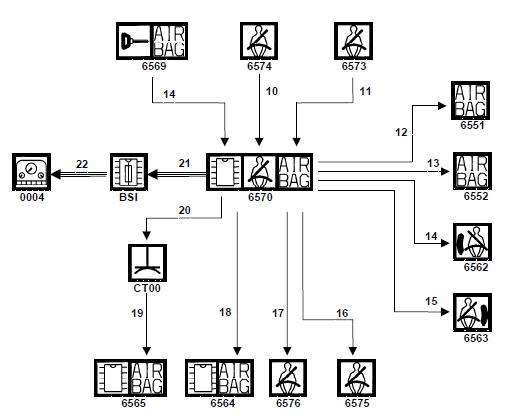
Key:
- single arrow: wired link,
- triple arrow: multiplexed link.
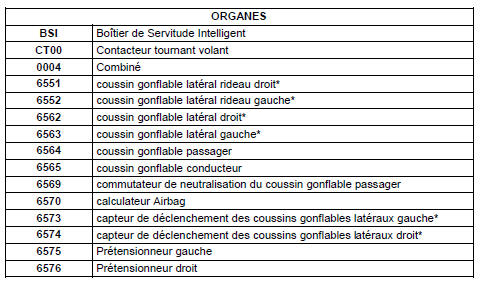
* Depending on version
Test yourself
A quick Citroen C5 Aircross quiz: every answer comes with an explanation and a link to the manual page.