Normal Operating Conditions
GENERAL INFORMATION
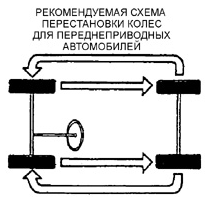
Tire Rotation
The maintenance schedule below (see table), which includes the list of operations and their intervals, is intended for normal operating conditions of the vehicle in accordance with its intended use:
– transportation of passengers and cargo in compliance with load limitations and
recommended tire inflation pressures indicated on the label that
is affixed to the edge of the driver's door.
– operation on roads with fairly good surface quality within the
permissible restrictions on driving modes.
Notes to the Maintenance Schedule
All maintenance operations listed in the table are described in detail later in this manual. Before performing the next scheduled maintenance
and before operating the vehicle, make sure that all previously removed parts and assemblies have been reinstalled on the vehicle and all necessary repair
work has been completed. Use only recommended oils and operating fluids.
Inspection of Accessory Drive Belts
Inspect the alternator, power steering pump and air conditioning compressor drive belt.
If there are signs of wear or damage (cracks,
delamination, etc.), replace the belt. Adjust the belt tension.
Engine Oil and Oil Filter Replacement
Always use engine oil of quality level SG or higher, or CCMC G4/G
5..
Engine oils marked SG have higher performance characteristics compared to oils of quality level SF/CC or SF/CD. The SG designation may appear on the oil label either alone or in combinations such as SG/CC or SG/CD.
Engine Oil Viscosity
Engine oil viscosity affects fuel economy and engine starting performance in cold weather. Lower viscosity oil improves fuel economy and makes engine starting easier at low temperatures. However, at high
ambient temperatures the lubricating properties of low-viscosity engine oil deteriorate and a higher-viscosity engine oil is required. Operating the engine on oils not recommended may lead to rapid wear of parts and
engine failure.
Engine Cooling System Service
Drain and flush the cooling system and fill with new coolant.
Engine cooling system service.
Fuel Filter Replacement
Air Cleaner Filter Element Replacement
Replace the fuel filter every 45,000 km of vehicle mileage. The filter
is located on the right side under the vehicle body near the fuel tank.
Check the tightness of the mounting bolts. If necessary, tighten the bolts
the vehicle is operated in conditions of heavy dust, replace the
filter element more frequently.
Throttle Body Mounting
Throttle body mounting.
Spark Plug Replacement
with a torque wrench (tightening torque 17 N·m).
Type: AC Type R45XLS.
Gap: 0.7–0.8 mm (DOHC engine) or 1.0–1.1 mm (SOHC engine).
High-Tension Lead Inspection
Clean the leads and check the insulation condition. Check the protective boots of the leads at the distributor cap and ignition coil. If necessary, replace
Brake System Service
defective leads.
Inspect the condition of the disc and drum brake pads and linings every 15,000 km of vehicle mileage or every 12 months.
Brake system service.
Carefully measure the thickness of the brake pad linings. If the remaining thickness of the brake linings is insufficient for proper brake operation until the next scheduled maintenance (in 15,000 km), replace the pads or linings with new ones. Check and, if necessary, clean the breather hole in the brake master cylinder reservoir cap.
Transmission Service
The manual transmission oil does not require replacement during the entire service life of the vehicle. The automatic transmission fluid and oil filter must be replaced every 75,000 km of vehicle mileage or every 60 months, whichever occurs first.
Transmission service.
Tire and Wheel Condition Inspection, Wheel Rotation
Inspect the condition of the tires and check for signs of abnormal wear or damage.
Checking tire and wheel condition, wheel rotation.
To extend the service life of the tire set, rotate the wheels periodically in
accordance with the pattern shown in the figure. Wheel Rotation Pattern. If uneven or
rapid tread wear occurs, check the wheel alignment angles. In addition,
check the wheels for runout. After removing the wheels from the vehicle, check
the brake system condition in accordance with the instructions in the "Brake System Inspection" item of the "Each Oil Change" subsection.
Brake System Inspection" item of the "Each Oil Change" subsection.
Designations
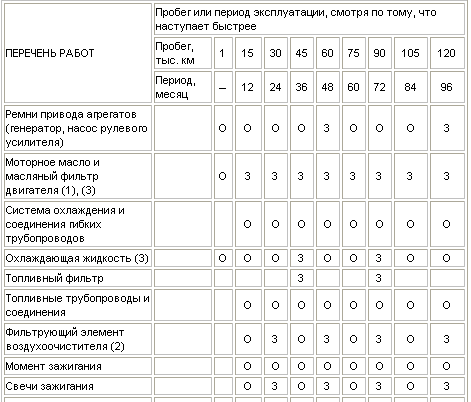

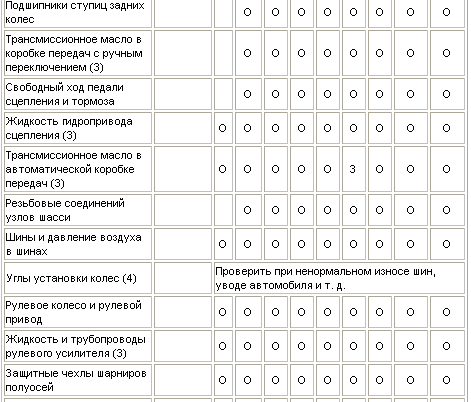

O – Inspect, check and determine the technical condition. If necessary,
bring the level to the specified value or perform cleaning, adjustment, tightening of fasteners
R – Replace
(1) When the vehicle is operated under severe conditions (frequent short trips, prolonged engine idling, heavy dust), the engine oil must be replaced every 7,500 km or every 6 months, whichever occurs first.
(2) When the vehicle is operated in conditions of heavy dust, the filter element must be replaced more frequently.
(3) Recommended operating materials are listed in the subsection "Engine Oil and Oil Filter Replacement".
(4) Balance the wheels if necessary.
(5) Maintenance intervals should be reduced when the vehicle is operated under severe conditions: frequent short trips, prolonged engine idling, frequent driving in city traffic jams, heavy dust.
Owner Inspections and Maintenance
(4) If necessary, balance the wheels.
Daewoo Nexia: Owner Inspections and Maintenance
The inspections, checks and maintenance operations described below must be performed by the vehicle owner or by qualified service personnel.
heavy dust
Test yourself
A quick Daewoo Nexia quiz: every answer comes with an explanation and a link to the manual page.