Engine Oil
Checking the Engine Oil Level
Engine oil is used to lubricate, cool, and operate various hydraulic components in the engine. Engine oil consumption during normal driving is expected, and the engine oil level must be checked and topped up regularly. Also check and top up the oil level within the intervals specified in the maintenance schedule to prevent deterioration of oil performance.
Check the engine oil by following the procedure below.
Gasoline Engine
1. Follow all oil manufacturer precautions.
2. Make sure the vehicle is on level ground, in P (Park), with the parking brake set and the wheels blocked.
3. Start the engine and warm it up until the engine coolant temperature reaches a stable normal temperature.
4. Stop the engine, wait 15 minutes for the oil to drain back into the oil pan, then remove the oil filler cap and the dipstick.
5. Wipe the dipstick clean and reinsert it fully.
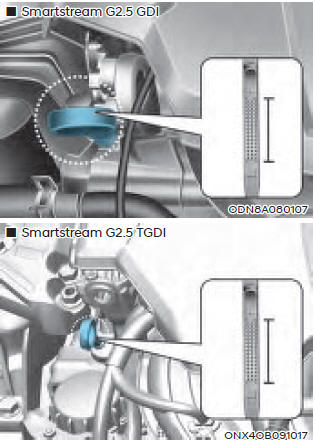
6. Pull out the dipstick again and check the level. The level should be between F (Full) and L (Low).
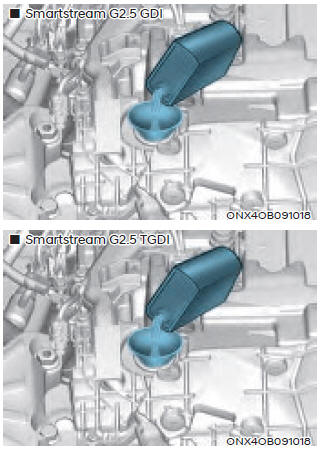
7. If the oil level is below L, add enough oil to bring the level up to F.
Use only the specified engine oil (refer to "Recommended Lubricants and Capacities" in Chapter 2).
NOTICE
To avoid engine damage:
- Do not spill engine oil when adding or replacing engine oil. Wipe up any spilled oil immediately.
- Engine oil consumption may increase while the new vehicle is being broken in. It will stabilize after driving 4000 miles (6000 km).
- Engine oil consumption may be affected by driving style, climate conditions, traffic conditions, oil quality, etc. Therefore, it is recommended that you check the engine oil level regularly and add oil if necessary.
Test yourself
A quick Hyundai Tucson quiz: every answer comes with an explanation and a link to the manual page.