TPMS Sensor
Description and Operation
Description
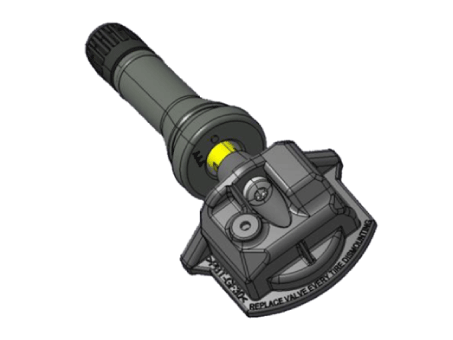
Function
The sensor measures pressure, temperature, acceleration and battery status, and transmits the information to the ECU by wireless radio frequency.
Wheel location is recognized by comparing the wheel pulse from the ECS (ABS) and the acceleration sensor value (upper line).
Structure and Features
Four (4) sensors are installed on each wheel of the vehicle.
The frequency conversion type is FSK, normally using the High Line.
TPMS Automatic Location Learning
The wheel angular speeds differ from each other in the following cases:
Slip on each axle occurs differently.
The turning radius (curve radius) for each wheel is different.
Tire wear, internal pressure, tire characteristics, etc. differ for each tire.
The TPMS sensor transmits the RF signal only at a specific phase (tire angle) in learning mode.
The TPMS receiver checks the information of each tire phase (tire tilt angle) when receiving RF signals from the sensor.
Each time RF signals are received from sensors with IDs 1, 2, 3 and 4, the ID with the highest correlation between the phases of each collected wheel is transmitted. (In other words, each time an RF signal is received, the tire phase is transmitted to the most consistent wheel.)
The TPMS sensor transmits the RF signal at 16-second intervals in learning mode.
After stopping or parking for more than 19 minutes, the automatic learning function is performed in any driving position.
The sensor switches to parking mode when stopped or parked for longer than 15 minutes. When acceleration greater than 4 g (15-20 km/h) is detected, parking mode switches to the first block mode.
Repair Procedures
Removal
Remove the wheel and tire.
(See Suspension System — Wheel)
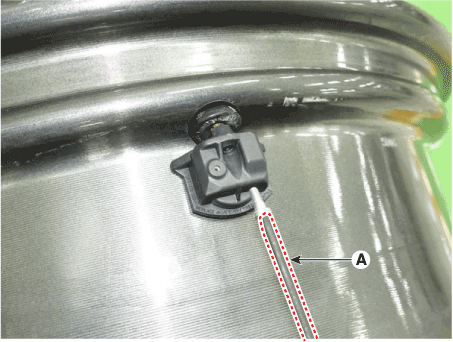
Remove the screw using a Torx screwdriver (A).
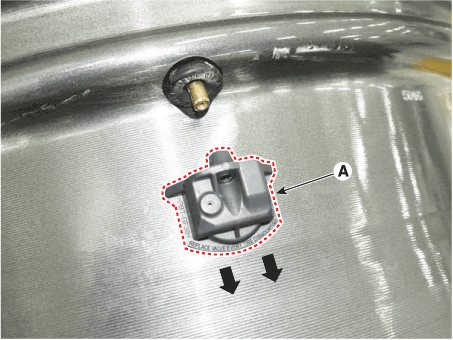
Remove the sensor housing (A) from the valve in the direction of the arrow.
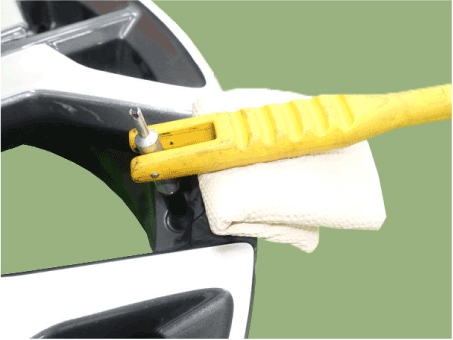
Use the valve installation tool to pull the valve until it is fully out of the lower hole.
Apply lubricant to the surface of the new valve, then install it through the wheel valve hole.
Specified lubricants: soapy water or YH100 (tire lubricant).
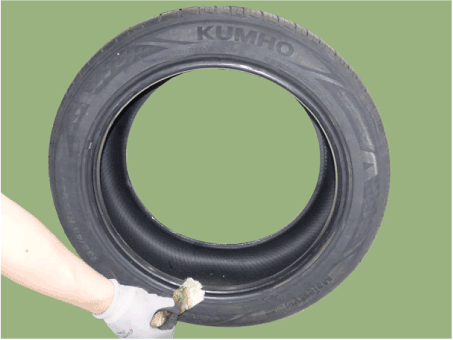
Apply soapy water or lubricant to the upper/lower bead of the tire.
To install the lower bead, position the sensor at the "5 o'clock" position relative to the head on the tire changer.
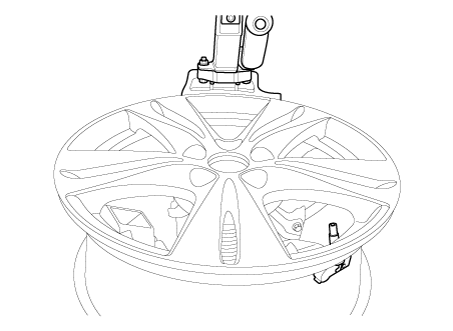
Rotate the rim clockwise and press the tire at the 3 o'clock position to fit the lower bead onto the rim.
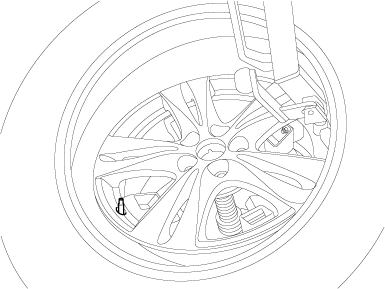
Once the lower bead is on the rim, rotate the rim until the sensor is at the 5 o'clock position relative to the head of the tire changer. Push down on the tire at the 3 o'clock position and rotate the rim clockwise to fit the upper bead.
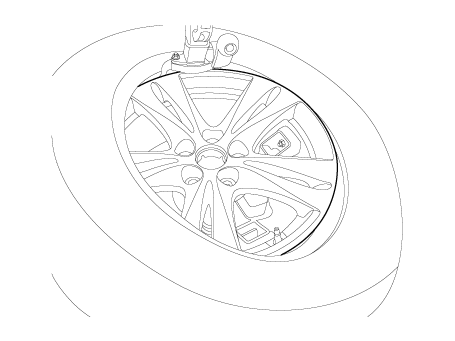
Inflate the tire until both beads are seated.
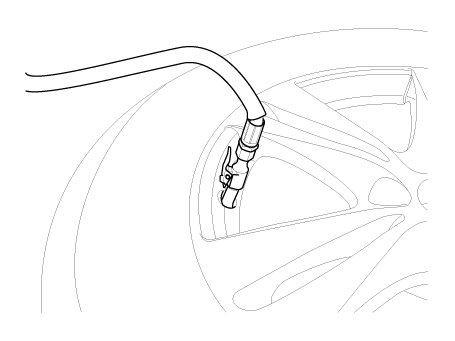
Adjust the tire pressure to the recommended tire pressure for the vehicle.
Tire Pressure: 2.50 kgf/cm² (35 psi)
If the TPMS sensor is faulty, the TPMS sensor learning must be performed. Replace all faulty sensors and perform TPMS sensor learning.
Diagnostic Procedure Using the Scan Tool
As a guide to diagnostic procedures using the diagnostic device, the main contents are as follows:
Connect the 16-pin diagnostic connector located in the lower part of the driver side trim panel to the scan tool, then turn on the scan tool after turning the ignition key ON.
Select "Vehicle Model" and "TPMS" on the KDS vehicle selection screen, then select OK.
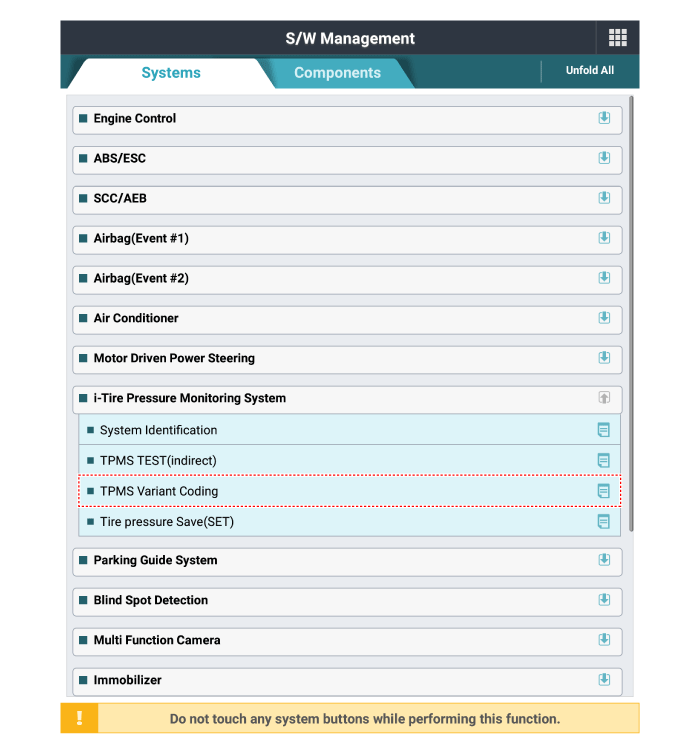
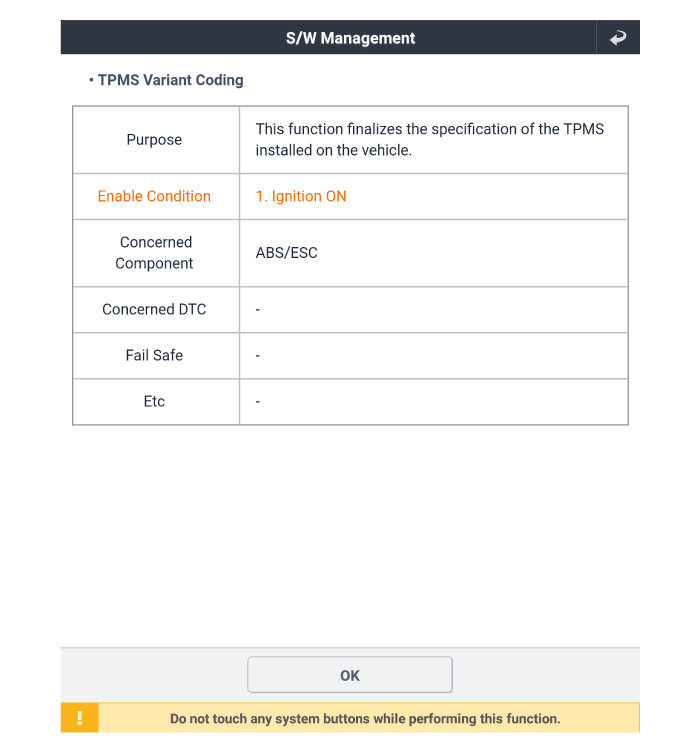
[TPMS Variant Coding]
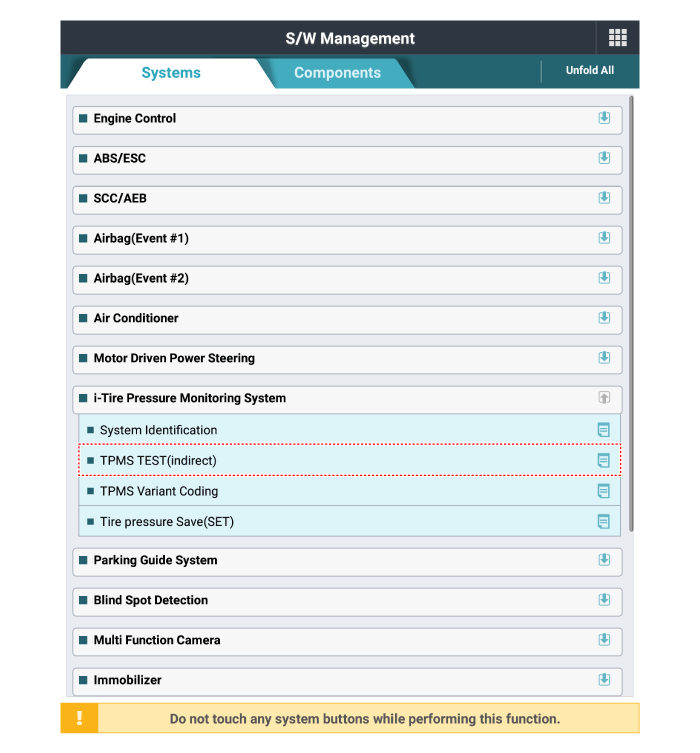
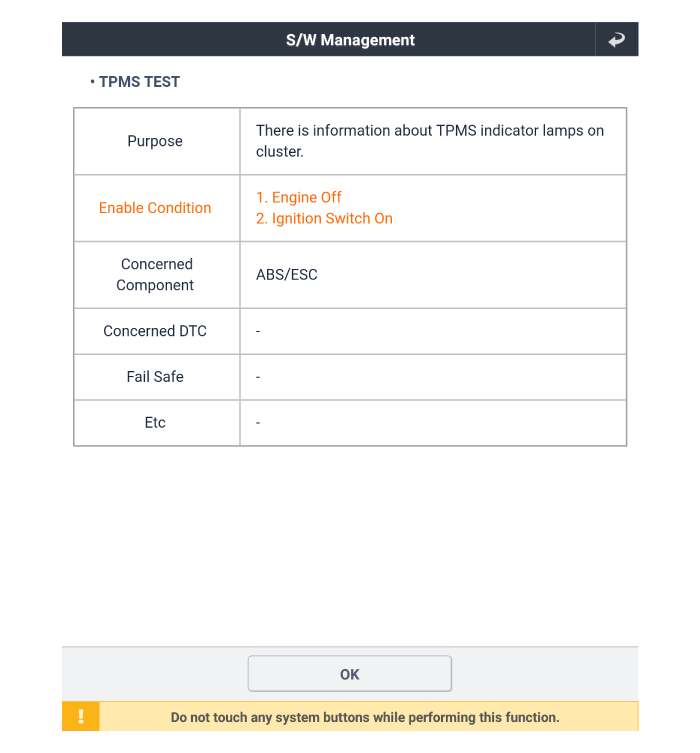
[TPMS TEST]
Test yourself
A quick Kia Optima DL3 quiz: every answer comes with an explanation and a link to the manual page.