How the air bag system works
- The air bag system only operates when the ignition switch is turned to the ON or START position.
- The air bags inflate instantly in a frontal or side impact (if the vehicle has side or curtain air bags) of a certain severity, in order to protect occupants from serious injury.
- There is no specific speed at which the air bags are triggered.
In general, air bags inflate depending on the intensity and direction of the impact. Based on these two factors, the sensors determine whether to send the electronic deployment/inflation signal.
It is practically impossible to see the air bags while they are inflating in a collision. It is much more likely to see deflated air bags hanging out of their compartment after the collision.
Since the speed of deployment determines whether the lives or safety of occupants can be saved in a collision, this characteristic is clearly of great importance in the design of air bags.
However, deployment may also cause injuries, including abrasions, bruises and facial fractures, because the air bags inflate with considerable force at that speed.WARNING
- To prevent the risk of injuries, which may even be fatal, from impact with the air bags in a collision, the driver must position the seat as far as possible from the steering wheel (at least 250 mm). The front passenger must always move their seat as far back as possible and sit firmly against the backrest.
- Since air bags inflate instantly in a collision, if occupants are not seated correctly, they risk being injured by the force of inflation.
- Air bag deployment may cause injuries such as abrasions to the face or body due to broken glass, or burns caused by explosive agents.
Noise and smoke When they inflate, air bags produce a loud noise and release smoke and dust into the passenger compartment.
This is normal and is the result of the airbag inflator devices being triggered. After the airbags deploy, you may experience breathing discomfort caused both by contact of the chest with the seat belt and the airbag, and by inhaling smoke and dust. We strongly recommend opening the doors and/or windows immediately after the impact to reduce this discomfort and to avoid prolonged exposure to smoke and dust.
Although the smoke and dust are not toxic, they may still cause skin irritation (eyes, nose, throat, etc.). In this case, wash and rinse immediately with cold water and consult a doctor if the symptom persists.
WARNING When the air bags deploy, the parts near them in the steering wheel, dashboard and/or roof side rails on both sides above the front and rear doors become very hot. To avoid burns, do not touch the components inside the air bag compartments immediately after deployment.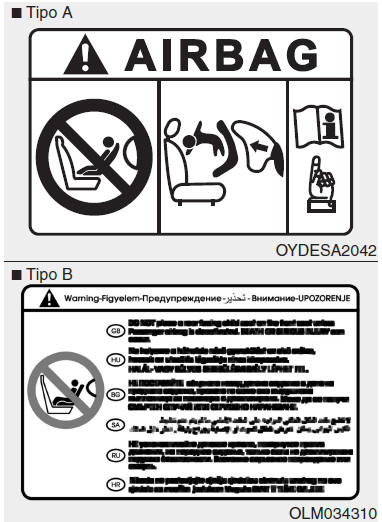
Never install child restraint systems on the front passenger seat Never place a rear-facing child seat on the front passenger seat.
The airbag deployment would strike the rear of the child seat, causing serious, even fatal, injuries.
Also, do not place a forward-facing child seat on the front passenger seat either. Deployment of the front airbag could cause serious, even fatal, injuries to the child.
If the vehicle is equipped with a front passenger airbag ON/OFF switch, you can turn the airbag on or off as needed.
WARNING
- Extreme danger! Do not use a rear-facing child seat on a seat protected by an airbag in front of it.
- Never place child restraint systems on the front passenger seat.
Deployment of the front airbag could cause serious, even fatal, injuries.
Deployment of the side or curtain airbag could cause serious, even fatal, injuries due to the inflation impact.
Test yourself
A quick Kia Picanto JA quiz: every answer comes with an explanation and a link to the manual page.