Winter Driving
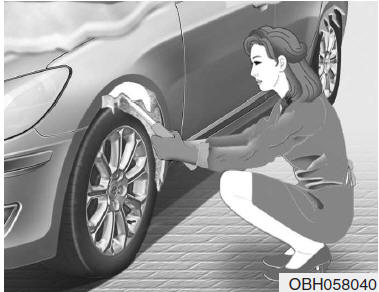
The harsh conditions of winter cause increased wear and other problems. To limit winter driving problems, follow these tips:
Snow-covered or icy road surface When driving the vehicle in deep snow, snow tyres or snow chains may be necessary. If snow tyres are used, choose tyres of the same size and type as those fitted to the vehicle. Failure to observe these instructions may compromise vehicle safety and handling. In addition, high-speed driving, rapid acceleration, sudden braking and sharp cornering are potentially very dangerous.
When decelerating, use engine braking as much as possible.
Applying the brakes suddenly on snow-covered or icy roads may cause skidding. Keep an adequate distance between your vehicle and the vehicles ahead. Also, apply the brake pedal gently. Note that fitting snow chains to the tyres provides greater traction, but does not prevent lateral skidding.
NOTE The use of snow chains is prohibited in some countries. Check local regulations before fitting snow chains.
Snow tyres If snow tyres are fitted to your vehicle, make sure they are radial tyres with the same size and load index as the original tyres.
Fit snow tyres on all four wheels to balance the vehicle's behaviour in all weather conditions. Remember that the traction provided by snow tyres on dry roads may not equal that of the tyres originally fitted to the vehicle. Drive with caution even when roads are clear.
Consult your tyre dealer for the recommended maximum speed.
WARNING - Snow tyre size Snow tyres must be the same size and type as the original tyres fitted to the vehicle. Otherwise, vehicle safety and handling may be adversely affected.Do not fit studded tyres without first checking that their use is permitted by local laws.
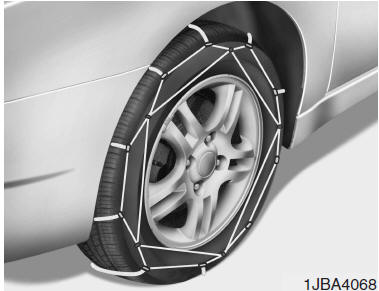
Snow chains Since the sidewalls of radial tyres are thinner, they may be damaged when some types of snow chains are fitted. It is therefore advisable to use snow tyres instead of snow chains. Do not fit snow chains to vehicles equipped with aluminium alloy wheels, as they may be damaged by the chains. If chains must be fitted, make sure their thickness is less than 12 mm. Any damage to the vehicle caused by unsuitable snow chains is not covered by the vehicle warranty.
Fit snow chains to the front tyres only.
WARNING
- Make sure the snow chains are of the correct size and type for the tyres.
Incorrect snow chains may cause damage to the bodywork and suspension, which may not be covered by the manufacturer's warranty.
In addition, the snow chain closing hooks may be damaged by contact with vehicle components, causing the chains to come off the wheels. Make sure that the snow chains are certified SAE class "S".Fitting snow chains When fitting snow chains, follow the chain manufacturer's instructions and tighten them as firmly as possible. Drive slowly with the chains fitted. If you hear the chains striking the bodywork or chassis, stop and tighten them. If the problem persists, reduce speed until it stops.
Remove the snow chains as soon as possible, once the road is clear of snow.
WARNING - Fitting snow chains When fitting snow chains, park the vehicle on a level surface away from the flow of traffic. Switch on the hazard warning lights and, if available, place the warning triangle behind the vehicle. Before fitting the chains, always place the gear selector in P (Park), apply the parking brake and switch off the engine.WARNING - Snow chains
- Using chains may adversely affect the vehicle's handling.
- Do not exceed a speed of 30 km/h or, if lower, the maximum speed recommended by the chain manufacturer.
- Drive carefully and avoid potholes, bumps, tight curves and other road irregularities that could cause the vehicle to bounce.
- Avoid sharp steering maneuvers or braking with the wheels locked.
WARNING
- Chains of the wrong size or incorrectly installed may damage the brake lines, suspension and wheels.
- Stop and retighten the chains when you hear them striking the vehicle.
Use of high-quality ethylene glycol-based coolant
The vehicle is delivered with the cooling system filled with high-quality ethylene glycol-based coolant. This is the only type of coolant that may be used, because it helps prevent corrosion of the cooling system, lubricates the water pump and prevents freezing. Replace or top up the coolant as specified in the scheduled maintenance in chapter 7. Before the winter period, have the coolant checked to make sure the freezing point is suitable for the temperatures expected in winter.
Battery and cable check
Winter places additional strain on the battery system. Visually inspect the battery and cables as described in chapter 7. The battery charge level can be checked at an authorized Kia dealer or a service station.
Possible replacement with winter-grade oil
In some climates it is advisable to use a low-viscosity winter-grade oil during the winter period. For the relevant specifications, see chapter 8. If in doubt about the type of oil to use, contact an authorized Kia dealer.
Spark plug and ignition system check
Inspect the spark plugs as described in chapter 7 and replace them if necessary.
Also check all ignition cables and components to make sure they show no cracks, signs of wear or damage.
To prevent door locks from freezing
To prevent door locks from freezing, apply de-icer fluid or glycerin into the lock.
If a lock is frozen over, remove the ice by spraying a suitable de-icer fluid. If the lock is frozen internally, it may be necessary to thaw it using a heated key. Handle the heated key with care to avoid burns.
Use of antifreeze approved for windshield washer fluid To prevent the water in the washer system from freezing, add a suitable antifreeze solution to the washer fluid, following the instructions on the container. Windshield washer antifreeze is available from authorized Kia dealers and most car accessory outlets. Do not use engine coolant or other types of antifreeze, as they may damage the paintwork.
Precautions against parking brake sticking Under some conditions the parking brake may freeze in the applied position. This is more likely if snow or ice has built up near the rear brakes, or if the brakes are wet. If there is a risk of the parking brake freezing, apply it only temporarily while moving the selector lever to P (automatic transmission) or engaging first or reverse gear (manual transmission), and place suitable wheel chocks against the rear wheels to hold them. Then release the parking brake.
Preventing snow and ice build-up under the vehicle Under some conditions, snow and ice can build up under the fenders and obstruct the steering. If the vehicle is used in severe conditions where this may occur, periodically check the underbody of the vehicle to make sure that the movement of the front wheels and steering components is not obstructed.
Carrying emergency equipment Depending on how severe the weather conditions are in the areas where the vehicle is used, it may be necessary to carry suitable safety equipment. This equipment may include snow chains, tow straps or chains, warning lights, emergency flashing lights, sand, a shovel, jump leads, a windshield scraper, gloves, waterproof sheets, overalls, blankets, etc.
Test yourself
A quick Kia Picanto JA quiz: every answer comes with an explanation and a link to the manual page.