Clutch and Brake
Description and Operation
Description
Brakes
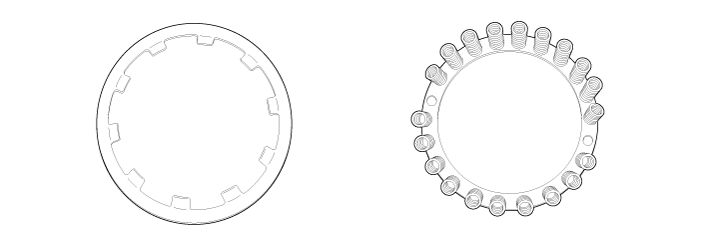
The automatic transaxle (A4CF1) uses the low & reverse brake and the second brake. The low & reverse brake is held by the low & reverse ring gear and the overdrive planetary carrier.
The overdrive sun gear is held to the transaxle case by the second brake.
Grab
Multi-plate clutches and a one-way clutch are used as the transmission units.
The retainer of each clutch consists of precision sheet metal parts to achieve performance and light weight.
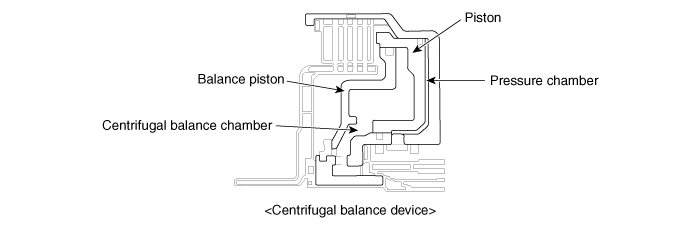
A hydraulic centrifugal oil pressure balance device is located inside the clutch assembly.
Normally, the oil remaining in the piston pressure chamber pushes the piston by centrifugal force. To prevent the piston from being pushed, oil is filled between the piston and the return spring retainer, so centrifugal force occurs and both forces are offset, so the piston does not move. As a result, durability and shift performance are improved.
Low Clutch
The driving force of the input shaft is transmitted to the low clutch sun gear.
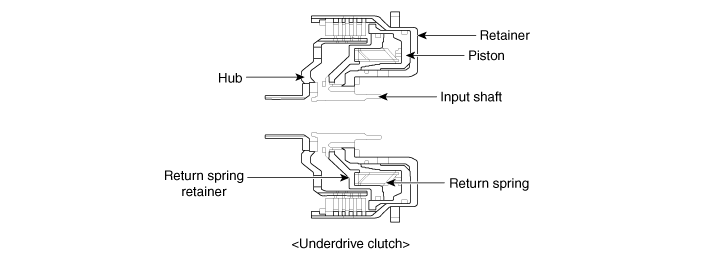
The working oil pressure in the low clutch components acts between the piston and the retainer and pushes the piston to the clutch discs to transmit the driving force from the retainer to the hub.
Reverse Clutch and Overdrive Clutch
The reverse clutch transmits the driving force of the input shaft to the reverse sun gear.
The overdrive clutch transmits the driving force of the input shaft to the overdrive planetary carrier and the low & reverse ring gear.
The working oil pressure of the reverse clutch is applied between the reverse clutch retainer and the reverse clutch piston, and the entire overdrive clutch torque is transmitted through the hub splines.
Test yourself
A quick Kia Rio YB quiz: every answer comes with an explanation and a link to the manual page.