Auxiliary burner
Performance
The auxiliary burner is intended to improve the warm-up of the vehicle cabin.
Heating is provided by a diesel-fuelled burner that heats the engine coolant circuit water. The burner is located in the engine compartment.
Functional description
The auxiliary heating request is managed by the BSI.
The auxiliary burner is controlled by the engine ECU.
The BSI generates the auxiliary heating request based on the following information:
- engine coolant temperature,
- Outside temperature (from the passenger-side mirror sensor).
Activation and switch-off of the burner are defined by the following 2 thresholds:
- activation threshold: engine coolant temperature < 74 °C,
- switch-off threshold: engine coolant temperature > 79 °C.
Note: The burner is only controlled if the outside temperature is below 10 °C.
The BSI then sends the auxiliary burner request to the engine ECU via the CAN network, according to the table below:

Note: The engine running signal is required to activate the burner.
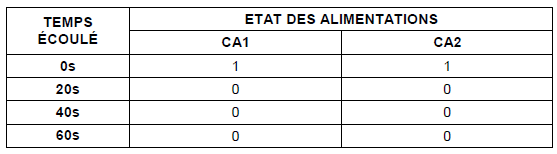
Switching off the engine immediately cuts outputs CA1 and CA2.
Activation / switch-off delay of the auxiliary burner
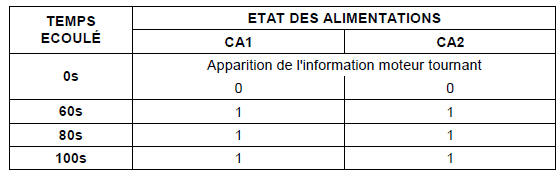
Activating the burner
Note: When the engine running signal appears, the BSI starts a 60-second stabilisation delay before the heater resistors are switched on.
Switching off the burner
Burner switch-off in case of impact
In the event of an impact, the airbag ECU sends the BSI a signal that a pyrotechnic element has been triggered.
The BSI immediately cuts the power supply to the burner.
Degraded modes
The degraded modes for the auxiliary burner are as follows:
- Outside temperature information invalid: activation of the auxiliary burner is prohibited,
- Engine coolant temperature information invalid: the auxiliary burner activation request is based on the outside temperature information, simulating an engine coolant temperature of 40 °C.
Test yourself
A quick Citroen C5 Aircross quiz: every answer comes with an explanation and a link to the manual page.