Driving Recommendations in Adverse Weather Conditions
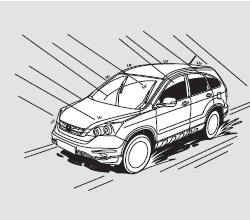
Driving in rain, heavy fog, or snow requires special driving skills due to reduced tire traction and reduced visibility. Keep your vehicle in good operating condition at all times, and be especially careful when driving in bad weather. Do not use the cruise control system (on some models) in adverse weather conditions.
Driving Characteristics – Always drive at a lower speed than you would on a dry road surface. Remember that the vehicle's response to control inputs is slower, even if the road only appears slightly wet. Apply all vehicle controls smoothly. On wet or slippery road surfaces, a sudden jerk of the steering wheel or careless pressing of the brake pedal may result in loss of vehicle control. At the beginning of a trip, until you have fully adapted to the changed weather conditions, exercise increased caution. This precaution is especially important when driving during snowfall. Keep in mind that many useful driving skills on snow-covered roads are forgotten over the summer period. Therefore, you may need some time to regain these skills.
Be extremely careful when driving in rain after a long period of good, sunny weather. The first rains after a dry spell make the road surface especially slippery.
Visibility – For road safety in any weather conditions, it is very important to have good visibility in all directions and to be visible to other drivers. These requirements are more difficult to meet in adverse weather conditions. To make your vehicle more visible to other road users in daylight, turn on the headlights.
Regularly check the operation of the windshield wiper and washer.
Always maintain the required fluid level in the washer reservoir. Use the recommended fluid. Replace the wiper blades if they no longer clean the windshield properly or leave streaks on it. To prevent moisture condensation on the inner surfaces of the glass, use the air blower for the glass and, when necessary, turn on the air conditioner (see page 239).
Tire Traction – Regularly check the tire air pressure and the degree of tread wear.
Both factors are important for preventing tire hydroplaning (loss of wheel traction on a road surface covered with a layer of water).
To ensure better vehicle handling when winter arrives, install a full set of winter tires on the vehicle.
While driving, constantly monitor road conditions, which may change from time to time. Wet leaves on the road can be as slippery as ice. A seemingly clean and dry road surface may be icy in places. Driving conditions can be very dangerous when the outside air temperature stays around 0 degrees Celsius. Puddled sections of road may alternate with icy sections, resulting in unpredictable and sudden changes in tire traction.
Be careful when downshifting. On surfaces with low traction, you may momentarily lock the drive wheels, which may cause a skid.
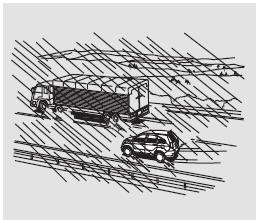
Exercise particular caution when overtaking, and when being overtaken by other vehicles. Spray of water and dirt from the wheels of a truck being passed may sharply reduce visibility through the windshield, and gusts of crosswind may cause loss of vehicle control.
CAUTION: Do not drive through deep puddles. Driving through a deep puddle may cause engine damage, electrical system failure, and other malfunctions.
Test yourself
A quick Honda CR-V quiz: every answer comes with an explanation and a link to the manual page.