Timing Belt Drive - Inspection
TIMING BELT SPROCKETS, TENSIONER PULLEY AND IDLER PULLEY
1. Inspect the camshaft sprocket, crankshaft sprocket, timing belt tensioner pulley and idler pulley for excessive wear, cracks and damage. Replace if necessary.
2. Check the timing belt tensioner pulley and idler pulley for smooth and free rotation, and make sure there is no excessive play or abnormal noise when rotating. Replace if necessary.
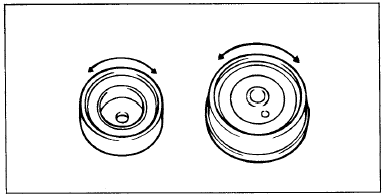
3. Replace the pulley if signs of grease leakage from its bearing are found.
TIMING BELT
1. Check the belt for contamination or oil deposits. Replace if necessary.
Minor belt contamination can be removed with a dry cloth or wiping paper.
Do not use solvents for this purpose.
2. During engine overhaul or belt tension adjustment, inspect the belt carefully. If any of the defects listed below are found, replace the belt with a new one.
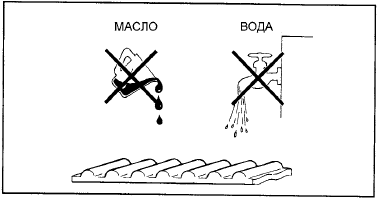
• Do not bend, twist, stretch or turn the timing belt inside out.
• Do not allow the timing belt to contact oil, coolant, water or steam.
| Description | Condition |
| 1. Hardening of the back side of the belt. | The back side of the belt becomes glossy and so hard that a fingernail pressed against it leaves no mark.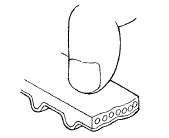 |
| 2. Cracks on the back side of the belt. | 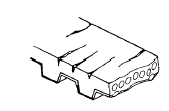 |
| 3. Cracks or separation of the tooth facing material. | 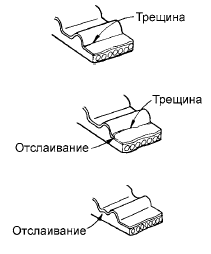 |
| 4. Severe tooth wear (early stage). The facing on the load side of the belt teeth is worn (fabric of the facing is fuzzy, rubber base is exposed, belt color has faded to colorless, fabric structure is unclear). |
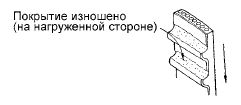 |
| 5. Severe tooth wear (final stage). The facing on the load side of the belt teeth is completely worn and the rubber base is exposed (tooth thickness is reduced). |
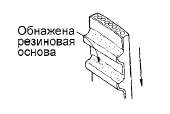 |
| 6. Cracks at the tooth base. | 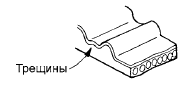 |
| 7. Missing tooth. | 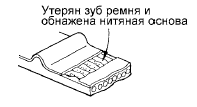 |
| 8. Side face of the belt is worn. | 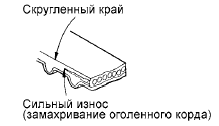 |
| 9. Cracks on the side face of the belt. | 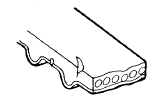 |
Test yourself
A quick Hyundai Elantra CN7 quiz: every answer comes with an explanation and a link to the manual page.