Engine Control System/Fuel System
AGM Battery Description and Operation
In this manual: Engine Control System/Fuel System
~2min read
Description
[AGM Battery for ISG System] The AGM battery is used when the vehicle's electrical load is particularly high, depending on the equipment and requirements. AGM stands for Absorbent Glass Mat; it is a fiberglass absorbent mat. AGM batteries are installed on models with high electrical loads/consumers. The constantly growing energy demand of modern automotive electrical systems requires even more powerful battery solutions. Energy consumption is significant even when the vehicle is parked. The slightly higher price compared to a battery of similar size is fully offset by the following advantages:- Significantly longer service life
- Improved starting reliability at low temperatures
- 100% maintenance-free
- Low risk in the event of an accident (reduced environmental risk)
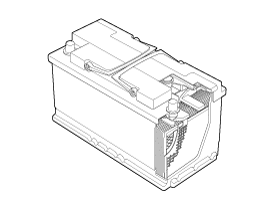
Check Battery Condition
Battery condition cannot be determined solely on the basis of state of charge. If a faulty battery is suspected, check the battery condition with a battery tester and determine the cause using the module test. If the battery charge is low, recharge the battery.AGM Battery Charging
The battery can be charged with chargers at a constant charging voltage of 14.8 V. If possible, the battery temperature during charging should be within 20 °C (68°F) and 30 °C. Only chargers with voltage limitation (IU or WU curve) or chargers with an IUoU curve that have a trickle function may be used. IU or WU charging technique: Optimized charging voltage for IU or WU: 14.7 V (at 20–30 °C / 68–86°F) for approximately 24 hours. Minimum charging voltage at 20 °C: 14.4 V. Maximum charging voltage at 20 °C: 14.8 V. The recommended charging current is 10% of capacity (e.g., 60 Ah : 10 = charging current 6.0 A).Test yourself
A quick Hyundai Kona quiz: every answer comes with an explanation and a link to the manual page.
Was this page helpful?