Engine Mechanical System

Thermostat

17steps
~102min
4/5difficulty
Done 0 of 17

Components and Component Location

Components
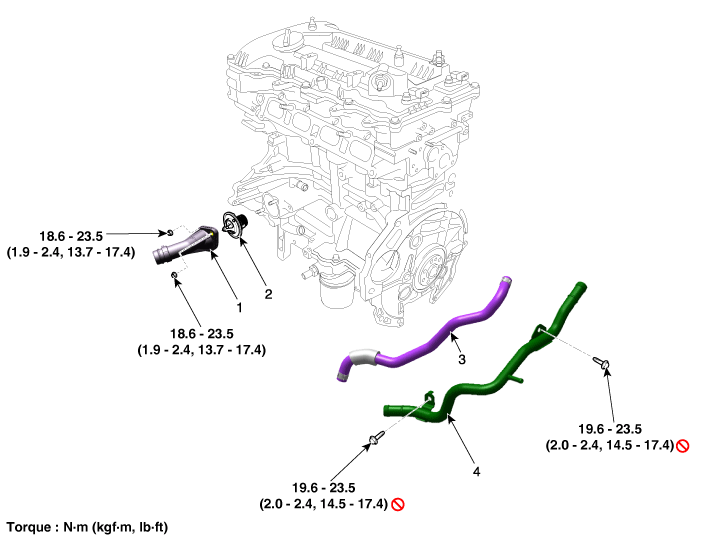
1. Water Inlet Pipe
2. Thermostat
3. Bypass Hose
4. Heater Pipe and Hose Assembly

Repair Procedures

Removal and Installation

Thermostat

  1. Drain the engine coolant.

    (Refer to Cooling System - "Engine Coolant")

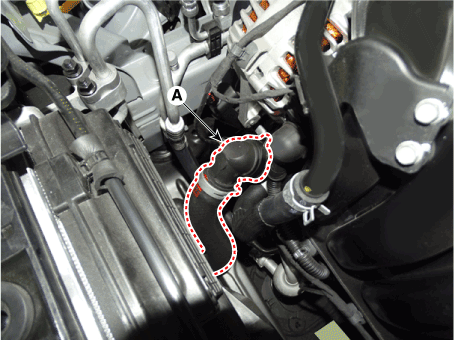
  2. Disconnect the lower radiator hose (A).
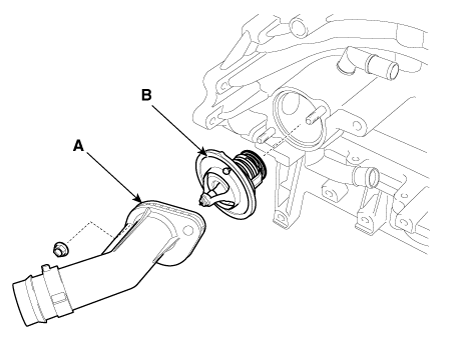
  3. Remove the water inlet connection (A) and the thermostat (B).

    Tightening torque: 18.6–23.5 N·m (1.9–2.4 kgf·m, 13.7–17.4 ft-lbf)
  4. Install in the reverse order of removal.

  5. Fill the engine coolant.

  6. Start the engine and check for leaks.

  7. Recheck the coolant level.

Heater pipe

  1. Remove the intake manifold.

    (See Intake and Exhaust System - Intake Manifold)

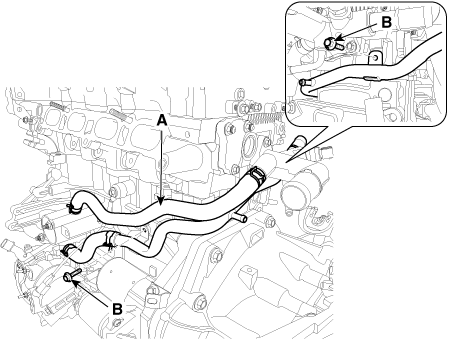
  2. Remove the bypass hose (A).

  3. Remove the heater pipe bolts (B) and remove the heater pipe.

    Tightening torque: 19.6–23.5 N·m (2.0–2.4 kgf·m, 14.5–17.4 ft-lbf)
  4. Install in the reverse order of removal.

  5. Fill the engine coolant.

    (Refer to Cooling System - "Engine Coolant")

  6. Start the engine and check for leaks.

  7. Recheck the coolant level.

Inspection

Thermostat

  1. Immerse the thermostat in water heated above 95 °C, then heat for at least 3 minutes to check valve lift.
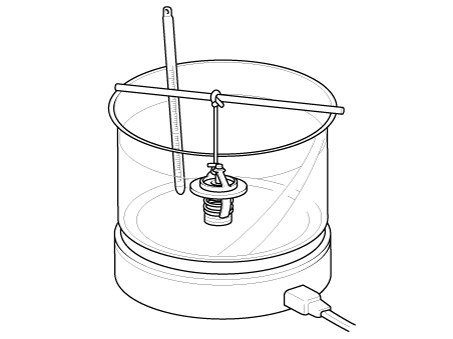
  2. Check the valve opening temperature.

    If the valve opening temperature does not meet the specification, replace the thermostat.

    Valve opening temperature:

    88 ± 1,5 °C

    Fully open temperature: 100 °C

  3. Check the valve lift.

    If the valve lift is not as specified, replace the thermostat.

    Valve lift: 8 mm (0.3 in) or more at 100 °C

Troubleshooting

Troubleshooting

Symptoms Possible Causes Remedy
Coolant Leakage
  • From the thermostat gasket

Check the mounting nuts
  • Check the tightening torque of the mounting nuts

  • Tighten the bolts and check for leaks again.

Check the gasket for damage
  • Check the gasket or seal for damage

  • Replace the gaskets and reuse the thermostat.

Excessive cooling
  • Low heater performance (blows cold air)

  • Temperature gauge reads "LOW"

Visually check after removing the radiator cap.
  • Insufficient coolant or leakage.

  • After adding coolant, repeat the check.

KDS Check and Engine Start
  • Check the diagnostic trouble codes

  • Check the operation of the fan motor as the temperature changes.

  • Check the connection of the fan clutch or fan motor.

※ If the fan clutch is always engaged, noise will be heard at idle.
  • Check the engine coolant temperature sensor, wiring and connectors.

  • Check the fan motor, relay and connector.

  • Replace the components.

Remove the thermostat and inspect.
  • Check for dust or debris in the thermostat valve.

  • Check the thermostat seating.

  • Clean the thermostat valve and reuse the thermostat.

  • Replace the thermostat if it does not operate properly.

Overheating
  • Engine Overheated

  • Temperature gauge indicates "HI".

Visually check after removing the radiator cap.
  • Insufficient coolant or leakage.

    ※ Be careful when removing the radiator cap from an overheated vehicle.

  • Check for air in the cooling system.

  • After adding coolant, repeat the check.

  • Check the cylinder head gasket for damage and the tightening torque of the mounting bolts.

KDS Check and Engine Start
  • Check the diagnostic trouble codes

  • Check the operation of the fan motor as the temperature changes.

  • Check whether the fan clutch is slipping.

  • Check the water pump for proper fit or damaged impeller.

  • Check the engine coolant temperature sensor, wiring and connectors.

  • Check the fan motor, relay and connector.

  • Replace the fan clutch if it does not operate properly.

  • Replace the water pump if it does not operate properly.

Immerse the thermostat in boiling water and inspect it.
  • After removing the thermostat, check its operation.

※ Make sure the thermostat opens at the valve opening temperature.
  • Replace the thermostat if it does not operate properly.

Test yourself

A quick Kia Optima DL3 quiz: every answer comes with an explanation and a link to the manual page.