Child seats
The electronic steering lock on the Lexus GS (L10) is another security feature that prevents unauthorized vehicle movement. It engages automatically when the engine is switched off and unlocks only when the key is correctly recognized. This chapter explains how it works, typical malfunctions, and the correct procedure for starting problems. This keeps your Lexus reliably protected against theft and ready for use.
Lexus strongly recommends the use of child seats.
Important Points
Studies have shown that a child seat installed on the rear seat is much safer than one installed on the front seat.
- Select a child seat that is suitable for the vehicle and appropriate for the child's size and age.
- Follow the child seat manufacturer's instructions when installing the seat.
This owner's manual contains general installation instructions.
- If your country has regulations regarding child seats, contact a Lexus dealer or authorized service center, or another qualified repair shop with the appropriate equipment, for installation.
- Lexus recommends the use of child seats that comply with ECE Regulation No. 44.
Types of Child Seats
Under ECE Regulation No. 44, child seats are divided into the following 5 groups:
Group 0: Up to 10 kg (0 - 9 months)
Group 0+: Up to 13 kg (0 - 2 years)
Group I: 9 to 18 kg (9 months - 4 years)
Group II: 15 to 25 kg (4 years - 7 years)
Group III: 22 to 36 kg (6 years - 12 years)
This owner's manual describes the following 3 popular types of child seats that can be secured with the seat belt:
Baby seat

Complies with Groups 0 and 0+ of ECE Regulation No. 44
Junior seat
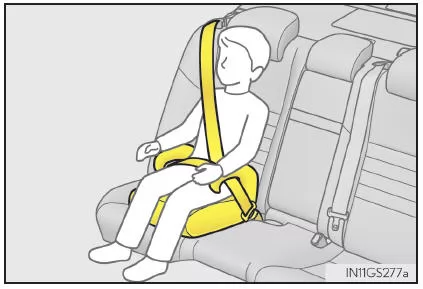
Complies with Groups II and III of ECE Regulation No. 44
Child seat
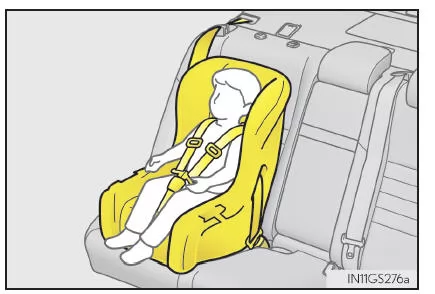
Complies with Groups 0+ and I of ECE Regulation No. 44
Child Seats Suitable for Each Seating Position
The following table shows which child seat is suitable for each seating position.
GS350/GS200t
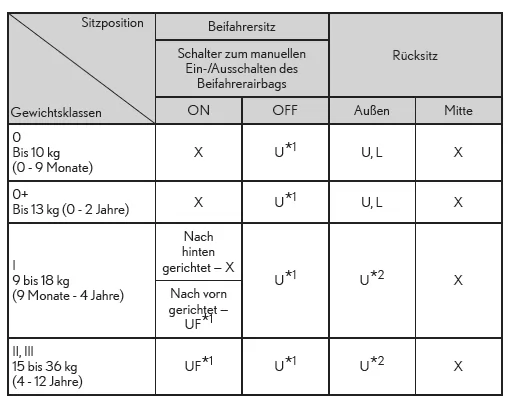
Meaning of the abbreviations in the table above:
U: Suitable for "universal" child seats approved for this weight group.
UF: Suitable for forward-facing "universal" child seats approved for this weight group.
L: Suitable for the child seats listed in the child seat list.
X: Seating position not suitable for children in this weight group.
*1: Set the front seatback to the most upright position. Slide the front seat fully rearward.
If the head restraint interferes with the child seat and can be removed, remove it.
If the front passenger seat is equipped with a height adjuster, set it to the highest position.
Do the following:
- When installing a child seat with a base, if the backrest interferes with the child seat locking onto the base, recline the backrest rearward until there is no longer any interference.
- When installing a forward-facing child seat: If there is a gap between the child seat and the backrest, recline the backrest rearward until the child seat is fully against the backrest.
If the shoulder belt anchor is located in front of the child seat belt guide, move the seat cushion forward.
- When installing a junior seat: If the child in your child seat is in a very upright position, adjust the backrest to the most comfortable position.
If the shoulder belt anchor is located in front of the child seat belt guide, move the seat cushion forward.
*2: If the head restraint interferes with the child seat and can be removed, remove it.
Child seats listed in the table may not be available outside the EU.
Other child seats that differ from those listed in the table may be used, but their suitability must be carefully confirmed with the child seat manufacturer and checked with the child seat seller.
GS F
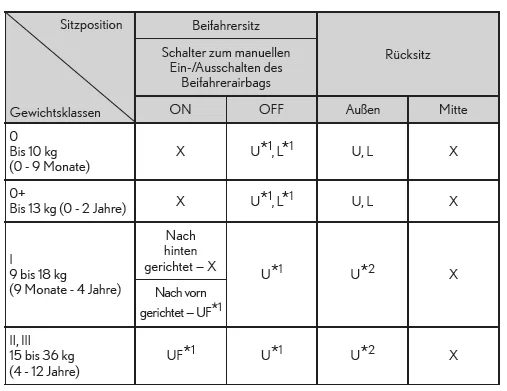
Meaning of the abbreviations in the table above:
U: Suitable for "universal" child seats approved for this weight group.
UF: Suitable for forward-facing "universal" child seats approved for this weight group.
L: Suitable for the child seats listed in the child seat list.
X: Seating position not suitable for children in this weight group.
*1: Set the front seatback to the most upright position. Slide the front seat fully rearward.
If the front passenger seat is equipped with a height adjuster, set it to the highest position.
Do the following:
- When installing a child seat with a base, if the backrest interferes with the child seat locking onto the base, recline the backrest rearward until there is no longer any interference.
- When installing a forward-facing child seat: If there is a gap between the child seat and the backrest, recline the backrest rearward until the child seat is fully against the backrest. If the shoulder belt anchor is located in front of the child seat belt guide, move the seat cushion forward.
- When installing a junior seat: If the child in your child seat is in a very upright position, adjust the backrest to the most comfortable position.
If the shoulder belt anchor is located in front of the child seat belt guide, move the seat cushion forward.
*2: If the head restraint interferes with the child seat and can be removed, remove it.
Child seats listed in the table may not be available outside the EU.
Other child seats that differ from those listed in the table may be used, but their suitability must be carefully confirmed with the child seat manufacturer and checked with the child seat seller.
List of child restraints
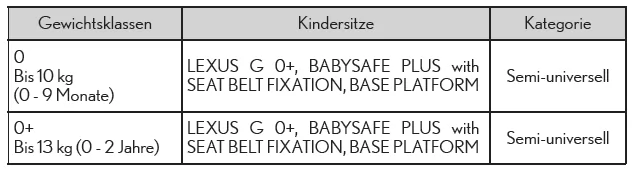
Child restraints suitable for the various seating positions (with ISOFIX anchorages)
The following table shows which child seat is suitable for each seating position.
GS350/GS200t
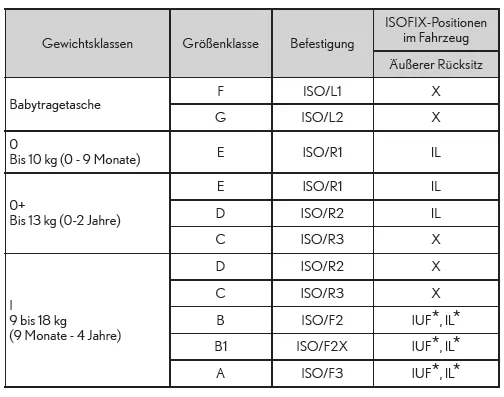
Meaning of the abbreviations in the table above: IUF: Suitable for forward-facing ISOFIX "universal" child restraints approved for this weight class.
IL: Suitable for the child restraints listed in the ISOFIX child restraint list.
When using a "LEXUS MINI" or "LEXUS MIDI" child seat, set the support leg and ISOFIX anchorages as follows:
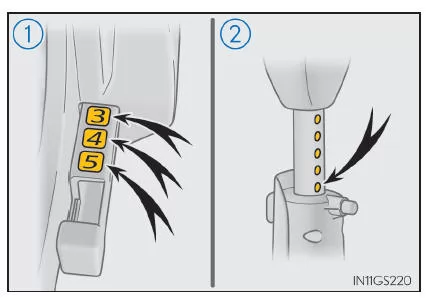
- Lock the ISOFIX anchorages at the position where numbers 3, 4 and 5 are visible.
- Lock the support leg at the position where the 5th hole is visible.
X: ISOFIX position not suitable for ISOFIX child restraints of this weight class and/or size class.
*: If the head restraint interferes with the child seat and can be removed, remove it.
Child seats listed in the table may not be available outside the EU.
Other child seats that differ from those listed in the table may be used, but their suitability must be carefully confirmed with the child seat manufacturer and checked with the child seat seller.
GS F
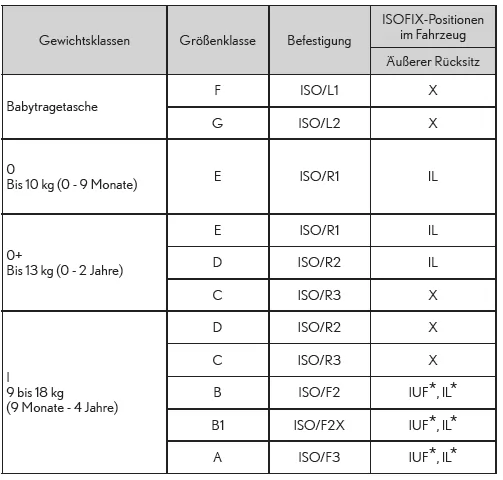
Meaning of the abbreviations in the table above: IUF: Suitable for forward-facing ISOFIX "universal" child restraints approved for this weight class.
IL: Suitable for the child restraints listed in the ISOFIX child restraint list.
When using a "LEXUS MINI" or "LEXUS MIDI" child seat, set the support leg and ISOFIX anchorages as follows:
- Lock the ISOFIX anchorages at the position where numbers 4 and 5 are visible.
- Lock the support leg at the position where the 4th hole is visible.

X: ISOFIX position not suitable for ISOFIX child restraints of this weight class and/or size class.
*: If the head restraint interferes with the child seat and can be removed, remove it.
Child seats listed in the table may not be available outside the EU.
Other child seats that differ from those listed in the table may be used, but their suitability must be carefully confirmed with the child seat manufacturer and checked with the child seat seller.
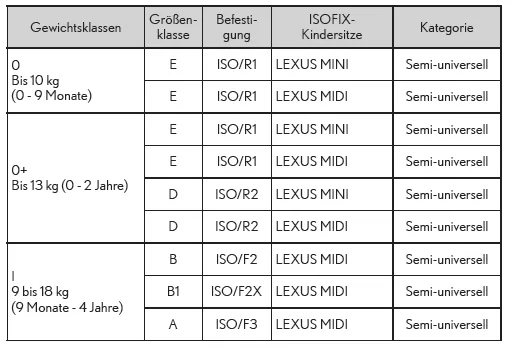
List of ISOFIX child restraint systems
When installing a child seat on the front passenger seat
If you need to install a child seat on the front passenger seat, make the following adjustments:
- Set the backrest to the most upright position
- Set the seat cushion to the highest position
- Slide the seat cushion all the way to the rear

Selecting a suitable child seat
- Use a child seat suitable for the child's age and size until the child is big enough to wear the seat belt correctly.
- If the child is too large for a child seat, the child must sit on one of the rear seats and be secured with the seat belt.
WARNING
Using a child seat
Using a child seat that is not suitable for the vehicle may not provide adequate protection for the infant or child. Death or serious injury may result (in the event of sudden braking or an accident).
Precautions when using child seats
- For effective protection in an accident or sudden braking, a child must be properly secured in the vehicle with the seat belt or a child seat, according to age and size. Holding a child in your arms is by no means a substitute for a child seat. In an accident, the child could be thrown against the windshield or become trapped between you and vehicle parts.
- Lexus strongly recommends using a suitable child seat designed for the child's height and weight and installed on the rear seat. Accident statistics show that children properly secured on the rear seats are better protected than those on the front seat.
- Never use a rear-facing child seat on the front passenger seat when the manual on/off switch for the front passenger airbag is set to "ON". In an accident, the child may suffer death or serious injury due to the force of the suddenly inflating front passenger airbag.
- In exceptional cases, a forward-facing child seat may be installed on the front passenger seat. Child seats that require a top tether cannot be installed on the front passenger seat, because there is no tether anchor for this strap. Set the backrest as upright as possible and always slide the seat as far back as possible, because the front passenger airbag develops considerable speed and force when it deploys. Otherwise, the child could suffer serious or fatal injuries.
- Never allow a child to lean their head or any part of their body against the door or the area of the seat, the A- and C-pillars or the roof frame, where the SRS side and SRS curtain/shoulder airbags deploy, even if the child is secured in a child seat. This is dangerous, because the child could suffer death or serious injury when an SRS side or curtain/shoulder airbag deploys.
- When installing the child seat, follow all child seat manufacturer's instructions and make sure it is properly secured. If it is not properly secured, there is a risk of fatal or serious injury to the child in the event of sudden braking, a sudden evasive maneuver, or an accident.
WARNING
When children are in the vehicle
Do not allow children to play with the seat belts. If the seat belt wraps around a child's neck, suffocation or other serious or fatal injuries may result.
If this happens and the buckle cannot be released, cut the belt with scissors.
When the child seat is not in use
- The child seat must always be properly secured to the seat, even when it is not in use. Never store the child seat unsecured in the passenger compartment.
- If the child seat must be removed, take it out of the vehicle or store it securely in the luggage compartment. If a head restraint was removed to install a child seat, always reinstall the head restraint before driving. This prevents occupant injuries in the event of sudden braking, a sudden evasive maneuver, or an accident.
Lexus strongly recommends using child seats in the GS (4th gen) to maximize the safety of young passengers. This manual provides comprehensive information on selection and correct use, so that parents and caregivers can ensure the best protection for children. Particular focus is placed on secure installation on the rear seat.
The clear presentation of child seat types and their suitability by weight class makes selection considerably easier. This makes the Lexus GS the ideal choice for families who do not want to compromise on safety.
Test yourself
A quick Lexus GS quiz: every answer comes with an explanation and a link to the manual page.