Tires
Tire care on the Lexus GS (4th generation) is essential for safety and tire life. This chapter describes checking tire wear, correctly rotating the wheels, and how the tire pressure monitoring system works. Illustrations make the information easier to understand. Special notes cover replacing tires and handling the TPMS. This keeps your Lexus GS performing its best on the road, whether you use summer or winter tires.
When replacing tires or rotating wheels, follow the maintenance schedule and tread wear.
Checking the tires
Check whether the tire wear indicators are visible on the tires.
Also check the tires for uneven wear, such as excessive tread wear on one side of the tread.
Check the condition and air pressure of the spare tire if it has not been rotated.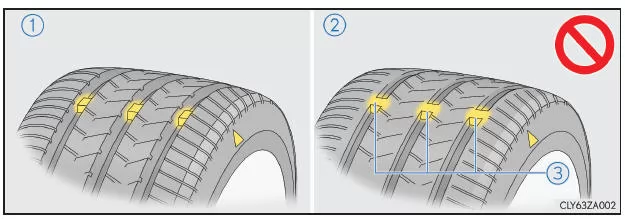
- New tread
- Worn tread
- Tire wear indicator
The position of the tire wear indicators is marked by "TWI" or "Δ", etc.
on the sidewalls of the tires.
Replace the tires if the tire wear indicators are visible.
Rotating the wheels
Rotate the wheels in the order shown.
- Vehicles with front and rear tires of the same size and without a full-size spare tire
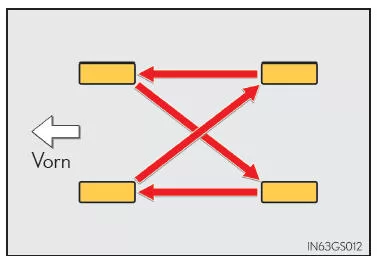
- Vehicles with front and rear tires of the same size and with a full-size spare tire

- Vehicles with front and rear tires of different sizes
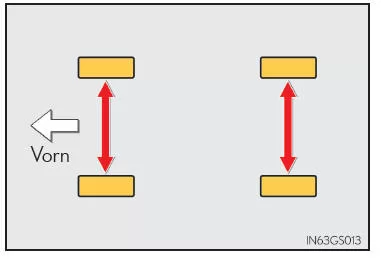
To wear the tires evenly and extend their service life, Lexus recommends rotating the wheels approximately every 10,000 km (6,000 miles) for two-wheel-drive models, or every 5,000 km (3,000 miles) for all-wheel-drive models.
After rotating the wheels, do not forget to initialize the tire pressure warning system. (Vehicles with tire pressure warning system)
Tire pressure monitoring system (if equipped)
Your vehicle is equipped with a tire pressure monitoring system that uses special valves and transmitters to detect low tire pressure before serious problems occur.
Vehicles without tire pressure monitoringIf the tire pressure drops below a certain value, the driver is alerted by a warning light.
Vehicles with tire pressure monitoring- If the tire pressure drops below a certain value, the driver is alerted by a display message and a warning light.
- The tire pressure detected by the tire pressure monitoring system can be displayed on the multi-information display.
The illustration shown is only an example and may differ from the actual display on the multi-information display.
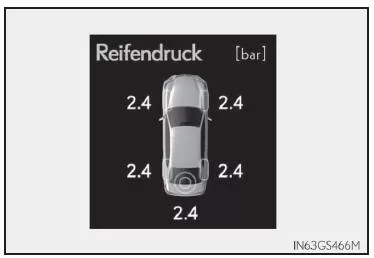
Installing the TPMS valves and transmitters
When tires or wheels are replaced, the tire pressure monitoring system valves and transmitters must also be installed.
After installing new tire pressure monitoring system valves and transmitters, new ID codes must be registered in the tire pressure monitoring system computer, and the system must be initialized. Have the ID codes of the tire pressure monitoring system valves and transmitters registered by a Lexus dealer or authorized repairer, or another qualified shop with the proper equipment.
Initializing the tire pressure monitoring system
■ The tire pressure monitoring system must be initialized under the following conditions:
- After rotating the wheels.
- After changing the tire pressure, for example when changing the driving speed.
When the tire pressure monitoring system is initialized, the current tire pressure is set as the reference value.
■ To initialize the tire pressure monitoring system
- Park the vehicle in a safe place and turn the engine switch off.
Initialization cannot be performed while the vehicle is moving.
- Adjust the tire pressure to the value specified as the recommended tire pressure for cold tires.
Be sure to adjust the tire pressure to the value specified as the recommended tire pressure for cold tires. The tire pressure monitoring system operates based on this pressure value.
- Switch the engine switch to IGNITION ON mode.
- Press
 or
 on the instrument switch and select

- Press
 or
 on the instrument switch and select "Vehicle Settings". Then press
 .
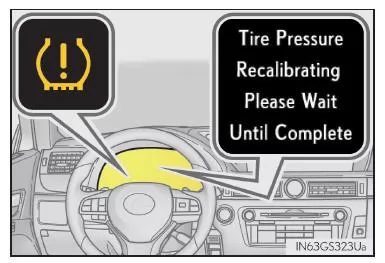
- Pressoron the meter switch and select "TPMS". Then press and holduntil a message is displayed.
The message is shown on the multi-information display, and the tire pressure warning light flashes slowly 3 times.
When the message disappears, initialization is complete.
Registering the ID codes
The tire pressure monitoring system valves and transmitters each have an individual ID code. When a tire pressure monitoring system valve or transmitter is replaced, the ID code must be registered. Have the ID code registered by a Lexus dealer or authorized repairer, or another qualified and properly equipped specialist workshop.
■When to replace the tires
Replace the tires in the following cases:
- Tread wear indicators become visible on a tire.
- Tire damage is evident, such as cuts, splits, or cracks that expose the cords, or bulges that indicate internal damage to the tire.
- A tire repeatedly goes flat, or cannot be repaired properly due to the size or location of the cut or damage.
If you are unsure, contact a Lexus dealer or authorized repairer, or another qualified and properly equipped specialist workshop.
■Replacing tires and wheels (vehicles with tire pressure monitoring system)
If the ID code of the tire pressure monitoring system valve and transmitter is not registered, the tire pressure monitoring system will not operate properly. After driving for about 10 minutes, the tire pressure warning light flashes for 1 minute and then stays on, indicating a system malfunction.
■ Tire service life
Any tire older than 6 years must be inspected by a qualified technician, even if it has been used rarely or never and no damage is visible.
■ Routine tire pressure checks
The tire pressure monitoring system does not replace routine tire pressure checks.
Check the tire pressure as part of your daily routine vehicle checks.
■ When rotating the tires (vehicles with tire pressure monitoring system and tire pressure display function)
Make sure the engine switch is off. If the tires are rotated while the engine switch is in IGNITION ON mode, the tire position information will not be updated.
If this happens by mistake, either turn the engine switch off and then to IGNITION ON mode, or initialize the system after making sure the tire pressure is set correctly.
■ Low-profile tires (except 225/50R17 tires)
In general, low-profile tires wear somewhat faster and have slightly less grip on snow and/or ice than conventional tires. On snowy and/or icy roads, use winter tires or snow chains. Drive carefully and adjust your speed to road and weather conditions.
■When the tread depth of winter tires is less than 4 mm
The tires no longer provide winter performance.
■ Situations in which the tire pressure monitoring system may not operate properly (vehicles with tire pressure monitoring system)
- In the following cases, the tire pressure monitoring system may not operate properly.
*: GS350/GS200t with normal spare tire only
- Performance may be affected in the following situations.
Vehicles with tire pressure display function: If the tire position information is not displayed correctly due to radio conditions, the display can be corrected by driving and changing the radio conditions.
- When the vehicle is parked, the time required for the warning to start or stop may be longer.
- If the tire pressure drops rapidly, such as from a blowout, the warning may not function.
■ Performing initialization (vehicles with tire pressure monitoring system)
- Always perform initialization after adjusting the tire pressure.
Also make sure the tires are cold before performing initialization or adjusting the tire pressure.
- If you turn off the engine switch by mistake during initialization, you do not need to restart initialization manually, as it will begin again automatically the next time the engine switch is set to IGNITION ON mode.
- If you perform initialization by mistake when it is not required, set the tire pressure to the specified cold tire value and perform initialization again.
■Tire pressure monitoring system warning performance (if equipped)
The tire pressure monitoring system warning depends on the conditions under which the system was initialized. For this reason, the system may issue a warning even if the tire pressure has not reached its lower limit, or when the tire pressure is higher than the pressure set at the time the system was initialized.
■If the tire pressure warning system initialization fails (vehicles with tire pressure warning system)
Initialization can be completed in a few minutes. However, in the following cases the settings will not be stored and the system will not operate properly.
If repeated attempts to store the tire pressure settings are unsuccessful, have the vehicle inspected by a Lexus dealer or repairer, or another qualified and properly equipped professional workshop.
- The initialization message is not shown on the Multi-Information Display when initialization is performed.
- After the initialization procedure, the tire pressure warning light flashes for 1 minute after 20 minutes of driving, and then remains on continuously.
■ Storing ID codes (vehicles with tire pressure warning system)
The ID codes of the valves and transmitters of the tire pressure warning system for two wheel sets can be stored.
The ID codes do not need to be stored when switching between summer tires and winter tires, provided that the ID codes of the summer and winter tires have already been stored beforehand.
For information on changing ID codes, contact a Lexus dealer or repairer, or another qualified and properly equipped professional workshop.
WARNING
■ Tire inspection and replacement
Observe the following precautions to avoid accidents.
Otherwise, damage to drivetrain components and hazardous handling characteristics may result, which could lead to accidents causing death or serious injury.
- Never use tires of different brands, models or tread patterns at the same time. Also never use tires with significantly different wear at the same time.
- Never use tire sizes other than those recommended by Lexus.
- Never use tires of different constructions (radial, bias and belted) at the same time.
- Never use summer, all-season and winter tires at the same time.
- Do not use tires that have already been used on another vehicle. Do not use tires if you do not know how they were used previously.
- Vehicles with spare wheel (GS350/GS200t with temporary spare and GS F): Do not tow a trailer when a spare wheel is mounted on your vehicle.
- Vehicles with tire repair kit: Do not tow a trailer or provide towing assistance when a tire repaired with the tire repair kit is mounted. The load on the tire could cause unexpected damage to it.
■ When initializing the tire pressure warning system (vehicles with tire pressure warning system) Only perform tire pressure initialization after first adjusting the tire pressure to the specified value. Otherwise, the tire pressure warning light may not come on when the tire pressure is low, or it may come on when the tire pressure is normal.
■ Precautions regarding interference with electronic devices (vehicles with tire pressure warning system and tire pressure display function)
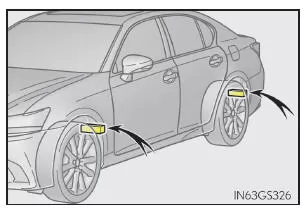
- Persons with implanted cardiac pacemakers, cardiac resynchronization therapy pacemakers or implantable cardioverter defibrillators should keep a distance of 450 mm from the transmitters of the tire pressure warning system. The radio waves may interfere with the operation of these devices.
- Users of electrical medical devices other than implantable cardiac pacemakers, cardiac resynchronization therapy pacemakers or implantable cardioverter defibrillators should check with the manufacturer of their device regarding its operation under the influence of radio waves. Radio waves may have unexpected effects on the operation of such medical devices.
■ Repairing or replacing tires, wheels, tire pressure warning system valves and transmitters, and valve caps (vehicles with tire pressure warning system)
- To remove or install wheels, tires, or tire pressure warning system valves and transmitters, contact a Lexus dealer or repairer, or another qualified and properly equipped professional workshop, as the valves and transmitters of the tire pressure warning system can be damaged if handled improperly.
- Remember to reinstall the valve caps. If the valve caps are missing, water may enter the tire pressure warning system valves and cause them to seize.
- Replace valve caps only with valve caps of the specified type. Otherwise, the caps may seize.
■ How to prevent damage to the tire pressure warning system valves and transmitters (vehicles with tire pressure warning system)
If a tire is repaired using liquid sealant, the tire pressure warning system valve and transmitter may become inoperative. If you use liquid sealant, contact a Lexus dealer or repairer, or another qualified and properly equipped professional workshop as soon as possible. Make sure that after using liquid sealant for a tire repair or tire replacement, the tire pressure warning system valve and transmitter are also replaced.
■ Driving on poor roads
Be especially careful when driving on unpaved roads and roads with potholes.
These conditions may cause tire pressure loss, reducing the tires' cushioning ability. Driving on poor roads may also damage the tires themselves as well as the wheels and vehicle body.
■ Low-profile tires (except 225/50R17 tires)
Low-profile tires may damage the wheel rim more than usual when subjected to hard impacts from road damage, etc. Therefore, observe the following:
- Maintain correct tire pressure. Tires with insufficient pressure may be damaged more easily.
- Avoid potholes, uneven paved roads, curbs, and other road hazards. Otherwise, severe tire and wheel damage may result.
■If tire pressure drops while driving
Do not continue driving, as this may cause severe damage to the tires and/or wheels.
Tire inspection and tire pressure management in the Lexus GS GRL1 contribute significantly to safety and driving stability. The Tire Pressure Warning System monitors tire pressure continuously and warns of deviations so the driver can respond in time. Even tire wear and optimal handling are supported by rotating the tires regularly.
These well-designed systems show how the fourth-generation Lexus GS combines the highest level of safety and comfort in a sport sedan.
Test yourself
A quick Lexus GS quiz: every answer comes with an explanation and a link to the manual page.