Tire service life
Tires last longer when inflated to the correct pressure and driven in a moderate style.
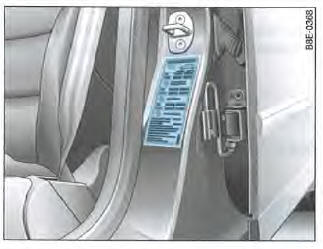
Fig. 227 Tire pressure table on door pillar
- Check the tire inflation pressure at least once a month.
- Always check the inflation pressure on cold tires. Do not let down hot tires whose pressure is higher.
- If the vehicle is heavily loaded, adjust the inflation pressure accordingly.
- Avoid cornering at high speed and accelerating abruptly.
- Check from time to time that tires are not wearing unevenly.
Tire pressure, vehicle load and tire pressure monitoring system*
Adjust the tyre inflation pressure to the vehicle load.
We recommend observing the tire pressure for the maximum vehicle load. The inflation pressures are indicated on the sticker on the door pillar => fig. 227.
However, if you wish to drive in greater comfort, you may observe the inflation pressure specified for normal vehicle load (2 to 3 persons) when the vehicle is normally loaded. If you wish to drive with maximum load, you must increase the tire pressure to the maximum specified value.
Inflation pressure that is too low or too high reduces tire service life and has a negative effect on the vehicle's handling.
Tire pressure is particularly important at high speeds. Check the tire pressure at least once a month and before setting off on a long trip.
At the same time, do not forget to check the inflation pressure of the spare wheel*:
- Spare wheel: always inflate it to the maximum pressure specified for the vehicle's wheels.
- Temporary spare tire*: The specified inflation pressure is shown on the sidewall of the tire.
The system only monitors the tire pressures you have stored. The system cannot detect the vehicle load.
The tire pressure monitoring system* cannot perform its function if you store the tire pressures for a normal vehicle load while driving with the maximum permitted load. The tire pressure must be stored in the tire pressure monitoring system according to the load.
On vehicles with full wheel covers, the dust caps are replaced by valve extensions. To check and correct the tire inflation pressure, it is not necessary to unscrew the valve extensions.
Driving style
Cornering at high speed, hard acceleration and sudden braking (tire squeal) cause tires to wear more quickly.
Wheel balancing
The wheels of a new vehicle are balanced. During use of the vehicle, an imbalance may develop due to various influences, which results in steering instability.
Since an imbalance also causes increased wear of the steering, wheel suspension and tires, it is recommended to have the wheels rebalanced. In addition, a wheel must be rebalanced after fitting a new tire and after every tire repair.
Incorrect wheel alignment
Incorrect chassis adjustment not only causes increased tire wear but also compromises the road safety of the vehicle. If the tires show abnormal wear, have the wheel alignment checked by an Audi workshop.
CAUTION!
- Always adjust the tire pressure to the vehicle's current load.
- At high cruising speeds, a tire with too low a pressure is subjected to greater flexing work. It therefore overheats. This can cause the tread to separate and even the tire to burst - risk of accident!
 Environment
Tire inflation pressure that is too low increases fuel consumption.
Note
Tire inflation pressure that is too low or too high considerably shortens tire life and adversely affects the vehicle's handling.
Test yourself
A quick Audi A4 quiz: every answer comes with an explanation and a link to the manual page.