Brake System
Brake Booster
Your vehicle is equipped with a brake booster system, which is automatically adjusted during normal operation.
If the brake booster loses power due to the engine stopping unexpectedly or for any other reason, you can still stop the vehicle by applying more force to the brake pedal than usual. However, the braking distance will increase.
If the engine is not running, braking force will decrease with each press of the brake pedal. Do not pump the brake pedal if the brake booster function is impaired.
Pumping the brake pedal should only be done when necessary to maintain control of the vehicle on a slippery road.
WARNING
- Brake System
• Do not rest your foot on the brake pedal while driving. This will cause excessive brake heating, excessive wear of the brake pads and linings, and increased braking distance.
• On long and steep downhill grades, shift to a lower gear and avoid prolonged brake application. Prolonged brake use will overheat the brakes and may eventually cause a temporary loss of braking force.
• Wet brakes may cause the vehicle to brake unevenly and pull to one side. To check the effect on braking performance, perform a light test stop. Always check the brakes this way after driving through deep water. To dry the brakes, lightly apply them while driving forward at a safe speed until normal braking performance is restored.
• Always check the positions of the brake pedal and accelerator pedal before starting to move.
If you do not check the positions of the accelerator and brake pedals before starting to move, you may press the accelerator pedal instead of the brake pedal. This may result in a serious accident.
In Case of Brake Failure
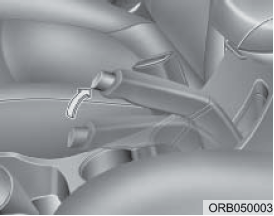
If the service brakes fail while the vehicle is moving, you can make an emergency stop using the parking brake. However, the braking distance will be much longer than normal.
WARNING
- Parking Brake
Applying the parking brake at normal driving speed may cause sudden loss of vehicle control. If you must use the parking brake to stop the vehicle, be extremely careful.
Brake Pad Wear Indicator
Your vehicle is equipped with disc brakes.
When the brake pads are worn and need replacement, a high-pitched warning sound will be heard from the front or rear brakes (if equipped). This sound may come and go, or it may sound each time the brake pedal is pressed.
Note that under certain road or climate conditions, the first brake application (or light braking) may produce a squealing noise. This is normal and is not a sign of brake malfunction.
Test yourself
A quick Hyundai Solaris quiz: every answer comes with an explanation and a link to the manual page.