Exterior Care
Exterior General Precautions
It is very important to follow the label instructions when using any chemical cleaner or polish. Read all warnings and cautions that appear on the label.
Complete the Maintenance
Washing
To protect your vehicle's paint from rust and wear, wash it thoroughly with warm or cold water at least once a month.
If you use your vehicle for off-road driving, wash it after every off-road trip. Pay special attention to removing any accumulation of salt, mud, dirt and other foreign materials. Make sure the drain holes in the lower edges of the doors and the rocker panels remain open and clean.
Insects, resin, tree sap, bird droppings, industrial contamination and similar deposits may damage your vehicle's finish if not removed promptly.
Even a quick wash with plain water cannot completely remove all these deposits. Use a mild soap that is safe for painted surfaces.
After washing, rinse the vehicle thoroughly with warm or cold water. Do not allow soap to dry on the finish.
NOTICE
High-pressure water may damage the front and rear cameras, sensors, vehicle trim, boots (rubber or plastic covers) or connectors.
WARNING
After washing the vehicle, dry the brakes by lightly depressing them while maintaining a slow forward speed.
NOTICE
- Do not use strong soap, chemical cleaners or hot water, and do not wash the vehicle in direct sunlight or when the body is warm.
- To avoid damaging plastic parts, do not clean them with chemical solvents or strong cleaners.
NOTICE
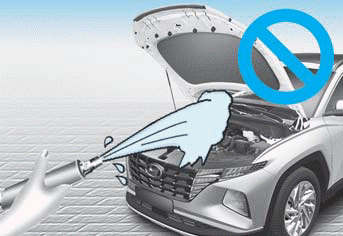
- Washing the engine compartment with water, including high-pressure water washing, may cause electrical circuits located in the engine compartment to malfunction.
- Never allow water or other liquids to contact electrical/electronic components inside the vehicle to avoid damage.
NOTICE
Matte paint finish (if equipped)
To avoid damaging the matte finish:
- Do not drive a vehicle with an automatic transmission through a rotating-brush car wash.
- Avoid using a steam cleaner. High-temperature steam may leave spots that are difficult to remove.
- Use a soft cloth (such as a microfiber towel or sponge) when washing the vehicle and dry it with a microfiber towel. When washing the vehicle by hand, do not use a cleaner containing wax. If the vehicle surface is very dirty (sand, mud, dust, contaminants, etc.), rinse the surface with water before washing the vehicle.
Waxing
A good layer of wax helps protect the paint from contaminants.
Wax the vehicle when water no longer beads on the paint.
Always wash and dry the vehicle before waxing. Use a quality liquid or paste wax and follow the manufacturer's instructions. Apply wax to all metal trim to protect it and maintain its shine.
Removing oil, resin and similar materials with a spot remover usually strips wax from the finish. Be sure to re-wax these areas, even if the rest of the vehicle does not yet need waxing.
NOTICE
- Do not wipe dust and dirt from the body with a dry cloth to avoid scratching the finish.
- Do not use steel wool, abrasive cleaners or strong detergents containing highly alkaline or caustic substances on chrome or anodized aluminum parts to prevent discoloration or damage to the finish.
NOTICE
Matte paint (if equipped) Do not use polishing compounds such as cleaner, abrasive or polish. If wax is applied, remove it immediately with a silicone remover. If any resin or tar contamination is on the surface, use a resin remover to clean it.
Be careful not to apply too much pressure to the painted area.
Complete the Repair of Damage
Deep scratches or stone chips on the painted surface must be repaired promptly. Exposed metal will rust quickly and may result in costly major repairs.
Information
If your vehicle is damaged and requires any repair or replacement of metal, make sure the body shop applies anti-corrosion materials to the repaired or replaced parts.
NOTICE
Matte paint (if equipped) It is not possible to blend or spot-paint only the damaged area. The entire panel must be repainted as necessary. If the vehicle is damaged and requires painting, contact an authorized HYUNDAI dealer.
Bright Metal Care
- To remove road tar and insects, use a tar remover, not a scraper or other sharp object.
- To protect bright metal surfaces from corrosion, apply a coat of chrome wax or preservative and rub to a high shine.
- In winter or in coastal areas, cover bright metal parts with a thicker coat of wax or preservative. If necessary, coat parts with non-aggressive petroleum jelly or another protective compound.
Underbody Maintenance
Corrosive materials used for ice and snow removal and dust control may collect on the underbody. If these materials are not removed, rust may develop more quickly on underbody components such as fuel lines, frame, floor pan and exhaust system, even though they are treated with corrosion protection.
Thoroughly wash the underbody and wheel wells with warm or cold water once a month, after driving on unpaved roads, and at the end of each winter. Pay special attention to these areas, because it is difficult to see all the dirt and mud. Road dirt that is not removed can do more harm than good by holding moisture. The lower edges of doors, rocker panels and frame members have drain holes that must not be allowed to clog with dirt. Water trapped in these areas can cause rust.
Aluminum Wheel Care
Aluminum wheels are covered with a clear protective coating.
NOTICE
- Do not use abrasive cleaners, polishing compounds, solvents or wire brushes on aluminum wheels.
- Use only mild soap or neutral detergent and rinse thoroughly with water. Also clean the wheels after driving on salted roads.
- Do not wash the wheels with high-speed car wash brushes.
- Do not use cleaning agents containing acidic or alkaline detergents.
Corrosion Protection
Protecting Your Vehicle from Corrosion
Using the most advanced design and construction methods to fight corrosion, HYUNDAI produces vehicles of the highest quality. However, this is only part of the job. To achieve long-term corrosion resistance, your vehicle requires cooperation and assistance from the owner.
Common Causes of Corrosion
The most common causes of corrosion on your vehicle are:
- Road salt, dirt and moisture are allowed to accumulate under the vehicle.
- Removal of paint or protective coating by stones, gravel and abrasion, and minor scratches and dents that leave bare metal exposed to corrosion.
High-Corrosion Areas
If you live in an area where your vehicle is regularly exposed to aggressive materials, corrosion protection is especially important. Some common causes of accelerated corrosion are road salts, dust-control chemicals, ocean air, and industrial pollution.
Moisture Causes Corrosion
Moisture causes corrosion and creates conditions in which corrosion is most likely to occur. For example, corrosion is accelerated by high humidity, especially when the temperature is just above freezing. Under these conditions, corrosive material remains in contact with the vehicle surface with moisture that evaporates slowly.
Mud is especially aggressive because it dries slowly and keeps moisture in contact with the vehicle. Although mud may appear dry, it can still hold moisture and promote corrosion.
High temperatures can also accelerate corrosion of parts that are not properly ventilated, so moisture cannot dissipate. For all these reasons, it is especially important to keep the vehicle clean and free of mud or accumulated foreign materials. This applies not only to visible surfaces but especially to the underside of the vehicle.
To help prevent corrosion
Keep your vehicle clean
The best way to prevent corrosion is to keep your vehicle clean and free of corrosive materials. Attention to the underbody of the vehicle is especially important.
- If you live in a high-corrosion area, where road salt is used, near the ocean, in areas with industrial pollution, acid rain, etc., you should take extra care to prevent corrosion. In winter, spray the underside of your vehicle at least once a month and be sure to thoroughly clean the underbody when winter is over.
- When cleaning under the vehicle, pay special attention to components behind the wheel arches and other areas hidden from view. Perform a thorough job. Simply dampening accumulated dirt rather than washing it away may accelerate corrosion rather than prevent it. High-pressure water and steam are especially effective at removing accumulated dirt and corrosive materials.
- When cleaning the lower door panels, rocker panels and frame members, make sure the drain holes remain open so moisture can escape and not become trapped inside, where it would accelerate corrosion.
Keep your garage dry
Do not park the vehicle in a damp or poorly ventilated garage. This creates a favorable environment for corrosion.
This is especially true if you wash the vehicle in a garage or drive it into a garage while it is still wet or covered with snow, ice or mud. Even a warm garage can promote corrosion unless it is well ventilated so moisture can dissipate.
Keep paint and finish in good condition
Scratches or chips in the finish should be touched up with touch-up paint as soon as possible to minimize the possibility of corrosion. If bare metal is visible, consult a qualified service technician and a body shop.
Bird droppings are very acidic and can damage painted surfaces in just a few hours. Always remove bird droppings as soon as possible.
Test yourself
A quick Hyundai Tucson LM quiz: every answer comes with an explanation and a link to the manual page.