All-Wheel Drive (AWD)
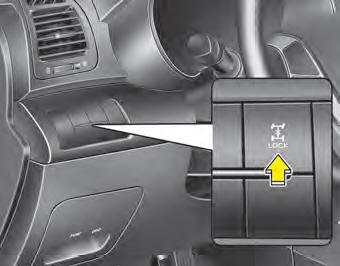
Engine power can be transmitted to all four wheels for maximum traction on the road. All-wheel drive is useful when additional traction is needed on the road, such as when driving on slippery, muddy, wet, or snow-covered roads. These vehicles are not designed for severe off-road use. Occasional off-road use, such as on maintained gravel roads and trails, is acceptable. When driving off-road, it is always important that the driver carefully reduces speed to a level that does not exceed the safe operating speed for those conditions.
In general, off-road conditions provide less traction and braking effectiveness than normal road conditions. The driver must be especially alert to avoid driving on slopes that tilt the vehicle in any direction.
These factors must be carefully considered when driving off-road.
Keeping the vehicle in contact with the road surface and under control in these conditions is always the responsibility of the driver for the safety of the driver and passengers.
WARNING - Off-Road Driving
This vehicle is designed primarily for on-road use, although it can be driven off-road. However, it is not designed for severe off-road conditions. Driving in conditions that exceed the intended design of the vehicle or the driver's experience level may result in serious injury or death.
WARNING
If the AWD system warning light (  ) is on, it means that
there is a malfunction in the all-wheel drive system. In this case, have the vehicle checked by an authorized Kia dealer as soon as possible.
Braking Effect on Sharp Turns
CAUTION - AWD When making a sharp turn on a paved road at low speed with AWD, steering will be difficult.
The braking effect on sharp turns is a unique characteristic of all-wheel drive vehicles, caused by the difference in rotation of the tires on all four wheels and the zero-degree alignment of the front wheels and suspension.
Sharp turns at low speeds should be made with caution.
Selecting the AWD Drive Mode
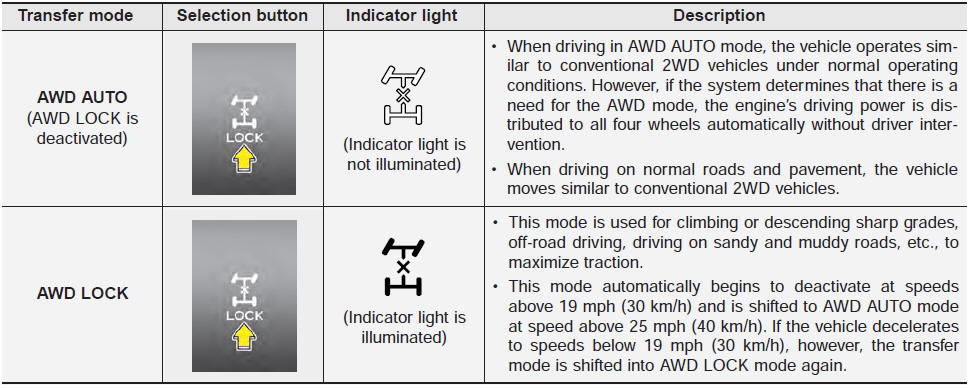
✽ NOTICE
- When driving on normal roads, turn off the AWD LOCK mode by pressing the AWD LOCK button (the indicator light goes off). Driving on normal roads with AWD LOCK mode engaged (especially when turning) may cause mechanical noise or vibration. The noise and vibration will disappear when AWD LOCK mode is deactivated. Some powertrain components may be damaged by prolonged driving with noise and vibration.
- When AWD LOCK mode is deactivated, a jolt may be felt when the drive power is transmitted entirely to the front wheels. This shock is not a mechanical failure.
Test yourself
A quick Kia Sorento Owner's Manual quiz: every answer comes with an explanation and a link to the manual page.