Driving in winter
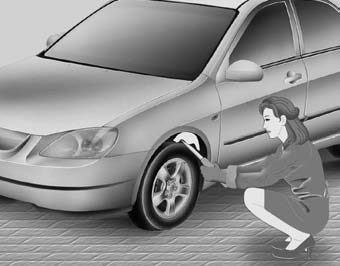
The severe driving conditions encountered in winter can cause premature wear and other problems. To minimize winter driving problems, follow these suggestions.
Snow and Ice
You may need winter tires to drive in deep snow.
If so, you must choose tires of the same size and type as the original equipment tires. Failing to do so may affect the vehicle's safety and handling. In addition, driving too fast, accelerating too quickly, braking suddenly and taking sharp corners can be dangerous.
When decelerating, use engine braking as much as possible. Sudden braking on snow or ice may cause skidding. Maintain an adequate distance between you and the vehicles ahead of and around you.
Finally, brake gently.
Winter Tires
If you install winter tires on your vehicle, make sure they are radial tires of the same size and load capacity as the original equipment tires. Install winter tires on all four wheels to balance handling in all weather conditions. Keep in mind that winter tires offer different traction on dry roads than original equipment tires. You should drive carefully even when roads are clear. Consult your tire dealer for a recommendation on maximum speeds.
WARNING - Winter Tire SizeWinter tires should be of the same size and type as the original equipment tires.
Otherwise, this could affect the vehicle's safety and handling quality.
Do not install studded tires unless local or provincial regulations permit them.
Ethylene Glycol Coolant
Your vehicle's cooling system is filled with high-quality ethylene glycol coolant. This is the only type of coolant that should be used because it protects against corrosion in the cooling system, lubricates the water pump, and protects against freezing. Make sure to replace or top up the coolant according to the maintenance schedule in Section 7. Before winter, have the coolant checked to ensure its freezing point is adequate for the temperatures expected in winter.
Check the Battery and Cables
Winter places an additional load on the electrical system. Visually inspect the battery and cables as recommended in Section 7. The battery's state of charge can be checked at an authorized Kia dealer or at a service station.
Switching to "Winter Oil"
In some climates, the use of a lower-viscosity "winter oil" is recommended. See the recommendations in Section 8. If you are unsure which type of oil to use, consult an authorized Kia dealer.
Check the Spark Plugs and Ignition System
Inspect the spark plugs as described in Section 7 and replace them if necessary.
Also check the ignition wires and components to make sure they are not cracked, worn, or damaged.
Preventing Locks from Freezing. To protect locks from freezing, spray an approved de-icer or glycerin into the keyhole. If the lock is covered with ice, spray some de-icer to melt the ice. If the lock is frozen inside, you may be able to thaw it with a heated key. Handle the heated key carefully to avoid injury.
Using an Approved Antifreeze Windshield Washer Fluid
To prevent the washer system from freezing, add an approved antifreeze windshield washer fluid according to the directions on the container. Antifreeze washer fluid is available from an authorized Kia dealer and most automotive parts retailers. Do not use engine coolant or other types of antifreeze, as they may damage the paint.
Do Not Let the Parking Brake Freeze
Under certain conditions, the parking brake may freeze in place. This can happen when snow or ice builds up around or near the rear brakes, or if the brakes are wet. If the parking brake may freeze, apply it only temporarily while shifting the gear selector into P (automatic transmission) or into 1st or Reverse (manual transmission), then chock the rear wheels to prevent the vehicle from rolling. Then release the parking brake.
Do Not Let Ice and Snow Build Up Under the Body Sills
Under certain conditions, ice and snow can accumulate in the wheel wells and interfere with steering. If you drive in severe winter weather where this may occur, check the underbody regularly and make sure the front wheels and steering move freely.
Emergency Equipment
Depending on the severity of the climate where you drive, you should keep emergency equipment in your vehicle. Items may include tow straps or chains, a flashlight, emergency flares, sand, a shovel, jumper cables, an ice scraper, gloves, a rag, coveralls, a blanket, etc.
Test yourself
A quick Kia Optima DL3 quiz: every answer comes with an explanation and a link to the manual page.