Child restraint systems
Toyota strongly recommends the use of child restraint systems.
Points to remember
Studies have shown that installing a child seat on a rear seat is much safer than installing it on the front passenger seat.
- Choose a child restraint system suitable for the vehicle as well as for the child's age and size.
- For installation details, follow the instructions supplied with the child restraint system.
Child restraint system types
Child restraint systems are classified into the following 5 groups in accordance with ECE R44:
Group 0: Up to 10 kg (0 - 9 months)
Group 0+: Up to 13 kg (0 - 2 years)
Group I: 9 to 18 kg (9 months - 4 years)
Group II: 15 to 25 kg (4 - 7 years)
Group III: 22 to 36 kg (6 - 12 years)
This Owner's and Service Manual describes the 3 most common types of child restraint systems that can be secured with the seat belts:
Infant seat
Corresponds to Groups 0 and 0+ of ECE R44
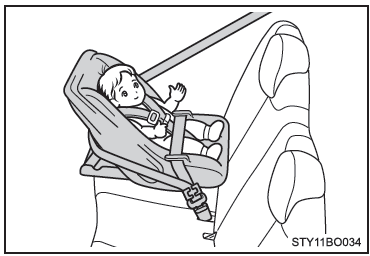
Child seat
Corresponds to Groups 0+ and I of ECE R44
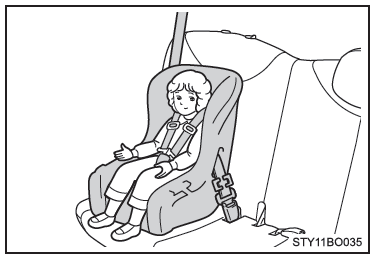
Junior seat
Corresponds to Groups II and III of ECE R44
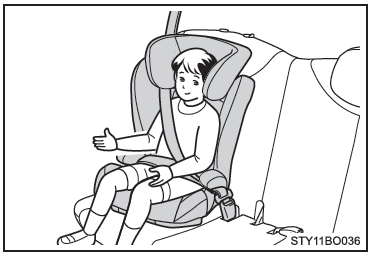
Compatibility of the child restraint system with different seat positions
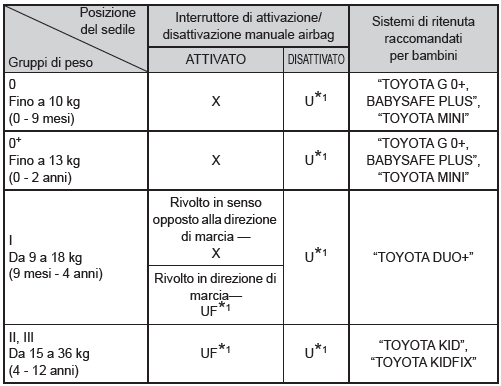
The information in the table shows the compatibility of your child restraint system with the different seat positions.
Front passenger seat
Rear seat
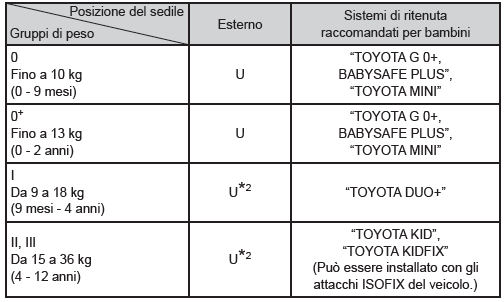
Meaning of the letters in the table above: U: Suitable for "universal" category child restraint systems approved for use in this weight group.
UF: Suitable for forward-facing child restraint systems of the "universal" category and approved for use in this weight group.
X: Seat position not suitable for children of this weight group.
*1: Move the front seatback to the most upright position possible.
If the front passenger seat has a height adjuster, it must be set to the highest position.
Follow the procedures below:
- To install an infant seat with base: If the infant seat interferes with the seatback when installing it onto the base, move the seatback rearward until the interference is resolved.
- To install a forward-facing child seat: If there is a gap between the child seat and the seatback, tilt the seatback rearward until the two are in full contact.
If the upper seat belt anchorage is in front of the child restraint seat belt guide, move the seat cushion fully forward.
*2: If the head restraint interferes with the child seat system and the head restraint can be removed, remove it.
- Adjust the front passenger seat so that it does not interfere with the child or the child restraint system.
- The child restraint systems listed in the table may not be available outside the EU area.
- Child restraint systems other than those listed in the table may also be used, but their compatibility must be carefully verified with the child restraint manufacturer and the seller of the seat.
Compatibility of the child restraint system with the different seat positions (with ISOFIX anchorages)
The information in the table shows the compatibility of your child restraint system with the different seat positions.
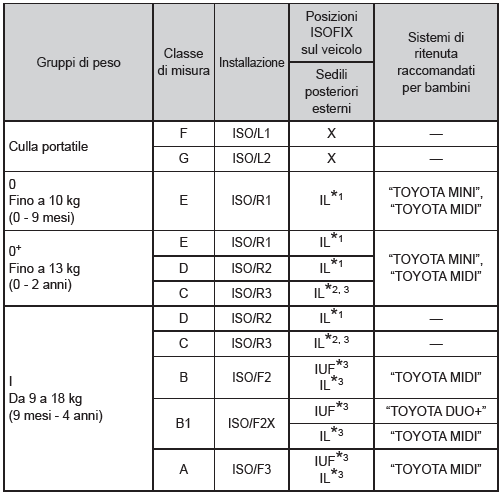
Meaning of the letters in the table above:
IUF: Suitable for forward-facing ISOFIX child restraint systems of the universal category and approved for use in this weight group.
IL: Suitable for ISOFIX child restraint systems of the "specific vehicle", "restricted use" or "semi-universal" categories and approved for use in this weight group.
X: ISOFIX position not suitable for ISOFIX child restraint systems of this weight group and/or size class.
*1: When installing the ISOFIX child restraint system on the rear seat, adjust the front seat to the 9th locking click counting from the most forward seat position.
*2: When installing the ISOFIX child restraint system on the rear seat, adjust the front seat to the 4th locking click counting from the most forward seat position.
*3: If the head restraint interferes with the child seat system and the head restraint can be removed, remove it.
If using a "TOYOTA MINI" or "TOYOTA MIDI" system, adjust the support leg and the ISOFIX connectors as follows:
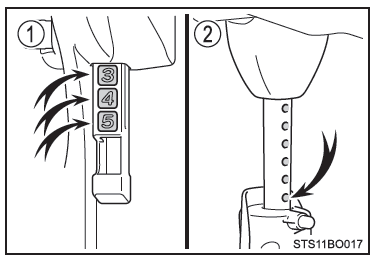
- Lock the ISOFIX connectors in the positions where numbers 3, 4 and 5 are visible.
- Lock the support leg in the position where the 6th hole is visible.
If using a "TOYOTA MINI" system, the front seat can be adjusted to the 12th locking click, counting from the most forward position.
If using a "TOYOTA DUO+" system, adjust it to the most reclined position.
- Adjust the front passenger seat so that it does not interfere with the child or the child restraint system.
- The child restraint systems listed in the table may not be available outside the EU area.
- Child restraint systems other than those listed in the table may also be used, but their compatibility must be carefully verified with the manufacturer and the seller of the seat.
■ When installing a child restraint system on the front passenger seat
When using a child restraint system on the front passenger seat, make the following adjustments:
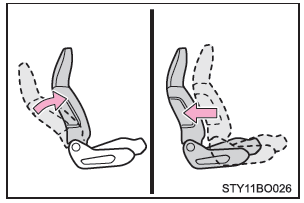
- Move the seatback to the most upright position possible.
If the child restraint system interferes with the seatback when fixing it to the base, move the seatback rearward until there is no longer any interference.
Move the seat as far rearward as possible.
If the seat cannot be installed correctly, for example because it contacts a protrusion in the cabin, adjust the front seat position and the angle of its seatback.
If the upper seat belt anchorage is in front of the child restraint seat belt guide, move the seat cushion fully forward.
■ Choosing a suitable child restraint system
- Use an appropriate child restraint system until the child is tall enough to wear the vehicle's seat belts correctly.
- If the child is too large for a child restraint system, have them sit on a rear seat and use the vehicle's seat belts.
WARNING
■ Using a child restraint system Using a child restraint system that is not suitable for the vehicle may not provide adequate protection for the infant or child. This could result in serious or fatal injury (in the event of a collision or sudden braking).
■ Child seat precautions
- For effective protection in the event of a collision or sudden braking, children must be adequately restrained using a seat belt or a restraint system chosen according to the child's age and weight. Holding the child on your lap cannot be considered a substitute for a child restraint system.
■ Child seat precautions
- Vehicles with SRS curtain airbags: Do not allow the child to rest their head or any part of their body against the doors or in the area of the seat, the front pillar, the rear pillar or the roof side rails containing the SRS side airbags or SRS curtain airbags, even when the child is seated in the appropriate restraint system. If the SRS side airbags and curtain airbags deploy, this is dangerous and the impact could cause serious or fatal injury to the child.
- Make sure you have followed the installation instructions provided by the child seat manufacturer and that the system is securely fastened. Incorrect installation could cause serious or fatal injury to the child in the event of sudden braking, sharp steering or an accident.
■ When children are on board the vehicle Do not allow children to play with the seat belt. If the belt wraps around a child's neck, the child could suffocate or suffer other serious injuries that could result in death.
If this happens and the buckle cannot be released, cut the belt with scissors.
■ When the child restraint system is not in use
- Keep the child restraint system properly secured to the seat, even when it is not in use. Do not store an unsecured child restraint system in the passenger compartment.
- If the child restraint system must be removed from its securing position, take it out of the vehicle or store it safely in the luggage compartment. If the head restraint was removed to install the child restraint system, always refit it before driving. This will prevent the head restraint from injuring vehicle occupants in the event of sudden braking, sharp steering or an accident.
Test yourself
A quick Toyota Aygo quiz: every answer comes with an explanation and a link to the manual page.