Engine compartment
1KR engine
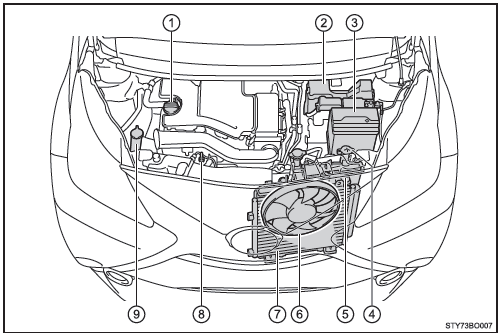
- Engine oil filler cap
- Fuse box
- Battery
- Engine coolant reservoir
- Radiator
- Electric cooling fan
- Condenser
- Engine oil level dipstick
- Windshield washer fluid reservoir
HM01 engine
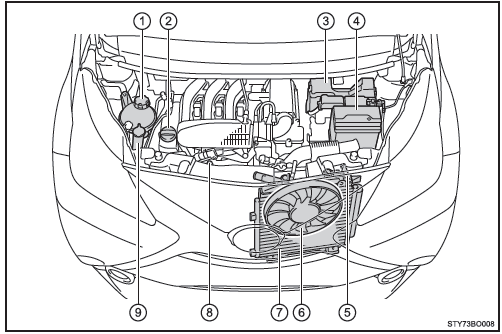
- Engine coolant reservoir
- Engine oil filler cap
- Fuse box
- Battery
- Radiator
- Electric cooling fan
- Condenser
- Engine oil level dipstick
- Windshield washer fluid reservoir
Engine oil
With the engine at operating temperature and switched off, check the oil level on the dipstick.
■ Checking engine oil
- Park the vehicle on level ground. After warming up and turning off the engine, wait more than 5 minutes for the oil to drain back into the oil pan.
- Pull out the dipstick while holding a rag under its end.
1KR engine
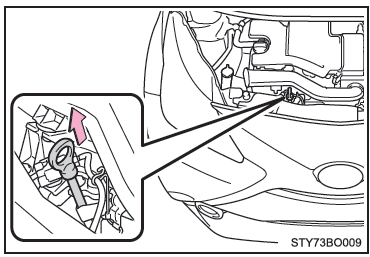
HM01 engine
- Clean the dipstick.
- Reinsert the dipstick fully.
- While holding a rag under its end, pull out the dipstick and check the oil level.
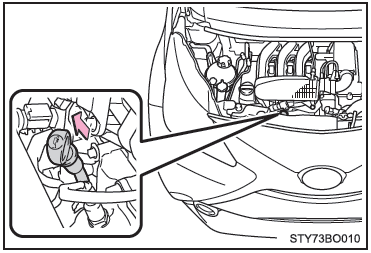
- Minimum
- Normal
- Excessive
1KR engine
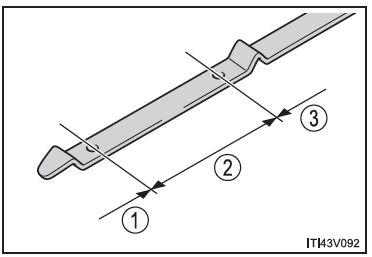
HM01 engine
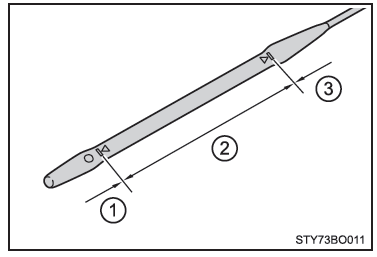
The shape of the dipstick may differ depending on the vehicle or engine type.
- Clean the dipstick and reinsert it fully.
■ Adding Engine Oil If the oil level is below or near the LOW mark, add engine oil of the same type as the oil already in the engine.
1KR engine
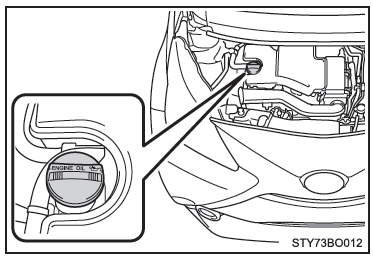
HM01 engine
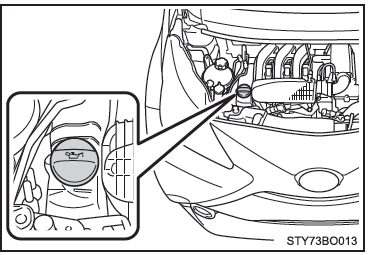
Be sure to check the oil type and prepare the necessary items before adding oil.
| Engine Oil Selection | |
| Items | Clean funnel |
- Remove the oil filler cap by turning it counterclockwise.
- Add engine oil slowly, checking the dipstick.
- Install the oil filler cap by turning it clockwise.
■ Engine Oil Consumption Some engine oil will be consumed while driving. In the following situations, oil consumption may increase, and it may be necessary to add engine oil between maintenance intervals.
- When the engine is new, for example right after purchasing the vehicle or after an engine replacement
- When low-quality oil or oil with an unsuitable viscosity is used
- When driving at high speeds, under heavy loads, or with frequent acceleration and deceleration
- When the engine is left idling for long periods or when driving frequently in heavy traffic
WARNING
■ Used Engine Oil
- Used engine oil contains potentially harmful contaminants that may cause skin disorders such as inflammation and skin cancer. Avoid prolonged and repeated skin contact. To remove used engine oil from your skin, wash thoroughly with soap and water.
- Dispose of used oil and filters safely and in an approved manner. Do not dispose of used oil or filters with household waste, into sewers, or onto the ground.
NOTE
■ To Prevent Serious Engine Damage Check the engine oil level regularly.
■ When Replacing Engine Oil
- Take care not to spill engine oil on vehicle components.
- Do not add too much oil, as this may damage the engine.
- Check the oil level on the dipstick each time you refill the vehicle.
- Make sure the engine oil filler cap is properly tightened.
Engine coolant
The coolant level is correct if, with the engine cold, it is between the "FULL", "F" or "MAX" and "LOW" or "MIN" marks on the reservoir.
1KR Engine (Type A)
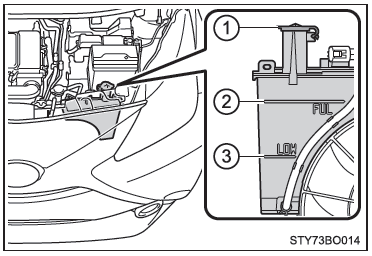
- Reservoir cap
- "FULL" mark
- "LOW" mark
If the level is at or below the "LOW" mark, add coolant until it reaches the "FULL" mark.
1KR Engine (Type B)
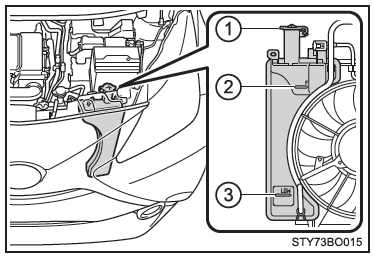
- Reservoir cap
- "F" mark
- "LOW" mark
If the level is at or below the "LOW" mark, add coolant until it reaches the "F" mark.
HM01 engine
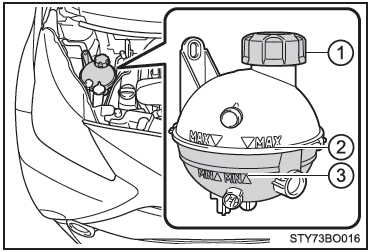
- Reservoir cap
- "MAX" mark
- "MIN" mark
If the level is at or below the "MIN" mark, add coolant until it reaches the "MAX" mark.
■ Coolant Selection
1KR engine
Use only "Toyota Super Long Life Coolant" or an ethylene glycol-based coolant that does not contain silicates, amines, nitrites or borates, using long-life hybrid organic acid technology.
"Toyota Super Long Life Coolant" is a mixture containing 50% coolant and 50% deionized water. (Minimum temperature: -35 °C)
(Minimum temperature: -35 °C)
HM01 engine
Use only "Toyota Genuine Premium Long Life Coolant 2WZ-TV" or an ethylene glycol-based coolant that does not contain silicates, amines, nitrites or borates, using long-life hybrid organic acid technology.
"Toyota Genuine Premium Long Life Coolant 2WZ-TV" is a mixture containing 50% coolant and 50% deionized water. (Minimum temperature: -38 °C) For more information about coolant, contact any Toyota authorized dealer or repairer, or another suitably qualified and equipped professional.
■ If the Coolant Level Drops Noticeably Soon After Adding Coolant Visually inspect the radiator, hoses, engine coolant reservoir cap, drain cock and water pump.
If you cannot locate the leak, any Toyota authorized dealer or repairer, or another suitably qualified and equipped professional, can pressure-test the cap and check the cooling system for leaks.
WARNING
■ When the Engine Is Hot Do not remove the radiator cap (1KR engine) or the engine coolant reservoir cap (HM01 engine).
The cooling system may be under pressure. Removing the cap may cause hot coolant to spray out, resulting in serious injury such as burns.
NOTE
■ When Adding Coolant Coolant is neither plain water nor antifreeze alone. To ensure proper lubrication, corrosion protection and cooling, use the correct mixture of water and antifreeze. Read the label on the antifreeze or coolant.
■ If Coolant Is Spilled Be sure to wipe it off with water to prevent damage to components and paint.
Radiator and condenser
Inspect the radiator and condenser and remove any foreign objects.
If any of the parts listed above are very dirty or you are not sure of their condition, have the vehicle inspected by any authorized Toyota dealer or repair shop, or another suitably qualified and equipped professional.
WARNING
■ When the engine is hot Do not touch the radiator or condenser as they may have reached extremely high temperatures and may cause serious injury, such as burns.
Battery
Check the battery as follows:
■ Warning symbols The meanings of each warning symbol on the top of the battery are as follows:
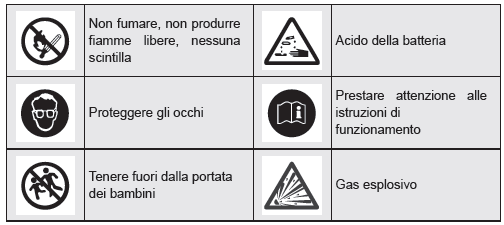
■ Battery exterior Check that the battery terminals are not corroded and that there are no loose connections, cracks, or loose terminals.
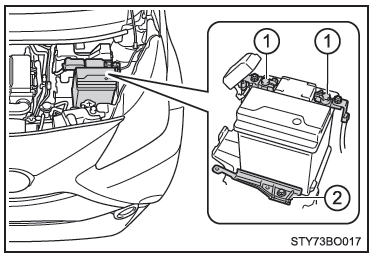
- Terminals
- Terminal clamp
■ Checking the battery condition (if equipped) Check the battery condition by referring to the color of the indicator.
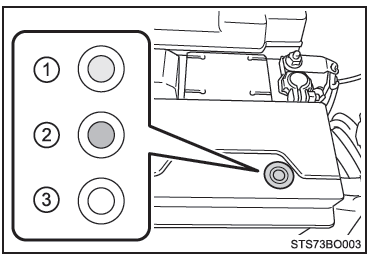
- Green: Good condition
- Dark: Recharging required.
Have the vehicle inspected by any authorized Toyota dealer or workshop, or another suitably qualified and equipped professional.
■ Before recharging During charging, the battery produces hydrogen gas, which is flammable and explosive. Therefore, before recharging:
- If charging the battery while it is installed in the vehicle, make sure the negative (–) cable has been disconnected.
- When connecting and disconnecting the charger cables to and from the battery, make sure the charger power switch is off.
■ After recharging/reconnecting the battery (vehicles with smart entry and start system) The engine may not start. Follow the procedure below to initialize the system.
- With the shift lever in N, depress the brake pedal.
- Open and close any door.
- Restart the engine.
- Unlocking the doors using the smart entry and start system may not be possible immediately after reconnecting the battery.
If the engine does not start even after several attempts, contact any authorized Toyota dealer or repair shop, or another suitably qualified and equipped professional.
NOTICE
■ Chemicals in the battery The battery contains toxic and corrosive sulfuric acid and may produce flammable and explosive hydrogen gas. To reduce the risk of serious injury or death, take the following precautions when working on or near the battery:
- Do not create sparks by touching the battery terminals with tools.
- Do not smoke or light a match near the battery.
- Avoid contact with eyes, skin, and clothing.
- Do not inhale or swallow the electrolyte.
- When working near the battery, wear protective safety glasses.
- Keep children away from the battery.
■ Where to recharge the battery safely Always recharge the battery outdoors. Do not charge it in a garage or closed room without sufficient ventilation.
■ How to recharge the battery Only charge the battery slowly (5 A or less). With faster charging, the battery may explode.
■ Emergency measures for electrolyte
- If electrolyte gets in the eyes Flush the eyes with clean water for at least 15 minutes and seek medical attention immediately. If possible, while going to the nearest medical facility, continue applying water with a sponge or cloth.
- If electrolyte gets on the skin Thoroughly wash the affected area. If pain or burning occurs, seek medical attention immediately.
- If electrolyte gets on clothing It may be absorbed and reach the skin. Remove the clothing immediately and, if necessary, follow the procedure described above.
- If electrolyte is accidentally swallowed Drink a large amount of water or milk. Seek medical attention immediately.
Washer Fluid
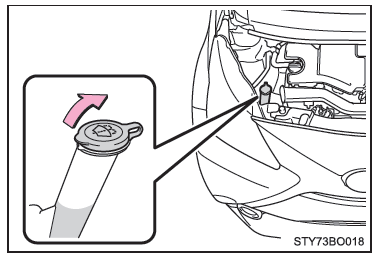
If the washer does not work, the washer fluid reservoir may be empty. Add washer fluid.
WARNING
■ When adding washer fluid Do not add washer fluid when the engine is hot or running, as the fluid contains alcohol that could ignite if spilled on the engine, etc.
NOTE
■ Do not use fluids other than washer fluid Do not use soapy water or engine coolant in place of washer fluid.
Doing so may streak the painted surfaces of the vehicle.
■ Diluting washer fluid Dilute the washer fluid with water as required.
Refer to the freezing temperatures shown on the washer fluid bottle label.
Test yourself
A quick Toyota Aygo quiz: every answer comes with an explanation and a link to the manual page.