Engine Coolant Check
When the engine is cold, check the coolant concentration and level at the intervals specified in the Scheduled Maintenance information.
Maintain the coolant concentration between 48% and 50%, which corresponds to a freezing point between -30°F (-34°C) and -34°F (-37°C). Coolant concentration must be checked with a refractometer. We do not recommend using hydrometers or coolant concentration test strips.
Adding Coolant
It is very important to use specification-compliant pre-diluted coolant to avoid clogging the small passages in the engine cooling system. Use of incorrect pre-diluted coolant may cause damage that is not covered by the vehicle warranty.
If the coolant level is at or below the minimum mark, add pre-mixed coolant immediately.
To add coolant, do the following:
- Slowly unscrew the cap. Any pressure will release when the cap is loosened.
- Add pre-diluted coolant that meets the correct specification.
- Add enough pre-mixed coolant to reach the correct level.
- Reinstall the coolant reservoir cap. Turn the cap clockwise until it reaches the hard stop.
- Check the coolant level in the coolant reservoir several times the next time you drive your vehicle.
If you need to add more than 1.1 quarts (1 L) of engine coolant per month, have the vehicle inspected as soon as possible. Operating the engine with low coolant may cause engine overheating and possible engine damage.
Do not mix different colors or types of pre-diluted coolant in your vehicle. Mixing pre-diluted coolant or using incorrect pre-diluted coolant may damage the engine or cooling system components and may not be covered by the vehicle warranty.
In an emergency, a large amount of plain water can be added without engine coolant to reach a service facility. In this case, qualified personnel must:
- The cooling system must be drained.
- Chemically clean the cooling system.
- Add pre-diluted coolant as soon as possible.
Water only, without pre-diluted coolant, may cause engine damage due to corrosion, overheating or freezing.
Do not use the following as coolant replacement:
- Alcohol.
- Methanol.
- Brine.
- Any coolant mixed with alcohol or methanol-based antifreeze.
Alcohol or other fluids may cause damage from overheating or freezing.
Do not add supplemental inhibitors or additives to the engine coolant. They may be harmful and impair the corrosion protection of the engine coolant.
Recycled Engine Coolant
We do not recommend using recycled engine coolant as an approved recycling process is not yet available.
Dispose of used engine coolant in an appropriate manner. Follow your local regulations and community standards for the recycling and disposal of automotive fluids.
Severe Cold Climate
If you are driving in an extremely cold climate:
- It may be necessary to increase the coolant concentration above 50%.
- A 60% coolant concentration provides improved freezing point protection. A coolant concentration above 60% reduces the overheating protection characteristics of the coolant and may cause damage.
If you are driving in an extremely hot climate:
- It may be necessary to reduce the coolant concentration to 40%.
- A 40% coolant concentration provides improved overheating protection. A coolant concentration below 40% reduces the freezing and corrosion protection characteristics of the coolant and may cause damage.
Vehicles operated year-round in non-extreme climates should use pre-diluted coolant for optimum cooling system and engine protection.
Engine Coolant Replacement
Engine coolant must be changed at the intervals specified in the scheduled maintenance information. When adding, use only pre-diluted coolant that meets the correct specification.
Fail-Safe Cooling
Fail-safe cooling allows you to temporarily drive your vehicle before any additional component damage occurs. The safe driving distance depends on the ambient temperature, vehicle load and terrain.
How Fail-Safe Cooling Works
If the engine begins to overheat, the engine coolant temperature gauge moves toward the red zone:
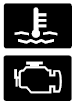 The warning lamp illuminates and a message may appear in the information display.
If the engine reaches a preset overheating level, the engine automatically switches to cylinder deactivation operation. Each deactivated cylinder acts as an air pump and cools the engine.
When this occurs, your vehicle is still operational, however:
- Engine power is limited.
- The air conditioning system turns off.
Continued operation increases engine temperature, which may cause the engine to shut down completely. Your steering and braking effort will increase in this case.
When the engine temperature drops, you can restart the engine. Have your vehicle checked as soon as possible to minimize engine damage.
When Fail-Safe Mode Is Activated
Your vehicle has limited engine power while in fail-safe mode, so drive with caution. Your vehicle will not sustain high speed operation and the engine may run poorly.
Remember that the engine is capable of automatic shutdown to prevent engine damage. In this situation:
- Pull off the road as soon as it is safe to do so and turn off the engine.
- If you are a member of a roadside assistance program, we recommend that you contact your roadside assistance provider.
- If this is not possible, wait for a short period for the engine to cool.
- Check the engine coolant level. If the engine coolant level is at or below the MIN mark, immediately add pre-diluted engine coolant.
- When the engine temperature drops, you can restart the engine. Have your vehicle checked as soon as possible to minimize engine damage.
Engine Coolant Temperature Management (if equipped)
If you are towing a trailer with your vehicle, the engine may temporarily reach a higher temperature under severe operating conditions, such as climbing a long or steep grade at high ambient temperatures.
At this time, you may notice the engine coolant temperature gauge moving toward the red zone, and a message may appear in the information display.
You may notice a reduction in vehicle speed caused by a reduction in engine power to manage engine coolant temperature. Your vehicle may enter this mode if certain high-temperature and high-load conditions occur. The degree of speed reduction depends on vehicle load, grade and ambient temperature. If this happens, it is not necessary to pull off the road. You may continue to drive your vehicle.
The air conditioner may automatically turn on and off during severe operating conditions to protect the engine from overheating. When the engine coolant temperature decreases to normal operating temperature, the air conditioner turns on.
If the engine coolant temperature gauge moves fully into the red zone, or if the engine coolant temperature warning or Service Engine Soon message appears in your information display, perform the following actions:
- Pull off the road as soon as it is safe to do so and shift the transmission into Park (P).
- Leave the engine running until the engine coolant temperature gauge returns to the normal position. If the temperature does not drop after a few minutes, follow the remaining steps.
- Turn off the engine and wait until it is cool. Check the engine coolant level.
- If the coolant level is at or below the minimum mark, add pre-mixed coolant immediately.
- If the engine coolant level is correct, restart the engine and continue.
Test yourself
A quick Ford Fusion quiz: every answer comes with an explanation and a link to the manual page.