Checking and Replacing Blown Fuses
If any device or instrument in the vehicle's electrical system fails, first check the condition of the corresponding fuses. Find the fuse that protects the circuit of the failed device using the diagrams and tables on pages 475 and 476 (vehicles with gasoline engines), pages 477 and 478 (vehicles with diesel engines), or the diagram on the fuse box cover. Check the fuses of the failed electrical equipment first, and then all other fuses. Replace any blown fuses and check the operation of the failed vehicle devices.
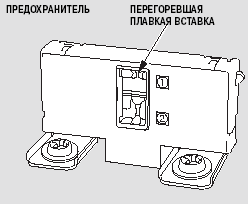
1. Turn the ignition key to the LOCK (0) position. Make sure the headlights and all other electrical loads are switched off.
2. Remove the cover from the engine compartment fuse box.
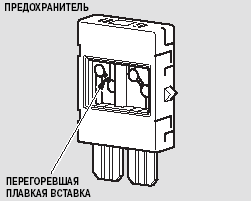
3. Visually check all large fuses located in the engine compartment fuse box. A blown fuse link indicates a faulty fuse. To replace a fuse, unscrew the mounting screws using a Phillips screwdriver.
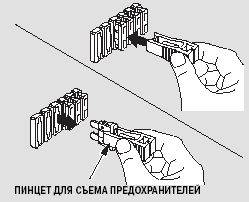
4. Using the tweezers stored under the cover of the interior fuse box, remove all small fuses located in the engine compartment fuse box and in the fuse box inside the vehicle, and check their condition.
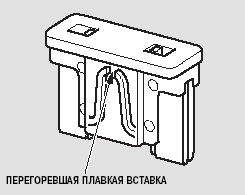
5. A blown fuse is indicated by a burnt fuse element inside the fuse body. Install a spare fuse with the same or lower rated current in place of the blown fuse.
If you do not have spare fuses and cannot continue driving with the faulty electrical equipment, we recommend temporarily replacing the blown fuse with a good fuse of the same or lower rating taken from another slot in the fuse box. Take a fuse from the audio system circuit, the cigarette lighter, or any other electrical device that can be done without for some time.
If you install a fuse with a lower rated current in place of the blown fuse, the new fuse may blow immediately.
This does not indicate a fault in the vehicle's electrical system. At the first opportunity, install a new fuse with the required rated current.

WARNING
Replacing a blown fuse with a new one of higher rated current significantly increases the probability of electrical system damage due to overload. Therefore, if the correct spare fuse is not available, install a fuse with a lower rated current than the one being replaced.
6. If a spare fuse with the required rated current blows quickly, this indicates a serious fault in the vehicle's electrical system. Leave the blown fuse in its slot and contact a service station to inspect and repair the vehicle's electrical system.
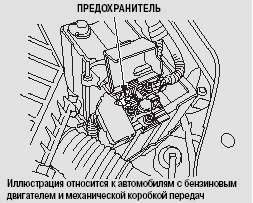
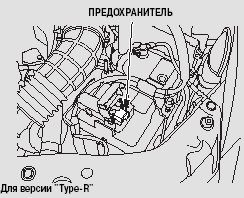
To check the battery fuse, remove the cover from the positive (+) battery terminal.
Test yourself
A quick Honda Civic quiz: every answer comes with an explanation and a link to the manual page.