When repairing the SRS, pay attention to the following items.
If the items below are not observed, there is a possibility of serious injury due to unexpected airbag deployment, and the airbag may not operate.
After disconnecting the battery negative (-) terminal, wait at least 3 minutes and 30 seconds. (Backup power is valid for about 150ms) Safety Precautions for Airbag System Service (Play ▶)
Video: Safety Precautions for Airbag System Service
Notes When Refering Video This video helps recognize potential hazards in advance and ensures procedures are performed correctly when safety precautions are required or when failure to follow steps or procedural errors could affect driving safety.
This video is created using common specifications and may differ from the actual vehicle.
The location and repair procedures of the parts may vary depending on vehicle model, model year, region, and specifications.
Check the KDS Guide for detailed information on how to use the KDS.
Check the manual for detailed maintenance procedures.
Unauthorized reproduction, distribution, or sharing of this video is prohibited.
Failure symptoms of the airbag system are difficult to identify. When troubleshooting, the DTC provides the most important information.
When repairing an airbag system fault, always inspect the DTC before removing the battery.
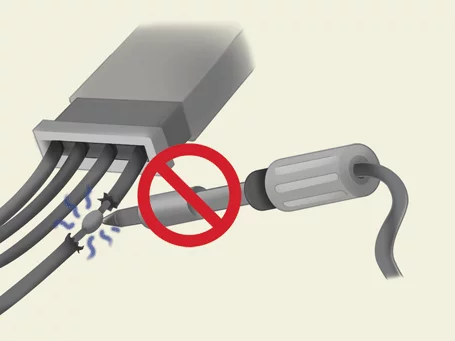
Do not measure the resistance of the airbag squib connector. (It is very dangerous because the airbag can be activated.)
Squib : It is an ignition device installed in the inflator of the electric airbag module.
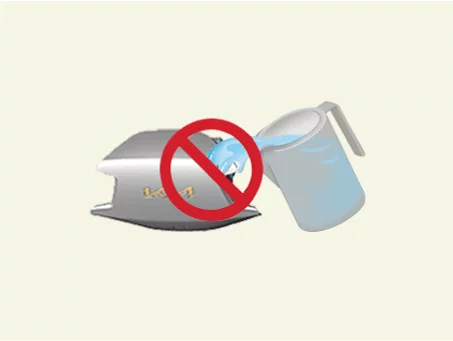
Be careful not to damage the airbag module by oil, grease, cleaner and water.
Do not use airbag components from other vehicles.
When replacing components, replace them with new ones.
Do not disassemble or repair to reuse for all airbag system components.
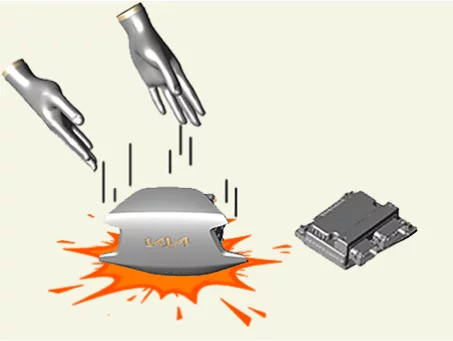
When installing the SRS, be careful not to impact around the SRS Control Module (SRSCM) and the collision detection sensor. The airbag may be suddenly deployed, which may cause damage and injury.
If the airbag module is dropped or other defects such as cracks, dents on the case, the bracket and the connector are occurred, replace them with new ones.
After completing the airbag system repair, check the warning lamp and delete the DTC.
The operation of the airbag warning lamp may be blocked by other circuit faults. Therefore, when the airbag warning lamp turns on, the DTC is deleted by using the KDS.
After completing the repair and inspection of the SRS, be sure to initialize the system. (Keep IG ON for more than 7 seconds → Keep IG OFF for more than 3 minutes and 30 seconds → Keep IG ON for more than 7 seconds)
Do not disassemble the airbag.
The deployed airbags cannot be reused.
Be sure to observe the following precautions when storing the airbag module.
Store the airbag module with the top side of the cover facing upward.
The double locking connector lever must be locked, and positioned so that the connector is not damaged.
Be careful not to damage the airbag module by oil, grease, cleaner and water.
Store in a place where the ambient temperature is below 60 °C, humidity is not high, and there is no electrical noise.
Follow the disposal procedure for the damaged airbag modules. (Refer to Airbag Module - "The Airbag Module Disposal Procedure")
Airbag Handling and Storage Wiring Precautions Observe the precautions described below.
Never reconnect or repair the damaged airbag wiring. If the airbag wiring is damaged, replace the harness.
Make sure the wiring is not interfered with other components.
Make sure that there are no foreign substances on the connector surface of the airbag module. Poor grounding can cause problems that are difficult to diagnose.
Precautions for Inspections When using the tester, insert the tester probe into the connector wire side. Do not insert the tester probe into the terminal side of the connector. Use a U-shaped probe and do not forcefully insert the probe. Airbag Connector Precautions
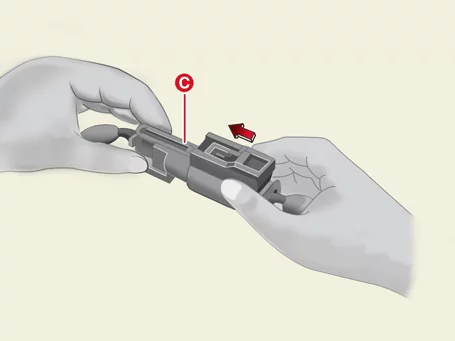
Disconnect the connector To disconnect the connector, remove the connector by holding the connector and pulling the spring loaded sleeve (A) and slider (B) from the opposite side. Be careful to pull the sleeve, not the connector.
Connect the connector Hold both connectors and push firmly until the protrusion (C) of the connector on the sleeve side clicks into place. Abbreviation
Abbreviation
Name
Driver Airbag (DAB)
Driver Airbag
Passenger Airbag (PAB)
Passenger Airbag
Side Airbag (SAB)
Side Airbag
Curtain Airbag (CAB)
Curtain Airbag
Knee Airbag (KAB)
Knee Airbag
Supplemental Restraint System Control Module (SRSCM)
Supplemental Restraint System Control Module
Front Impact Sensor (FIS)
Front Impact Sensor
P-SIS (Pressure type Side Impact Sensor)
Pressure type Front Side Impact Sensor
A-FSIS (Acceleration type Front Side Impact Sensor)
Acceleration type Front Side Impact Sensor
A-RSIS (Acceleration type Rear Side Impact Sensor)