Compressor
Description and Operation
Description
The compressor is the power unit of the air conditioning system.
It is located on the side of the cylinder block and is driven by the engine drive belt.
The compressor converts low-pressure, low-temperature gaseous refrigerant into high-pressure, high-temperature gaseous refrigerant.
Components and Component Location
Components
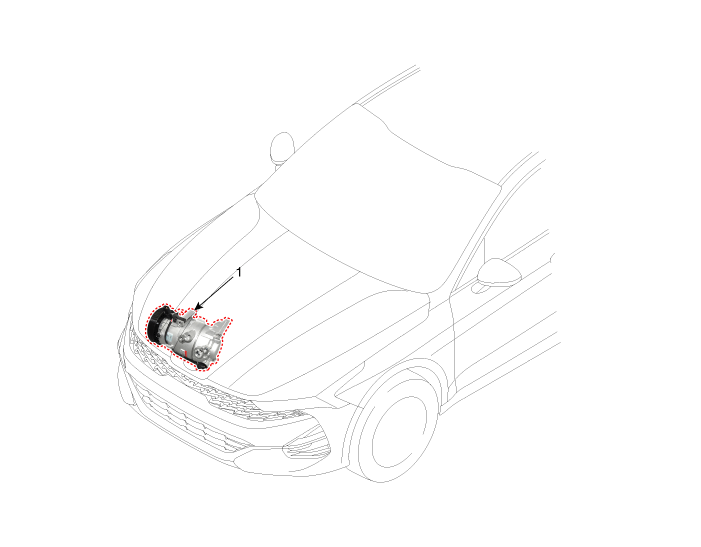
| 1. Compressor |
Repair Procedures
Removal
If the compressor is operating at its limit, run the engine at idle and let the air conditioner operate for several minutes, then stop the engine.
Disconnect the negative (-) battery terminal.
Recover the refrigerant using a recovery/recharging station.
Remove the engine room cover.
G 2.0 NU MPI (Refer to Engine Mechanical System - "Engine Compartment Cover")
G 2.5 GDI THETA II (Refer to Engine Mechanical System - "Engine Compartment Cover")
Loosen the drive belt.
G 2.0 NU MPI (Refer to Engine Mechanical System - "Drive Belt")
G 2.5 GDI THETA II (Refer to Engine Mechanical System - "Drive Belt")
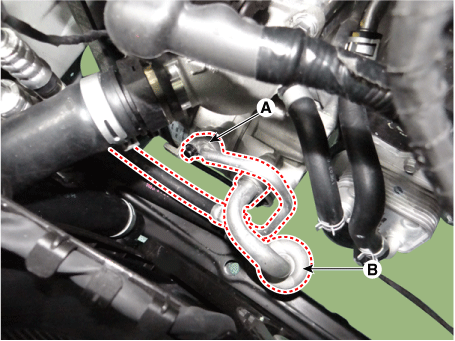
Remove the bolts, then disconnect the suction line (A) and discharge line (B) from the compressor.
Tightening Torque: 21.6–32 N·m
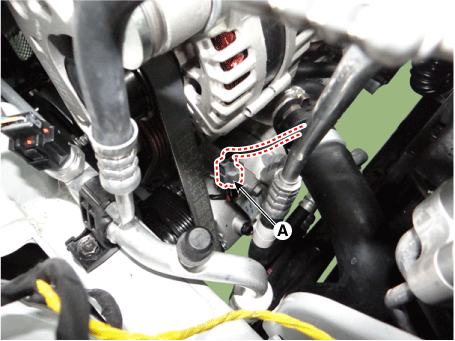
Press the lock pin and disconnect the compressor connector (A).
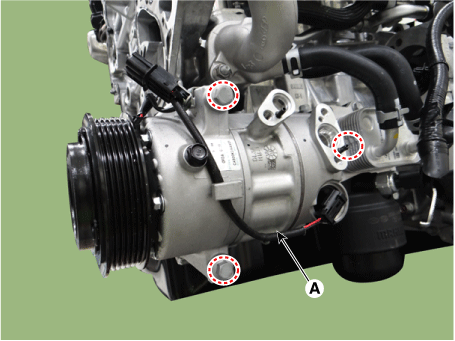
Loosen the mounting bolts and remove the compressor assembly (A).
Tightening Torque: 21.6–32 N·m
Installation
Make sure the compressor mounting bolts of the correct length are tightened. Tighten the mounting bolts in the specified order.
Tightening Torque: 21.6–32 N·m
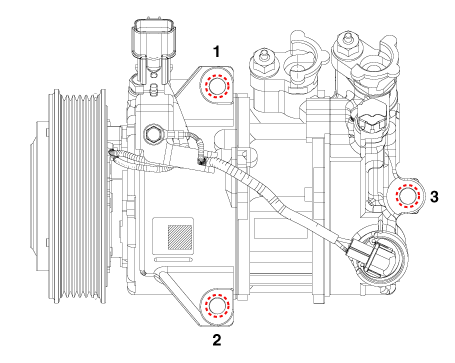
Install in the reverse order of removal.
Inspection
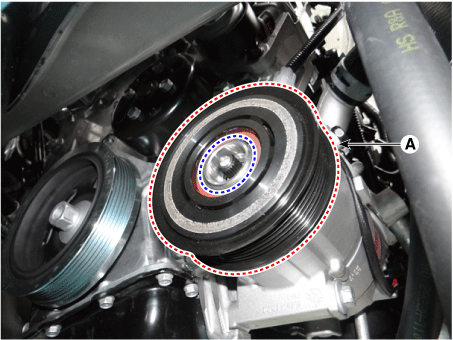
Inspect the limiter and hub for discoloration, peeling, or other damage. If damaged, replace the assembly.
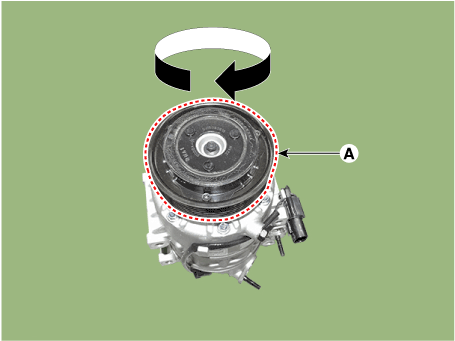
Check the clearance of the pulley bearing (A) and rotate the pulley by hand. Replace the pulley if it is noisy or has excessive play/drag.
Inspection of Compressor with External Control Valve (ECV)
Compressor Type: Fixed-type compressor, External control valve, Internal control valve.
For the fixed type and internal control valve type, the compressor operation can be checked by the clutch engagement sound.
However, for the external control valve type, it cannot be checked this way because it does not have a clutch.
Therefore, the ECV should be checked using the KDS as shown below.
Connect the KDS to the vehicle and select "A/C Compressor Test (ECV Type)".
[ECV1]
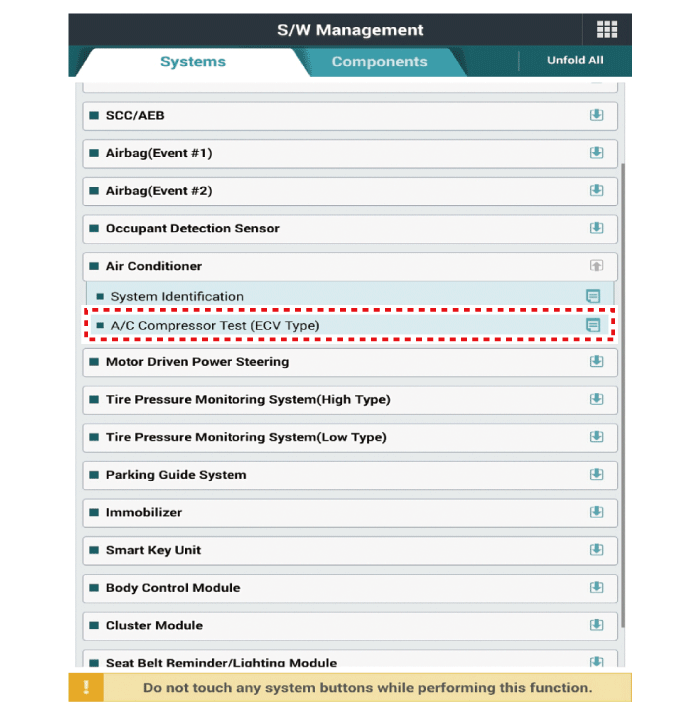
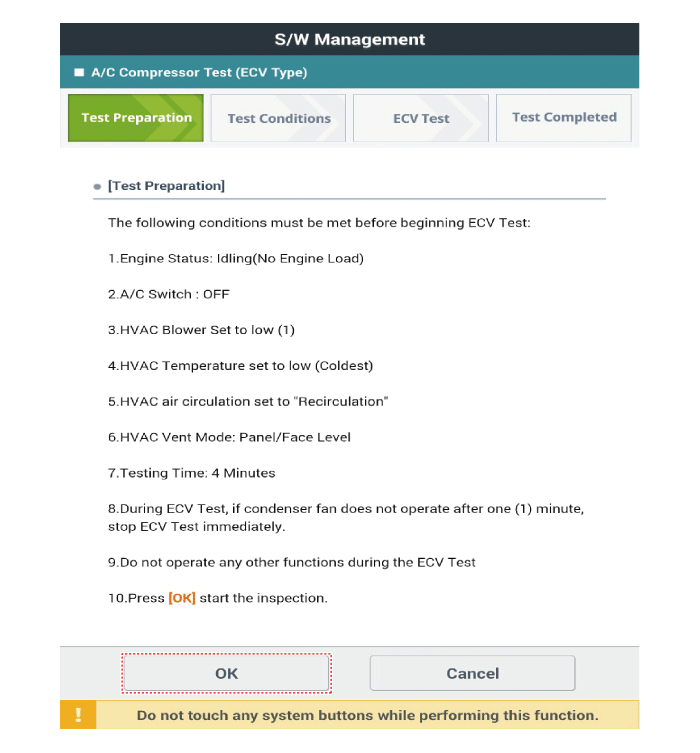
Prepare the vehicle according to the KDS instructions on the monitor. (Turn off only the A/C switch)
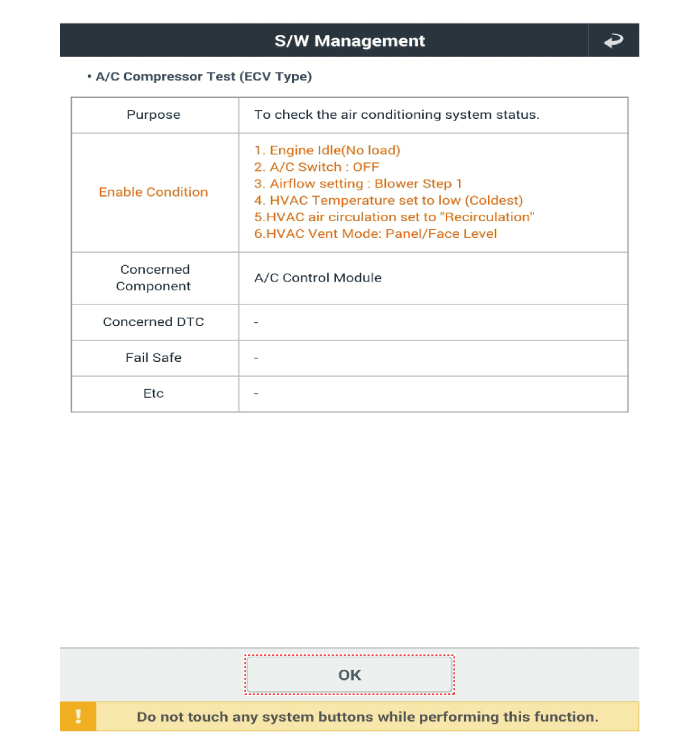
Before inspecting the ECV compressor, check whether other DTCs are present. If so, resolve those issues first. If not, press the "OK" button to continue.
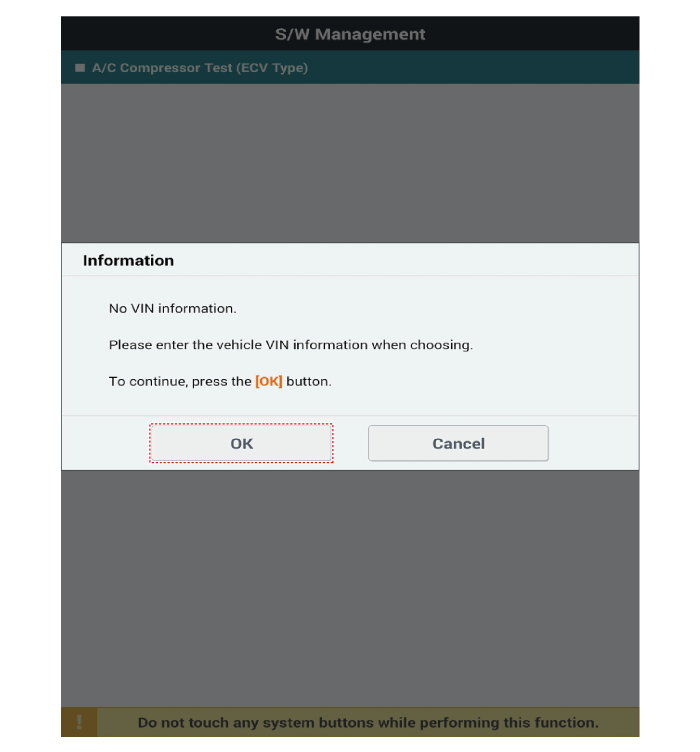
Start Inspection
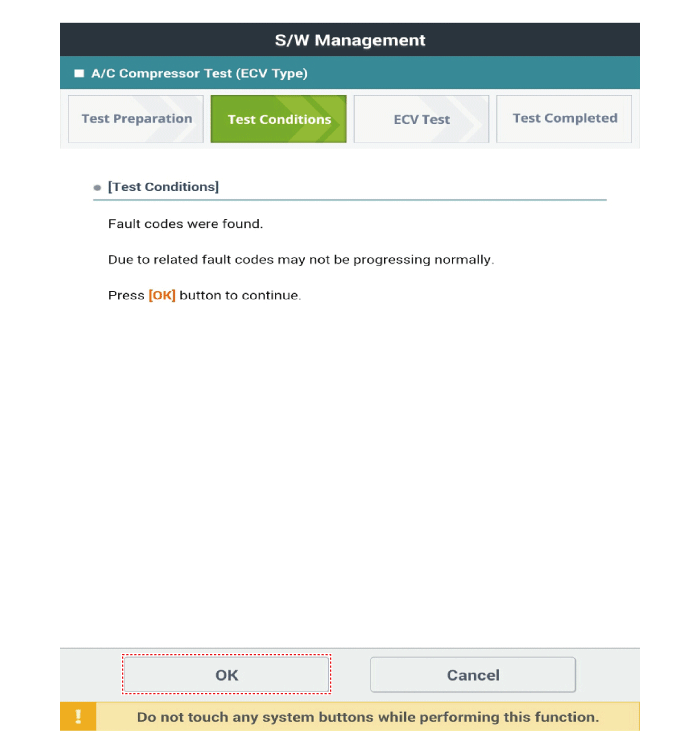
Check the inspection result.
[ECV7]
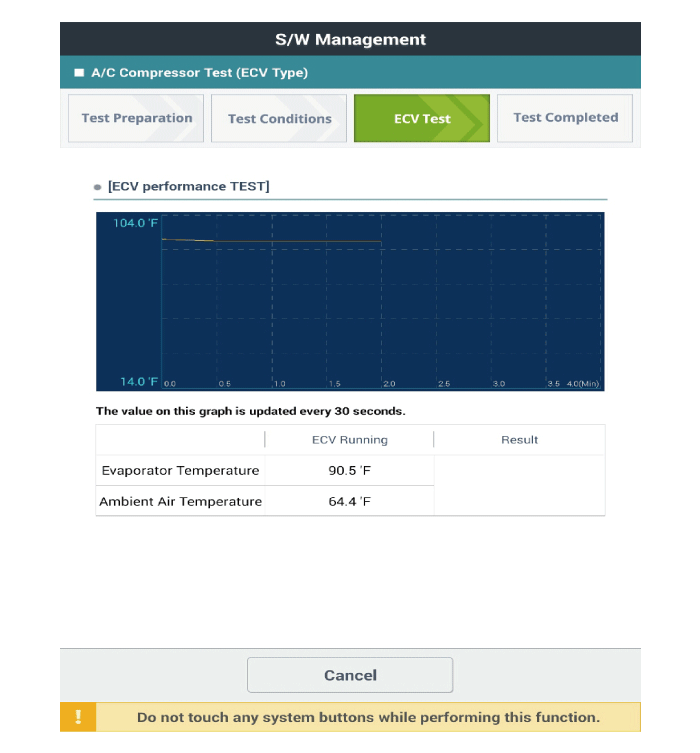
[ECV8]
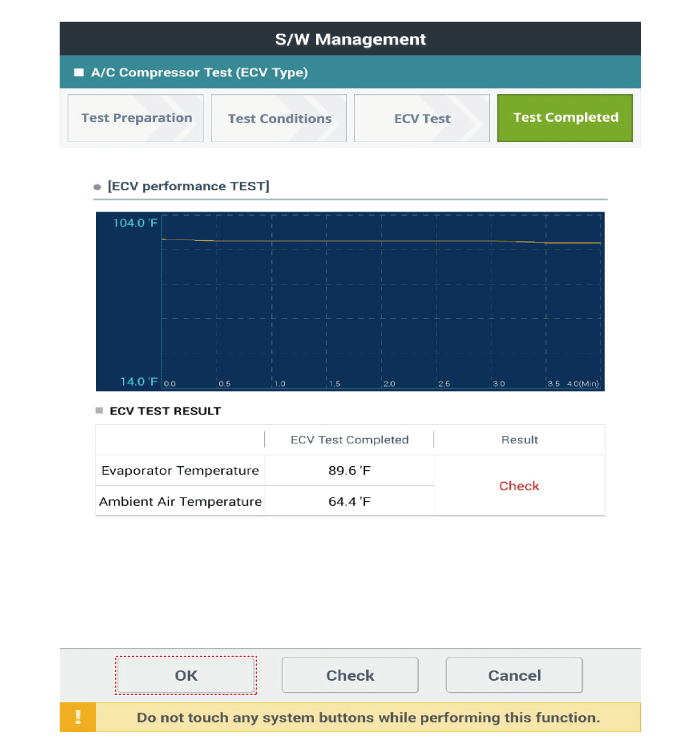
If the result displays "Check", press "Check" and follow the instructions.
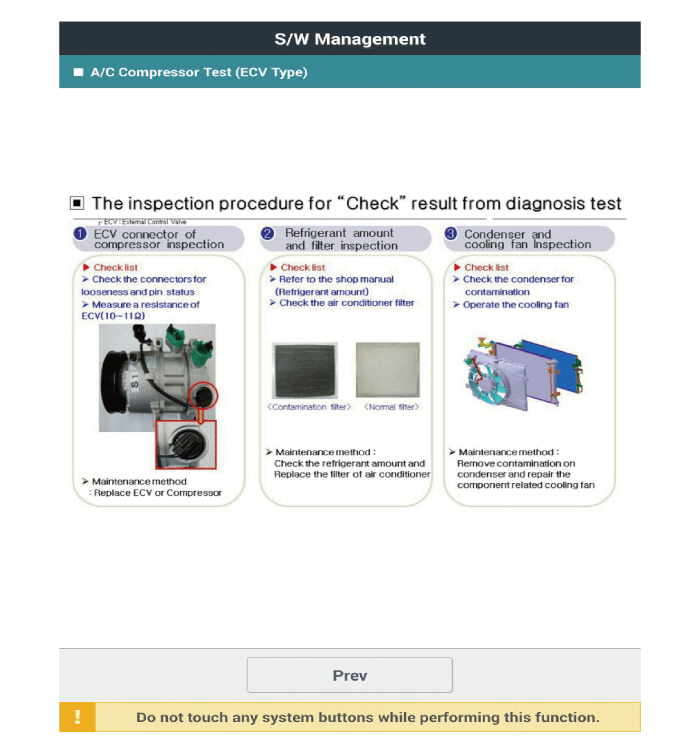
Recheck the ECV from the first step.
Disassembly
Remove the front wheel [RH].
Remove the engine room cover.
G 2.0 NU MPI (Refer to Engine Mechanical System - "Engine Compartment Cover")
G 2.5 GDI THETA II (Refer to Engine Mechanical System - "Engine Compartment Cover")
Remove the clutch bolt (A) while holding the pulley with the clutch bolt puller (09383-59100).
Tightening Torque: 9.8–14.7 N·m
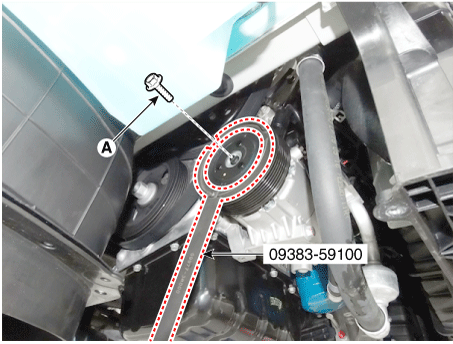
Loosen the limiter bolts, then remove the limiter and hub assembly (A).
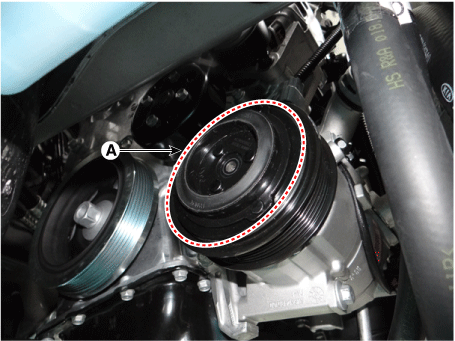
Remove the pulley (A) after first removing the snap ring using snap ring pliers.
Assemble in the reverse order of disassembly.
Test yourself
A quick Kia Optima DL3 quiz: every answer comes with an explanation and a link to the manual page.