Construction - Radial Belted Tire
Cross section of a radial belted tire
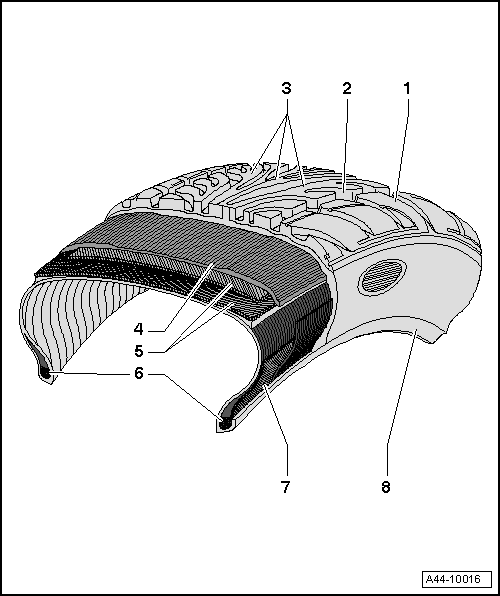
- Tread block
- Tread groove
- Tread
- Nylon cap ply
- Belt plies
- usually consist of steel
- Bead core
- consists of steel wires vulcanised into rubber
- ensures the tyre sits firmly on the rim
- Bead filler
- Rim flange protector
- protects the rim and tyre against abrasion, e.g. when contacting a kerb
- Tyres with rim flange protection are marked with the abbreviation MFS
The nylon overlay -4-, belt plies -5-, bead cores -6- and bead fillers -7- form the carcass. The carcass is the "load-bearing framework" of the tyre.
Run-flat tyres, design and marking of an SST tyre
Removal and fitting of run-flat tyres.
When run-flat tyres are used, a tyre pressure monitoring indicator is mandatory.
A tyre damage and the associated pressure loss cannot be recognised with the naked eye
SST tyres are identified by a special symbol (RSC = Runflat System Component) on the sidewall
The marking on the sidewall of run-flat tyres can differ depending on the manufacturer.
Self Supporting Tyre stands for tyre systems with run-flat properties in the event of pressure loss. In the event of a puncture, the driver can continue driving at restricted speed to the nearest workshop, see → Owner's Manual.
Advantage
In the event of complete pressure loss, SST tyres allow an adapted onward drive over a maximum distance of 80 km/h 50 km.
Driving style, driving speed, road surface, weather conditions, tyre condition and tyre load influence the run-flat distance.
With SST tyres, an immediate wheel change is not necessary in the event of complete pressure loss (e.g. no wheel change at unclear or dangerous locations)
Braking, steering and drive behaviour are largely retained even after tyre pressure loss.
When SST tyres are used, a spare wheel is no longer required. From the customer's point of view, this means space savings and weight reduction.
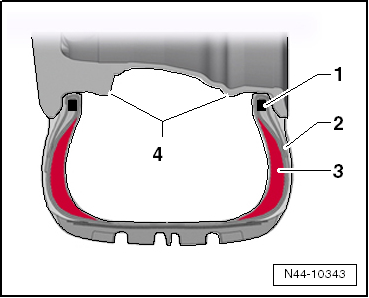
Design
- Bead with bead core
- Sidewall
- Sidewall reinforcement
- Rim with extended hump on both sides (EH2) - mandatory when using run-flat tyres
Technology in detail
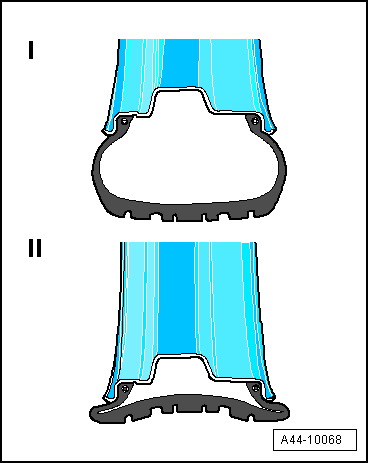
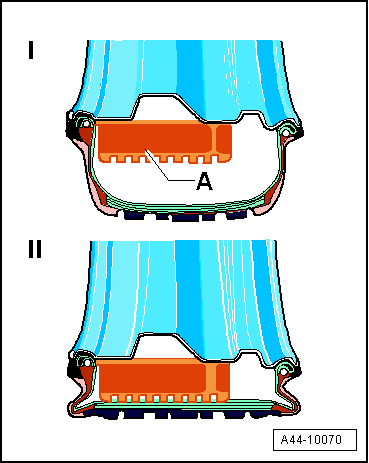
Standard tyre without run-flat properties
- Standard tyre with air
- Standard tyre without air
- If a standard tyre loses air, the rim compresses the sidewall extremely. The rubber becomes strongly heated when rolling with a flat tyre and rapidly breaks down into its components.
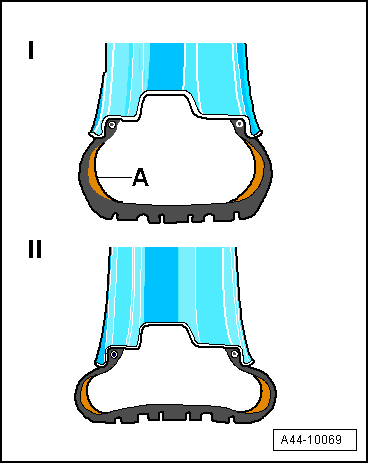
SST tyre with reinforced sidewall
The basis of SST technology is self-supporting, reinforced sidewalls.
- SST tyre with air
- SST tyre without air
- Particularly thick sidewalls -A- support the deflated tyre on a standard rim, and the vehicle remains manoeuvrable. A special rubber compound reinforces the tyre and carries the vehicle in an emergency.
The sidewalls, reinforced compared with standard tyres, prevent the tyre flanks from being pinched between the road and the rim in the event of a puncture.
Differences between wheels in H2 and EH2 Extended Hump rim designs.
- The EH2 Extended Hump rim prevents the SST tyre from coming off the rim in the event of pressure loss, due to the raised hump.
- The EH2 Extended Hump rim extends further towards the wheel centre.

WARNING!
The clearance to the brake is reduced
Run-flat tyre with Seal Inside technology
- The vehicles are optionally equipped with self-sealing tyres.
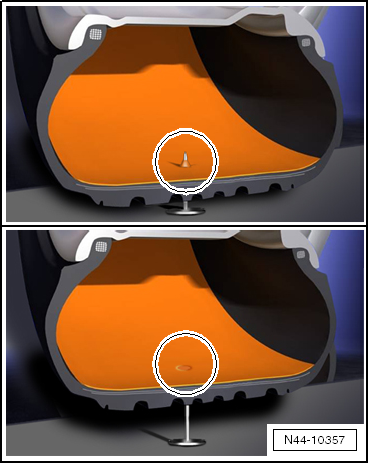
- With the technology called Seal Inside, a system has been developed that allows continued driving despite nails or screws having penetrated: a protective layer on the inside of the tyre tread seals the holes created when screws and nails penetrate, immediately.
- This means no air can escape. The sealing works for almost all leaks caused by objects up to 5 millimetres in diameter.

Note
Mixed fitting with other tyre types, e.g. run-flat tyres and "standard" tyres, is not permitted.
Explanations on the mobility tyre
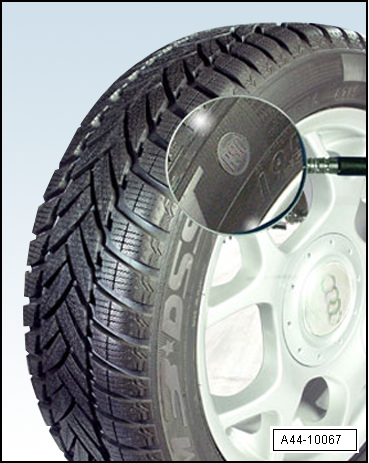
- Seal Inside technology is a sealing compound that the tyre manufacturer applies preventively as an integral part of the tyre production process.
- With Seal Inside technology, a self-adhesive, viscous sealing compound is applied evenly to the inside of the tread from shoulder to shoulder.
- The sealing compound is an integral component of mobility tyres.
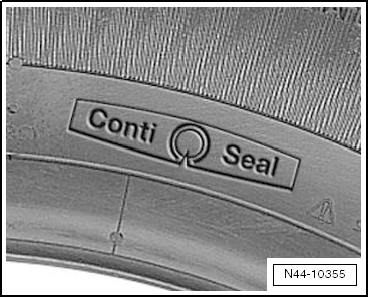
- A mobility tyre can be recognised from the outside by the special logo on the sidewall.
- Example: sidewall of a Continental tyre

Caution!
The sealing compound is not intended to serve as a permanent tyre repair after a puncture.
- If a foreign object with a diameter of up to 5 mm penetrates the tread of a mobility tyre, the task of the sealing compound is to surround it and prevent possible air loss by sealing almost immediately.
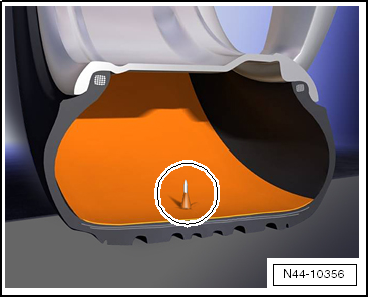
- The sealing compound is designed to seal most puncture channels caused by foreign objects up to a diameter of 5 mm.
- Seal Inside technology significantly reduces the frequency of flat tyres, but it is not designed to allow operation of the tyre with reduced pressure or in the flat (deflated) state.
- In all other respects, mobility tyres have the same characteristics as tyres without Seal Inside technology.
Handling mobility tyres
- When handling mobility tyres, pay particular attention to high cleanliness during work and also during storage of the tyres.
- The sealing compound on the inside of the tyre tread is not protected and is therefore very susceptible to any kind of contamination.
- It is recommended to store each tyre individually in suitably large bags or similar.
- Like other tyres, mobility tyres should be checked regularly for signs of cuts, punctures and loss of inflation pressure.
- This inspection should be carried out at least once or twice a month, and always before a longer journey.
- Punctures or damage that are not repaired in time can lead to loss of inflation pressure and/or tyre failure.
- Mobility tyres with cuts and punctures must be inspected immediately.
- It must be decided whether the tyre has to be taken out of service and scrapped.
- Removing and fitting a mobility tyre is identical to that of a standard tyre.
Run-flat tyres, PAX tyre design
Run-flat tyres (PAX) are a specially developed system that differs from conventional tyres in the following ways:
PAX tyre with support ring
- PAX tyre with air
- PAX tyre without air
- The tyre anchors on a special rim that prevents it from slipping off the rim when air is lost. The rubber support ring ensures stability during run-flat operation.
- The inner and outer bead diameters differ. This makes it possible to insert a support ring into the tyre.
- The tyre is anchored differently on the rim.
- This allowed the tyre height to be reduced considerably. This was possible because the bead area could be much smaller due to the special connection between tyre and rim.
- The tyre beads are shaped so that they can snap into the rim seats. When the tyre is unpressurised, they therefore remain firmly seated in the rim seats.
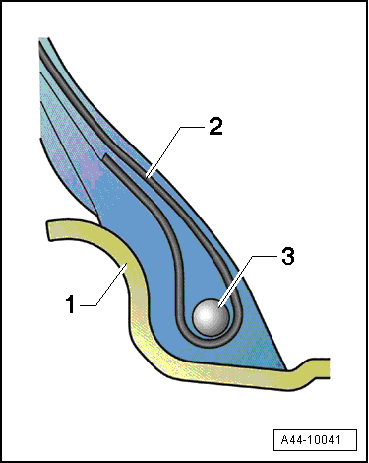
Bead zone design of a standard tyre
- Rim flange
- Fabric underlayer
- Bead core
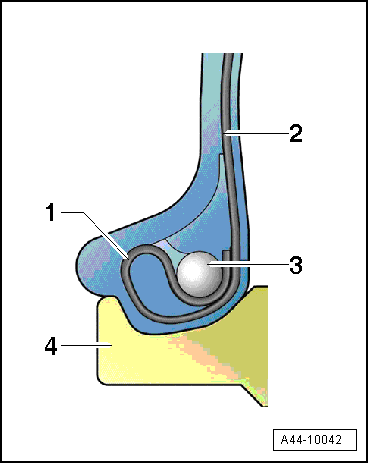
Bead zone design of a run-flat tyre (PAX)
- Loop
- Fabric underlayer
- Bead core
- Rim flange
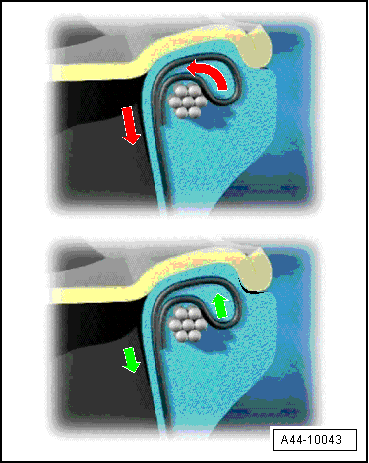
Anchoring of the run-flat tyre (PAX)
Due to its design, the tyre remains securely seated on the rim in all driving situations.
A wedge-shaped component of the tyre is pressed between the bead core and the rim under load. This happens regardless of the tyre pressure.
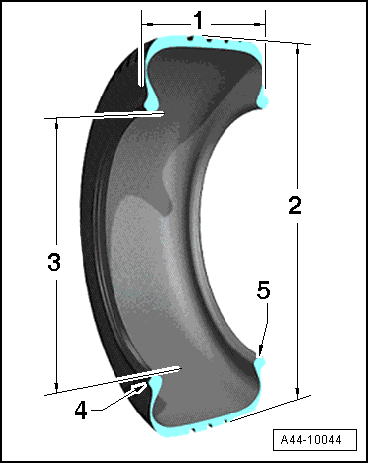
Dimensions of the run-flat tyre (PAX)
Compared with conventional tyres, run-flat tyres (PAX) differ in dimensions and designations.
Run-flat tyres (PAX) can therefore only be fitted to special rims (PAX).
- Width in millimetres: tyre width from sidewall to sidewall on the standard measuring rim (corresponds to the width specification on the standard tyre)
- Outside diameter in millimetres: maximum diameter of the new tyre
- Nominal diameter in millimetres at the standardised rim seat
- Smaller bead diameter in millimetres: rim seat on the outside
- Larger bead diameter in millimetres: rim seat on the inside