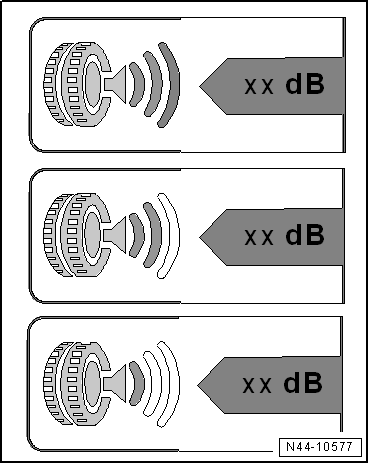
EU tyre label
EU tyre label, overview
From 1 November 2012, tyre manufacturers must label tyres in accordance with the new EU regulation (EC) No. 1222/2009 (Tyre Labelling Regulation).
The Tyre Labelling Regulation sets out the requirements for labelling and presenting information on rolling resistance (fuel efficiency), wet grip and external rolling noise on a uniform EU tyre label. The aim is to increase safety and the ecological and economic efficiency of road freight transport through fuel-saving, safe tyres with a low noise level.
The new EU tyre label shows specific information in seven classes each, A to G.
A distinction is made between 3 categories:

- Rolling resistance
- Explanations
- Wet grip
- Explanations
- Noise emission
- Explanations
EU tire label, objectives
- Reduction of fuel consumption
- Increase in road safety
- Reduction of traffic noise
The EU tire label provides the end customer with information on important tire properties. However, it does not show all decisive safety criteria.
- Explaining further tire properties can have a lasting influence on the purchase decision!
- The customer should be informed of the limited significance of the label for tire properties, e.g. the label makes no statement on winter properties of winter tires.
- Tire tests remain important sources of information for specialist dealers and end customers.
Tire tests examine many further performance factors that should be considered:
- Hydroplaning properties
- Driving stability
- Steering precision
- Service life
- Braking properties
- Behavior in winter conditions
EU tire label, categories
Rolling resistance
Rolling resistance:
- is defined as the energy consumption of the tire in relation to the distance covered.
- corresponds to the energy lost per defined distance unit covered.
- as a form of energy can be expressed as the quotient of newton meters (Nm) and distance in meters (m). The rolling resistance is thus expressed as a force in newtons (N).
The rolling resistance of a tire can be described by the rolling resistance coefficient (also called rolling resistance factor) cR:
-cR =
FR
Z
- cR - rolling resistance coefficient
- FR - rolling resistance force
- Z - vehicle weight (sum of all wheel loads)
Objective
- Reduction of rolling resistance
- Saving fuel and CO2
Rating
- Divided into fuel efficiency classes from A to G
- Class D is not used

Note
- The fuel efficiency classes are specified in EU Regulation (EC) No. 1222/2009, according to which the tire is then classified in the corresponding category.
- The rolling resistance is determined by the tire manufacturers through prescribed tests.
- The lower the rolling resistance, the lower the fuel consumption.
- A - -lowest rolling resistance coefficient = lowest fuel consumption
- B - -+ 0.10 l / 100 km
- C - -+ 0.12 l / 100 km
- E - -+ 0.14 l / 100 km
- F - -+ 0.15 l / 100 km
- G - -+ 0.15 l / 100 km

Wet grip
Definition
For wet grip, the wet grip index G must be determined. The wet grip index G is determined in a test with a standardized vehicle on a wet, smooth road surface, using the distance required to brake from 80 km/h to 20 km/h. The test is based on a predefined standard reference test tire (SRTT), which is also used to calculate the wet grip index G. The calculation is based on the mean fully developed deceleration (mfdd).
The mean fully developed deceleration (mfdd) is calculated as follows:
-mfdd =
231,48
S
S - the measured braking distance in meters between 80 km/h and 20 km/h
The wet grip index G is determined as follows:
-G =
mfdd of the tire under test
mfdd of the standard reference tire
mfdd - mean fully developed deceleration
Objective
- good wet grip of the tires
- significant reduction of braking distance

Rating
- Divided into wet grip classes from A to G.
- Classes D and G are not used

Note
- The wet grip classes are specified in EU Regulation (EC) No. 1222/2009, according to which the tire is then classified in the corresponding category.
- The lower the wet grip index, the shorter the braking distance.
- A - -lowest wet grip index = shortest braking distance
- B - -3 to 6 m longer braking distance compared to category A
- C - -3 to 6 m longer braking distance compared to category B
- E - -3 to 6 m longer braking distance compared to category C
- F - -3 to 6 m longer braking distance compared to category E
- In a full braking test from 80 km/h, the difference between classes A and F can be more than 18 m.

Noise emission
Objective
- Reduction of pass-by noise
- Reduction of noise exposure
Rating
- measured outside the vehicle only
- Divided into three classes
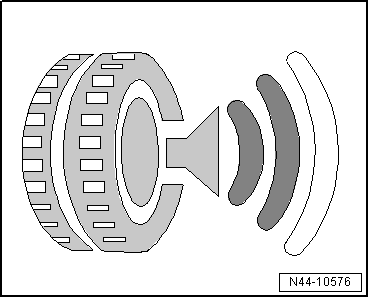
- Three black waves indicate the poorest performance. The tire generates rolling noise that is below the current limit under EU Directive 2001/43/EC. This limit exceeds the limit that will apply from 2016 under Regulation (EC) No. 661/2009.
- Two black waves: the tire's noise level is also below the limit that will apply from 2016 under Regulation (EC) No. 661/2009.
- One black wave: the tire's noise level is at least three decibels below the limit that will apply from 2016 under Regulation (EC) No. 661/2009.

Note
- Reducing the noise rating from two to one black wave corresponds to 3 dB, which halves the sound energy.
- Note that the external rolling noise of the tire does not always match the noise heard in the vehicle interior.