For circuit and connector information, refer to Wiring Diagrams Cell 46.
Normal Operation and Fault Symptoms
The Belt Tension Sensor (BTS) works in conjunction with the OCS. The OCSM interprets the AC voltage signal from the Belt Tension Sensor (BTS) to determine the possible presence of a child seat in the front passenger seat. The BTS output voltage is proportional to the amount of tension applied to the belt: no belt tension results in a low voltage (approximately 0.95 volts), and high belt tension results in a high voltage (approximately 3.8 volts) returned to the OCSM.
The OCSM monitors the Belt Tension Sensor (BTS) and associated circuits for the following faults:
Resistance Out of Range
Unexpected Voltage
Short to Ground
Seat Belt Tension Sensor (BTS) Fault (front passenger seat belt buckle part)
When a fault is detected, the OCSM stores DTC B0061:11, B0061:12, B0061:13 or B0061:64 in memory and sends a message to the RCM over HS-CAN2 indicating an OCSM fault is present. On receiving this message, the RCM sets DTC B00A0:09 and sends a message to the IPC to illuminate the airbag warning indicator.
DTC Fault Trigger Conditions
Trouble Code
Description
Fault Trigger Conditions
B0061:11
Passenger Seat Belt Tension Sensor: short to ground
The fault is indicated when the OCSM measures a voltage below the specified belt tension sensor (BTS) signal circuit threshold. An open in the belt tension sensor (BTS) VREF circuit can also set this DTC.
B0061:12
Passenger Seat Belt Tension Sensor: Short to Battery
The fault is indicated when the OCSM measures a voltage above the specified belt tension sensor (BTS) signal circuit threshold. An open in the belt tension sensor (BTS) return circuit can also set this DTC.
B0061:13
Passenger Seat Belt Tension Sensor: open circuit
The fault is indicated when the OCSM detects an open circuit in the seat belt tension sensor (BTS) circuit.
B0061:64
Passenger Seat Belt Tension Sensor: signal implausible
The fault is displayed when the front passenger seat belt is unbuckled and the OCSM measures a voltage on the seat belt tension sensor (BTS) signal circuit that is higher than the maximum voltage returned during normal sensor operation.
Possible Sources
Wiring, Terminals or Connectors
Seat Belt Tension Sensor (BTS) (front passenger seat belt buckle part)
OCSM
Visual Inspection and Preliminary Diagnosis
Inspect the front passenger seat belt buckle or the seat belt tension sensor (BTS) for damage.
Inspect the front passenger seat cushion airbag harness for damage.
Inspect the OCSM or seat belt tension sensor (BTS) connector for looseness or damage.
Inspect the OCSM for damage.
PINPOINT TEST A: B0061:11, B0061:12, B0061:13, B0061:64
NOTE: Most concerns are related to connector and/or wiring issues. Perform a thorough inspection and check before proceeding to the Pinpoint Test.
NOTE: Only disconnect or reconnect SRS components when instructed to do so in the Pinpoint Test step. Failure to follow this instruction may result in an incorrect SRS diagnosis.
NOTE: Always verify the correct SRS component is installed. Parts released for other vehicles may be incompatible even if they appear physically similar. Check the part number listed in the Ford parts catalog to confirm the correct component is installed. If an incorrect SRS component is installed, diagnostic trouble codes (DTCs) may be set.
NOTE: Before returning the vehicle to the customer, the SRS must be fully functional and operating correctly.
WARNING: Before starting any service procedure in this section, refer to the Safety Warnings in Section 100-00 General Information. Failure to follow this instruction may result in serious personal injury. REFER TO: Pyrotechnic Device Handling Precautions (100-00 General Information, Description and Operation).
The ignition is on.
Using the diagnostic scan tool, perform the OCSM self-test.
Was DTC B0061:11, B0061:12, B0061:13 or B0061:64 retrieved on-demand during the self-test?
Yes
This fault cannot be cleared until it is repaired and the DTC is no longer retrieved on demand during the self-test. For DTC B0061:11, GO to A2 For DTC B0061:12, GO to A5 For DTC B0061:13, GO to A7 For DTC B0061:64, GO to A9
No
This is an intermittent fault if it is present only as a CMDTC. GO to A12
A2 CHECK THE SEAT BELT TENSION SENSOR (BTS)
Ignition OFF.
Disconnect the seat belt tension sensor (BTS) C3238.
Using the diagnostic scan tool, perform the OCSM self-test.
DIAGNOSTIC AID: When viewing Diagnostic Trouble Codes (DTCs) with the seat belt tension sensor (BTS) disconnected, an open circuit is typically present. The seat belt tension sensor (BTS) shares a connector with the passenger seat belt buckle switch and, as a result, the passenger seat belt buckle switch circuit fault will also be present in the RCM.
Was DTC B0061:11 retrieved on-demand during the self-test?
Yes
GO to A3
No
INSTALL a new front passenger seat belt buckle. Front Seat Belt Buckle (501-20A Seat Belts, Removal and Installation). GO to A13
A3 CHECK THE SEAT BELT TENSION SENSOR (BTS) CIRCUITS FOR A SHORT TO GROUND OR TOGETHER
Ignition OFF.
Disconnect OCSM C3159.
Action: Click to display the connectors
Positive lead
Measurement/Action
Negative lead
C3238-1
Ground
Action: Click to display the connectors
Positive lead
Measurement/Action
Negative lead
C3238-1
C3238-3
Is the resistance greater than 10000 ohms?
Yes
GO to A4
No
REPAIR the circuit(s). For circuit and connector information, refer to Wiring Diagrams Cell 5. GO to A13
A4 CHECK THE SEAT BELT TENSION SENSOR (BTS) VREF CIRCUIT FOR AN OPEN
Action: Click to display the connectors
Positive lead
Measurement/Action
Negative lead
C3159-5
C3238-3
Is the resistance less than 0.5 Ohms?
Yes
GO to A11
No
REPAIR the circuit. For circuit and connector information, refer to Wiring Diagrams Cell 5. GO to A13
A5 CHECK THE SEAT BELT TENSION SENSOR (BTS) SIGNAL CIRCUIT FOR A SHORT TO VOLTAGE
Ignition OFF.
De-power the SRS. REFER to: Supplemental Restraint System (SRS) Disabling and Re-enabling (501-20B Supplemental Restraint System, General Procedures).
Disconnect the passenger side airbag (integrated) C337.
Disconnect the seat belt tension sensor (BTS) C3238.
Disconnect OCSM C3159.
Reset the SRS. Do not confirm the SRS at this time. Refer to: Supplemental Restraint System (SRS) Disabling and Re-enabling (501-20B Supplemental Restraint System, General Procedures).
The ignition is on.
Action: Click to display the connectors
Positive lead
Measurement/Action
Negative lead
C3159-6
Ground
Is there voltage present?
Yes
REPAIR the circuit. For circuit and connector information, refer to Wiring Diagrams Cell 5. GO to A13
No
GO to A6
A6 CHECK THE SEAT BELT TENSION SENSOR (BTS) GROUND CIRCUIT FOR AN OPEN
Ignition OFF.
De-power the SRS. REFER to: Supplemental Restraint System (SRS) Disabling and Re-enabling (501-20B Supplemental Restraint System, General Procedures).
Disconnect RCM C310A and C310B.
Action: Click to display the connectors
Positive lead
Measurement/Action
Negative lead
C3238-2
Ground
Is the resistance less than 3 ohms?
Yes
GO to A10
No
REPAIR the circuit. For circuit and connector information, refer to Wiring Diagrams Cell 5. GO to A13
A7 CHECK THE SEAT BELT TENSION SENSOR (BTS)
Ignition OFF.
De-power the SRS. REFER to: Supplemental Restraint System (SRS) Disabling and Re-enabling (501-20B Supplemental Restraint System, General Procedures).
Disconnect the passenger side airbag (integrated) C337.
Disconnect the seat belt tension sensor (BTS) C3238.
Connect a fused jumper wire: Click to display connectors
Lead 1
Measurement/Action
Lead 2
C3238-1
C3238-3
Reset the SRS. Do not confirm the SRS at this time. Refer to: Supplemental Restraint System (SRS) Disabling and Re-enabling (501-20B Supplemental Restraint System, General Procedures).
The ignition is on.
Using the diagnostic scan tool, perform the OCSM self-test.
DIAGNOSTIC AID: When viewing Diagnostic Trouble Codes (DTCs) with the seat belt tension sensor (BTS) circuits shorted together, a short to ground is typically present. The seat belt tension sensor (BTS) shares a connector with the passenger seat belt buckle switch and, as a result, the passenger seat belt buckle switch circuit fault will also be present in the RCM.
Did the on-demand fault code change from B0061:13 to B0061:11?
Yes
INSTALL a new front passenger seat belt buckle. Front Seat Belt Buckle (501-20A Seat Belts, Removal and Installation). GO to A13
No
GO to A8
A8 CHECK THE SEAT BELT TENSION SENSOR (BTS) SIGNAL CIRCUIT FOR AN OPEN
Ignition OFF.
Disconnect OCSM C3159.
Action: Click to display the connectors
Positive lead
Measurement/Action
Negative lead
C3238-1
C3159-6
Is the resistance less than 0.5 Ohms?
Yes
GO to A10
No
REPAIR the circuit. For circuit and connector information, refer to Wiring Diagrams Cell 5. GO to A13
A9 CHECK THE SEAT BELT TENSION SENSOR (BTS) SIGNAL CIRCUIT FOR A SHORT TO THE SEAT BELT TENSION SENSOR (BTS) VREF CIRCUIT
Ignition OFF.
Disconnect OCSM C3159.
Disconnect the seat belt tension sensor (BTS) C3238.
Action: Click to display the connectors
Positive lead
Measurement/Action
Negative lead
C3238-1
C3238-3
Is the resistance greater than 10000 Ohms?
Yes
GO to A10
No
REPAIR the circuits. For circuit and connector information, refer to Wiring Diagrams Cell 5. GO to A13
A10 CHECK THE SEAT BELT TENSION SENSOR (BTS) VOLTAGE OUTPUT
Ignition OFF.
De-power the SRS. REFER to: Supplemental Restraint System (SRS) Disabling and Re-enabling (501-20B Supplemental Restraint System, General Procedures).
Connect OCSM C3159.
Disconnect the passenger side airbag (integrated) C337.
Connect the fusible jumpers:
Lead 1
Measurement/Action
Lead 2
C3238, pin 3, harness side
C3238, pin 3, component side
C3238, pin 2, harness side
C3238, pin 2, component side
Reset the SRS. Do not confirm the SRS at this time. Refer to: Supplemental Restraint System (SRS) Disabling and Re-enabling (501-20B Supplemental Restraint System, General Procedures).
The ignition is on.
Action:
Positive lead
Measurement/Action
Negative lead
C3238, pin 1, component side
Ground
Does the voltage change from approximately 0.95 volts with no load applied to the sensor to approximately 3.8 volts with full tension applied to the sensor?
Yes
REMOVE the fusible links and GO to A11.
No
REMOVE the fusible links and INSTALL a new front passenger seat belt buckle. Front Seat Belt Buckle (501-20A Seat Belts, Removal and Installation). GO to A13
A11 CONFIRM THE OCSM (OCCUPANT CLASSIFICATION SYSTEM MODULE) FAULT
Ignition OFF.
Before reconnecting any previously disconnected SRS component:
inspect the connector(s) (including any integral connectors) for pushed-out, loose or spread terminals, and loose or chafed wire connections at the terminals.
Inspect the wiring harness for damage, pinching, cuts or punctures in the wires.
repair any problems found. Refer to Wiring Diagrams Cell 5 for schematic and connector information.
Connect OCSM C3159 (if previously disconnected).
Connect the seat belt tension sensor (BTS) C3238 (if previously disconnected).
If the passenger side airbag (integrated) C337 was previously disconnected, reconnect the SRS. REFER TO: Supplemental Restraint System (SRS) Disabling and Arming (501-20B Supplemental Restraint System, General Procedures).
Connect the passenger side airbag (integrated) C337.
If the SRS was previously disabled, re-enable the SRS. Do not confirm the SRS at this time. REFER TO: Supplemental Restraint System (SRS) Disabling and Arming (501-20B Supplemental Restraint System, General Procedures).
The ignition is on.
Using the diagnostic scan tool, perform the OCSM self-test.
Was the original DTC retrieved on demand during the self-test?
Yes
CHECK OASIS for any applicable Technical Service Bulletins (TSBs). If a TSB exists for this condition, STOP this test and FOLLOW the TSB instructions. If the TSBs do not address this concern, INSTALL a new OCS sensor. REFER TO: Occupant Classification Sensor (OCS) (501-20B Supplemental Restraint System, Removal and Installation). GO to A13
No
During the diagnosis, the condition became intermittent. Do not install new SRS components at this time. Install SRS components only when directed to do so in the pinpoint test. GO to A12
A12 CHECK FOR INTERMITTENT FAULT
Ignition OFF.
Disconnect the seat belt tension sensor (BTS) C3238.
Inspect the connector(s) (including any inline connectors) for loose or spread terminals and loose or worn wire-to-terminal connections.
Inspect the wiring harness for damage, pinching, cuts or punctures in the wires.
repair any problems found. Refer to Wiring Diagrams Cell 5 for schematic and connector information.
Connect the Belt Tension Sensor (BTS) C3238.
The ignition is on.
Using the diagnostic scan tool, perform the OCSM self-test.
Was DTC B0061:11, B0061:12, B0061:13 or B0061:64 retrieved on-demand during the self-test?
Yes
The fault condition is now present. This fault cannot be cleared until it is repaired, and the DTC is no longer retrieved on demand during the Self-Test. For DTC B0061:11 or B0061:1A GO to A2 For DTC B0061:12 GO to A5 For DTC B0061:13 GO to A7 For DTC B0061:64 GO to A9
No
CHECK for causes of an intermittent fault. ATTEMPT to recreate the fault by flexing the wiring harness and cycling the ignition frequently. ACTIVATE the other system in the same wiring harness. Do not install any new SRS components at this time. Install SRS components only when directed to do so in the pinpoint test. REPAIR any intermittent concerns found. GO to A13
A13 CHECK SUPPLEMENTAL RESTRAINT SYSTEM (SRS) DIAGNOSTIC TROUBLE CODES (DTCS)
Ignition OFF.
If the passenger side airbag (integrated) C337 was previously disconnected, reconnect the SRS. REFER TO: Supplemental Restraint System (SRS) Disabling and Arming (501-20B Supplemental Restraint System, General Procedures).
Reconnect all SRS components (if previously disconnected).
If the SRS was previously disabled, re-enable the SRS. Do not confirm the SRS at this time. REFER TO: Supplemental Restraint System (SRS) Disabling and Arming (501-20B Supplemental Restraint System, General Procedures).
The ignition is on.
NOTE: When Restraints is selected in the Self Test menu, DTCs are retrieved from the RCM, OCSM and, if equipped, BECMB. Using the diagnostic scan tool, perform the Restraints Self-Test.
Are any RCM, OCSM and/or BECMB diagnostic trouble codes (DTCs) retrieved on demand during the self-test?
Yes
Do not clear any Diagnostic Trouble Codes (DTCs) until all DTCs have been resolved. REFER TO: Supplemental Restraint System (SRS) (501-20B Supplemental Restraint System, Diagnosis and Testing).
No
Repair is complete. RETURN the vehicle to the customer.
?
Test yourself
A quick Ford Fiesta quiz: every answer comes with an explanation and a link to the manual page.
 WARNING: Before starting any service procedure in this section, refer to the Safety Warnings in Section 100-00 General Information. Failure to follow this instruction may result in serious personal injury.


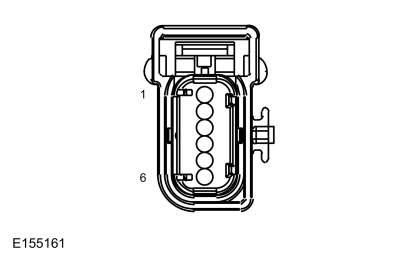 C3238, pin 3, harness side
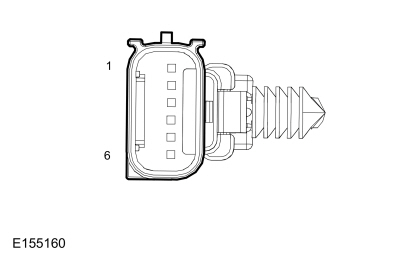 C3238, pin 3, component side