Kia Sorento: Manual Climate Control System (if equipped)
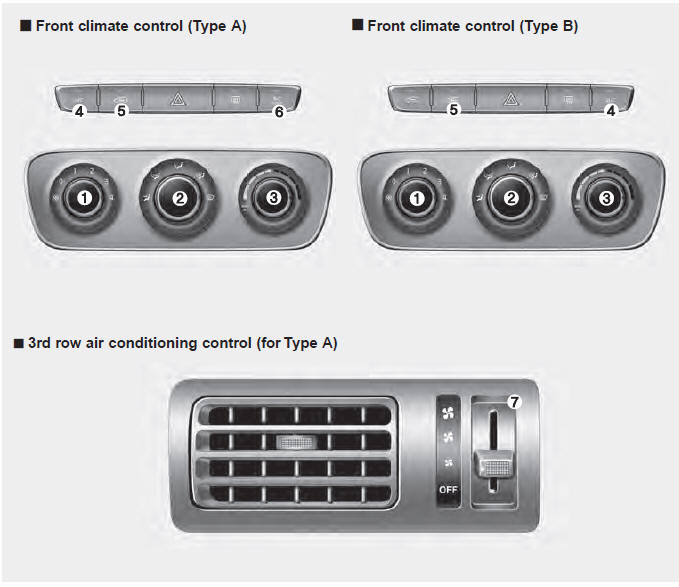
1. Fan Speed Control Knob
2. Mode Selector Knob
3. Temperature Control Knob
4. A/C Button
5. Air Intake Control Button
6. 3rd Row A/C ON/OFF Button (front-controlled)
7. 3rd Row A/C Fan Speed Switch.
Heating and Air Conditioning
1. Start the engine.
2. Set the mode to the desired position for improved heating and cooling;
- Heating:
- Cooling:
3. Set the temperature control to the desired position.
4. Set the air intake control to the fresh (outside) air position (if equipped).
5. Set the fan speed control to the desired speed.
6. If air conditioning is required, turn on the air conditioning system (if equipped).
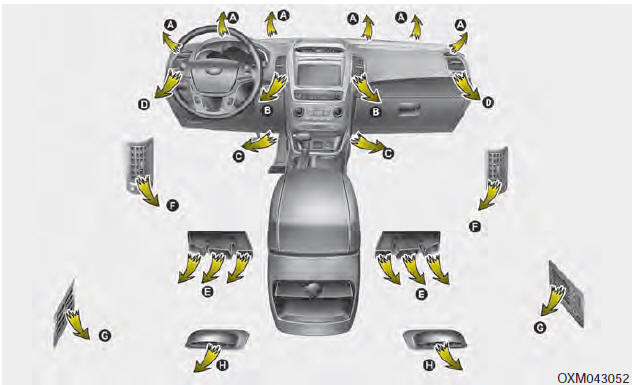
❈ 2nd and 3rd Row Vents (E, F, G, H) (G, H: if equipped)
- The airflow through the 2nd and 3rd row vents is controlled by the front climate control system and supplied through the internal floor duct (E, F, H).
- The airflow from the 2nd and 3rd row vents (E, F, H) may be weaker than the instrument panel vents due to the long duct.
- Close the vents (F) in cold weather. The airflow from the 2nd and 3rd row outlet vents may feel slightly cool during heating operation. (Use the 2nd and 3rd row outlet vents (F, G) in cooling mode.)
Mode Selection
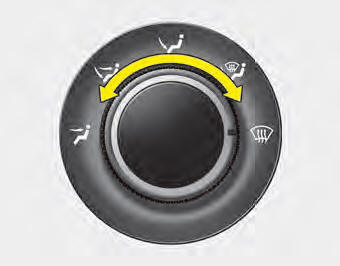
The mode selection knob controls the direction of airflow through the ventilation system.
Air can be directed to the floor, instrument panel vents, or windshield. Six symbols are used to represent the MAX A/C, Face, Bi-Level, Floor, Floor-Defrost, and Defrost airflow positions.
MAX A/C mode is used to cool the vehicle interior more quickly.
Face level (B, D, F)

Airflow is directed to the upper body and face. In addition, each vent can be adjusted to direct the air flowing out of the outlet.
Bi-Level (B, D, E, C, F, H)

Airflow is directed to the face and floor.
Floor (C, E, H, A, D)

Most of the airflow is directed to the floor, with a small amount directed to the windshield and side window defroster vents.
Floor/Defrost (A, C, D, E, H)

Most of the airflow is directed to the floor and windshield, with a small amount directed to the side window defroster vents.
Defrost Level (A, D)

Most of the airflow is directed to the windshield, with a small amount directed to the side window defroster vents.
Instrument Panel Vents
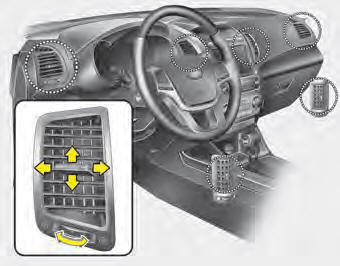
The vents can be opened or closed individually using the adjustment ring (if equipped).
You can also adjust the direction of airflow from these vents using the ventilation control lever, as shown in the illustration.
Temperature Control
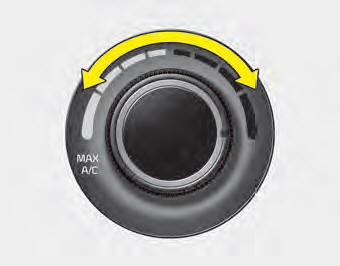
The temperature control knob regulates the temperature of the air flowing from the ventilation system.
To change the interior air temperature, turn the knob to the right for warm or hot air, or to the left for cooler air.
Air Intake Control
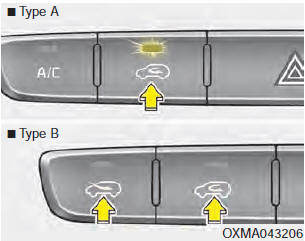
The air intake control is used to select the outside (fresh) air position or the recirculation position.
To change the air intake control position, press the control button.
Recirculated Air Position

When the recirculation position is selected, air from the passenger compartment passes through the heating system and is heated or cooled depending on the selected function.
Outside (Fresh) Air Position


When the outside (fresh) air position is selected, outside air enters the vehicle and is heated or cooled depending on the selected function.
✽ NOTICE
Operating the heater in recirculated air mode for a long time (without the air conditioner on) may cause the windshield and side windows to fog up, and the air inside the vehicle may become stale. In addition, using the air conditioner continuously with recirculated air mode selected will cause the air inside the vehicle to become excessively dry.
WARNING
- Continued use of the climate control system in recirculation mode may increase humidity inside the vehicle, which may cause the windows to fog up and reduce visibility.
- Do not sleep in the vehicle with the air conditioner or heater on. This may result in serious injury or death due to a drop in oxygen level and/or body temperature.
- Continued use of the climate control system in recirculation mode may cause drowsiness or fatigue, and loss of control of the vehicle. Set the air intake control to the fresh (outside) air position as much as possible while driving.
Blower Speed Control
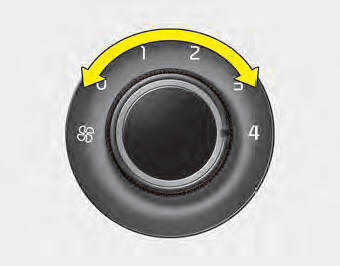
The ignition switch must be in the ON position for the blower to operate.
The fan speed control knob allows you to control the speed of the air flow from the ventilation system. To change the fan speed, turn the knob clockwise for higher speed or counterclockwise for lower speed.
Setting the fan speed control knob to the "0" position turns the fan off.
Air Conditioning

Press the A/C button to turn on the air conditioning system (the indicator will illuminate). Press the button again to turn the air conditioning system off.
Third Row Air Conditioning (if equipped)
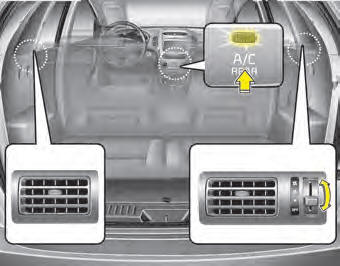
To turn on the third row air conditioning control system
1. Press the 3rd row A/C ON/OFF button (the indicator on the button will illuminate), located on the front climate control panel, and set the fan speed to the desired speed using the 3rd row fan speed switch.
2. To turn off the third row air conditioning control system, press the third row A/C ON/OFF button again on the front climate control panel, or set the fan speed to OFF using the third row fan speed switch.
System Operation
Ventilation
1. Set the mode to
position.
2. Set the air intake control to the outside (fresh) air position.
3. Set the temperature control to the desired position.
4. Set the fan speed control to the desired speed.
Heating
1. Set the mode to
position.
2. Set the air intake control to the outside (fresh) air position.
3. Set the temperature control to the desired position.
4. Set the fan speed control to the desired speed.
5. If dehumidified heating is required, turn on the air conditioning system (if equipped).
If the windshield fogs up, set the mode to or
 position.
- To prevent dust or unpleasant odors from entering the vehicle through the ventilation system, temporarily set the air intake control to recirculation. Be sure to return the control to the fresh air position when the irritant has passed to keep fresh air in the vehicle. This helps keep the driver alert and comfortable.
- Air for the heating/cooling system is drawn in through the grille only in front of the windshield. Make sure the grille is not blocked by leaves, snow, ice, or other obstructions.
- To prevent interior windshield fogging, set the air intake control to the fresh air position, set the fan speed as desired, turn on the air conditioning, and adjust the temperature control to the desired temperature.
Air Conditioning
Kia air conditioning systems are filled with refrigerant.
1. Start the engine. Press the A/C button.
2. Set the mode to
position.
3. Set the air intake control to the outside air or recirculation position.
4. Adjust the fan speed and temperature for maximum comfort.
CAUTION
- The refrigerant system must be serviced only by trained and certified technicians to ensure correct and safe operation.
- The refrigerant system should be serviced in a well-ventilated area.
- The air conditioning evaporator (cooling coil) is never to be repaired or replaced with one removed from a used or salvaged vehicle. New MAC evaporators must be certified (and marked) as conforming to SAE J2842.
✽ NOTICE
- When using the air conditioning system, watch the temperature gauge closely when driving uphill or in heavy traffic at high outside temperatures. Operating the air conditioning system may cause the engine to overheat. Continue to use the blower, but turn off the air conditioning system if the gauge indicates engine overheating.
- When opening the windows in humid weather, the air conditioning may cause water droplets to form inside the vehicle. Since excessive water droplets may cause damage to electrical equipment, the air conditioning should be used only with the windows closed.
- If the vehicle has been parked in direct sunlight in hot weather, open the windows briefly to release the hot air from the vehicle interior.
- To reduce humidity and fogging on the windows on rainy or humid days, reduce the humidity inside the vehicle with the air conditioning system turned on.
- During air conditioning operation, you may occasionally notice a slight change in engine speed when the A/C compressor engages. This is a normal operating characteristic of the system.
- Operate the air conditioning system for only a few minutes each month to maintain maximum system performance.
- When using the air conditioning system, you may notice clear water dripping (or even puddles) on the ground under the passenger side of the vehicle. This is a normal operating characteristic of the system.
- Operating the air conditioning system in recirculation mode provides maximum cooling; however, continuous operation in this mode may cause the air inside the vehicle to become stale.
- During cooling operation, you may occasionally notice a misty airflow due to rapid cooling and intake of humid air. This is a normal characteristic of system operation.
Test yourself
A quick Kia Sorento Owner's Manual quiz: every answer comes with an explanation and a link to the manual page.