Appearance Care
Exterior Care
General exterior precautions
When using chemical cleaners or polishing products, always follow the instructions on the product label. Read all caution and warning statements on the label.
Painted surface maintenance
Washing To protect the painted surfaces of the vehicle from rust and deterioration, wash them thoroughly and frequently, at least once a month, with lukewarm or cold water.
If the vehicle is used off-road, wash it after off-road driving.
Pay particular attention to removing salt, dirt, mud and other foreign materials. Make sure the drain holes on the lower edges of the doors and hinged panels are unobstructed and clean.
Insects, tar, tree resin, bird droppings, industrial pollution and similar deposits can damage the vehicle's painted surfaces if not removed immediately.
Even immediate washing with plain water may not completely remove all of these deposits. A neutral soap suitable for painted surfaces may be used.
At the end of washing, rinse the vehicle thoroughly with lukewarm or cold water. Do not let soap dry on the painted surface.
WARNING
- Do not use harsh soap, chemical cleaners or boiling water, and do not wash the vehicle in direct sunlight or when the body is hot.
- Do not direct high-pressure water jets too close to the side windows. Water may seep between the windows and wet the interior.
- To prevent damage to plastic parts, do not use chemical solvents or harsh cleaners for washing.
High-pressure washing
- When performing high-pressure washing, make sure to keep a sufficient distance from the vehicle.
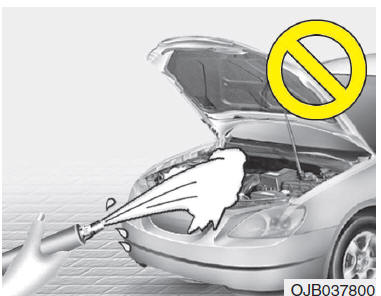
WARNING
- Washing the engine compartment with a high-pressure water jet may cause malfunctions in the electrical circuits located in the engine compartment.
- Prevent water or other liquids from contacting electrical/electronic components inside the vehicle, as they may be damaged.
Waxing Before waxing the vehicle, make sure there is no residual water on the paint.
Always wash and dry the vehicle before waxing. Use a good-quality liquid or paste wax, and follow the manufacturer's instructions.
Apply wax to all metal trim to protect it and maintain its shine.
Removing oil, tar and similar materials with a solvent usually strips the wax from the finish. Reapply wax to these areas even if the rest of the vehicle does not yet need waxing.
WARNING
- Removing dust and dirt from the body with a dry cloth will cause scratches on the body.
- Do not use steel wool, abrasive cleaners, or harsh cleaners with high alkaline or caustic content on chrome-plated and anodized aluminum parts. They may damage the protective coating or cause the paint to discolor or deteriorate.
Repairing damage to painted surfaces Deep scratches or gouges caused by stone chips on painted surfaces must be repaired promptly. Exposed metal oxidizes rapidly, leading to higher repair costs.
NOTE If the vehicle is damaged and requires repair or replacement of metal components, make sure that anti-corrosion materials are applied to the components being repaired or replaced at the body shop.
Care of bright metal parts
- To remove tar and insects, use a tar remover, not scrapers or sharp objects.
- To protect the bright metal components from the polished metal parts, apply a wax coating or a chrome protectant and polish thoroughly.
- During winter or in coastal areas, protect the polished metal parts with an extra layer of wax or protective products. If necessary, apply non-corrosive petroleum jelly or another protective compound to the affected components.
Underbody care Corrosive materials used to remove ice, snow and dust can accumulate on the underbody. If these materials are not removed, the underbody components, such as fuel lines, frame, floor pan and exhaust system, may corrode early, even if they have been treated with rust protection.
Wash the underbody and wheel housings thoroughly with warm or cold water once a month, after off-road driving and at the end of the winter period.
Pay particular attention to these areas, because mud and dirt are sometimes difficult to detect. Merely wetting road dirt without removing it is even more harmful. The lower edges of doors, hinged panels and frame elements have drain holes that must always be kept clear; water trapped on these surfaces can cause corrosion.
CAUTION After washing the vehicle, test the brakes by driving slowly to verify full braking efficiency. If braking performance is inadequate, dry the brakes by applying them gently while driving at low speed.Aluminium wheel care Aluminium wheels are protected with a clear protective coating.
- Do not use abrasive cleaners, polishing compounds or wire brushes on aluminium wheels. These may scratch or damage the coating.
- Clean the wheels once they have cooled down.
- Use only mild soap or neutral detergent, and rinse thoroughly with water. Also clean the wheels after driving on roads that have been salted. This prevents corrosion.
- Do not wash the wheels with the brushes of automatic car washes.
- Do not use acidic or alkaline cleaners.
Corrosion protection
Protecting the vehicle from corrosion The use of the most advanced design and construction methods to fight corrosion allows us to produce vehicles of very high quality.
However, this is only the beginning. To ensure the corrosion resistance that the vehicle is designed to offer, the owner's cooperation and care are also required.
Common causes of corrosion The most common causes of vehicle corrosion are:
- Salt, dirt and moisture from the road surface accumulating under the vehicle.
- Removal of protective coatings by stones, gravel, abrasion, or surface scratches and dents that leave the metal unprotected and exposed to corrosion.
Areas subject to high corrosion If you live in areas where the vehicle is regularly exposed to corrosive materials, corrosion protection is especially important. Some of the most common causes of early corrosion are salt spread on roads, dust-control chemicals, sea air and industrial pollution.
Moisture promotes corrosion Moisture creates the conditions in which corrosion occurs most easily.
For example, corrosion is accelerated by high humidity, especially at temperatures slightly above zero. Under these conditions, corrosive material is kept in contact with the vehicle surfaces by moisture that evaporates slowly.
Mud is particularly corrosive because it dries slowly and retains moisture in contact with the vehicle.
Although mud may appear dry, it can still retain moisture and promote corrosion.
High temperatures can also accelerate corrosion of components that are not adequately ventilated and in which moisture cannot escape. For all these reasons, it is especially important to keep the vehicle free of mud and accumulated material. This applies not only to visible surfaces, but especially to the underbody of the vehicle.
This is how corrosion is prevented Corrosion can be prevented by following these guidelines:
Clean the vehicle regularly
The most effective method of preventing corrosion is to keep the vehicle clean by removing corrosive materials. Pay particular attention to the underbody of the vehicle.
- If you live in an area with a high concentration of corrosive substances, i.e. where roads are frequently salted, near the sea, or in areas with heavy industrial pollution, acid rain, etc., take additional precautions to prevent corrosion.
Keep the garage dry Do not park the vehicle in a damp or poorly ventilated garage. This condition creates an environment that promotes corrosion. This happens, for example, if you wash the vehicle inside the garage or bring it into the garage while it is still covered with snow, ice or mud.
Even a heated garage can promote corrosion unless it is adequately ventilated to disperse the moisture.
Keep the paint and coatings in good condition Any scratches or chips in the paint must be touched up with suitable paint as soon as possible to prevent possible corrosion. If bare metal is showing, it is recommended to have the vehicle repaired by a qualified body shop.
Bird droppings: These are highly corrosive and can damage painted surfaces within a few hours. Remove bird droppings as soon as possible.
Do not neglect the interior Moisture can collect under the floor mats and carpeting and cause corrosion. Check under the floor mats regularly to make sure they are not wet. Take particular care when transporting fertilizers, cleaning materials or chemicals in the vehicle.
These materials must only be transported in suitable containers. Any traces of spilled material or leaks must be removed, washed with clean water and thoroughly dried.
Interior care
General interior precautions Prevent interior parts from coming into contact with perfumes, cosmetic oils, sunscreens, cleaning soaps and deodorants to avoid the risk of damage or discoloration. If interior parts are contaminated by these products, clean them immediately.
For the correct cleaning procedures for vinyl components, see the following instructions.
WARNING Prevent water or other liquids from contacting electrical/electronic components inside the vehicle, as they may be damaged. WARNING To clean leather surfaces (steering wheel, seats, etc.), use neutral cleaners or low-alcohol solutions. Using high-alcohol solutions or acidic/alkaline cleaners may fade the leather color or cause it to tear.Cleaning the upholstery and interior trim
Vinyl components Remove dust and dirt from vinyl components with a soft brush or a vacuum cleaner. Clean vinyl surfaces with a suitable cleaner.
Fabric components Remove dust and dirt from fabric components with a soft brush or a vacuum cleaner. Clean with a neutral soap solution suitable for upholstery or carpets. Remove new stains immediately with a fabric stain remover. If stains are not removed promptly, the fabric may become permanently stained and discolored.
In addition, improper maintenance of the materials may also compromise their flame-retardant properties.
WARNING Using cleaners and procedures not recommended may affect the appearance of the fabric and its flame-retardant properties.Cleaning the three-point seat belt webbing Clean the seat belt webbing with a neutral soap solution recommended for cleaning upholstery or carpets.
Follow the instructions provided with the soap. Do not treat with bleach or dye the seat belt webbing, as this may weaken it.
Cleaning the inside surfaces of the windows If the inside surfaces of the vehicle windows become fogged (i.e. if they have an oily, greasy or waxy film), clean them with glass cleaner. Follow the instructions on the glass cleaner container.
WARNING Do not scratch or scrape the inside surface of the rear window, to avoid damaging the rear window defroster elements.Test yourself
A quick Kia Picanto JA quiz: every answer comes with an explanation and a link to the manual page.