Instruments and Controls - Emergency Call (SOS) button

In this manual: Instruments and Controls - Emergency Call (SOS) button
Air bags, seat belts and child restraints — 1Exterior front — 1Exterior rear — 1Passenger compartment — 1Instrument panel — 1Engine compartment check locations — 1Warning and indicator lights — 1Basic Information — 1Basic Information — 1Precautions on Seat Belt Usage — 1Safety - Seats, Seat Belts and Supplemental Restraint System - Child safety — 1Precautions on child restraints — 1Precautions on SRS — 1Instruments and Controls - Instrument Panel — 1Basic Information — 1Warning & Indicator Lights — 1Basic Information — 1Instruments and Controls - Security Systems — 1Instruments and Controls - Wiper and Washer Switch — 1Headlight Control Switch — 1Instruments and Controls - Horn — 1Instruments and Controls - Heated Seat Switches — 1Instruments and Controls - Heated Steering Wheel Switch — 1Instruments and Controls - Vehicle Dynamic Control (VDC) OFF Switch — 1Instruments and Controls - Hill Descent Control Switch — 1Instruments and Controls - Warning systems switch — 1Instruments and Controls - Electronic locking rear differential (E-Lock) system switch — 1Instruments and Controls - Power inverter switch — 1Instruments and Controls - Parking Aids system switch — 1Instruments and Controls - Tow mode switch — 1Instruments and Controls - Emergency Call (SOS) button — 1Instruments and Controls - USB charging ports — 1Instruments and Controls - Wireless charger — 1Instruments and Controls - Rear Door Alert — 1Instruments and Controls - Power outlets — 1Instruments and Controls - Extended storage switch — 1Front-door pockets — 1Instruments and Controls - Windows — 1Instruments and Controls - Moonroof — 1Instruments and Controls - Interior lights — 1Instruments and Controls - HomeLink Universal Transceiver — 1Pre-driving checks and adjustments - Keys — 1Basic information — 1Basic information — 1Basic information — 1Pre-driving checks and adjustments - Hood — 1Pre-driving checks and adjustments - Fuel-filler door — 1Pre-driving checks and adjustments - Steering wheel — 1Pre-driving checks and adjustments - Sun visors — 1Pre-driving checks and adjustments - Mirrors — 1Pre-driving checks and adjustments - Truck box — 1Monitor, climate, audio, phone and voice recognition systems - NissanConnect Owner's Manual — 1Monitor, climate, audio, phone and voice recognition systems - Safety Note — 1Basic Information — 1Basic Information — 1Basic Information — 1Basic Information — 1Basic Information — 1Monitor, climate, audio, phone and voice recognition systems - Servicing air conditioner — 1Monitor, climate, audio, phone and voice recognition systems - Car phone or CB radio — 1Basic Information — 1Basic Information — 1Starting and driving - Starting the engine — 1Engine protection mode — 1Starting and driving - Parking brake — 1Starting and driving - Terrain Mode Selector — 1Starting and driving - Traffic Sign Recognition (TSR) — 1Basic Information — 1Basic Information — 1Basic Information — 1Basic Information — 1Basic Information — 1Basic Information — 1Basic Information — 1Basic Information — 1Starting and driving - Intelligent Driver Alertness (I-DA) — 1Starting and driving - Break-in schedule — 1Starting and driving - Using 4-Wheel Drive (4WD) — 1Starting and driving - Electronic locking rear differential (E-Lock) system — 1Starting and driving - Parking/parking on hills — 1Starting and driving - Brake system — 1Starting and driving - Active Brake Limited Slip (ABLS) system — 1Starting and driving - Vehicle Dynamic Control (VDC) system — 1Starting and driving - Hill descent control system — 1Starting and driving - Hill start assist system — 1Basic Information — 1Basic Information — 1Starting and driving - Cold weather driving — 1In case of emergency - Hazard warning flasher switch — 1In case of emergency - Flat tire — 1In case of emergency - Jump starting — 1In case of emergency - If your vehicle overheats — 1In case of emergency - Towing your vehicle — 1Appearance and care - Cleaning exterior — 1Appearance and care - Cleaning interior — 1Appearance and care - Corrosion protection — 1Do-it-yourself - Maintenance precautions — 1Do-it-yourself - Engine compartment check locations — 1Basic information — 1Checking engine oil level — 1Do-it-yourself - Automatic Transmission Fluid (ATF) — 1Do-it-yourself - Brake fluid — 1Do-it-yourself - Windshield-washer fluid — 1Do-it-yourself - Battery — 1Do-it-yourself - Variable voltage control system — 1Do-it-yourself - Drive belt — 1Do-it-yourself - Spark plugs — 1Do-it-yourself - Air cleaner — 1Do-it-yourself - Windshield wiper blades — 1Do-it-yourself - Brakes — 1Do-it-yourself - Fuses — 1Do-it-yourself - Intelligent Key battery replacement — 1Do-it-yourself - Lights — 1Tire pressure — 1Maintenance and schedules — 5Technical and consumer information — 14
~4min read
1special tools

Emergency support

Basic Information

NissanConnect Services provide a variety of connected services designed to assist Nissan Frontier owners during emergency situations and unexpected incidents.

For example, if the driver or an occupant experiences a medical emergency or serious injury, assistance can be requested by pressing the in-vehicle Emergency Call (SOS) button. Once connected to the NissanConnect Services Response Center, trained specialists can determine the vehicle's location using GPS technology and coordinate assistance from emergency responders, law enforcement agencies, or other appropriate services.

For information regarding additional NissanConnect Services emergency-support functions, contact the NissanConnect Customer Support line at 1-855-426-6628 or visit the NissanConnect Services website. Availability of services may vary depending on region, subscription status, and network coverage.

WARNING

  • Please note that the Automatic Collision Notification service and Emergency Call function cannot be used in the following conditions:
    • Emergency functions and services will not be available without an active paid subscription to NissanConnect Services.
    • The NissanConnect Services network system is disabled.
    • The vehicle moves outside the service area where the TCU (Telematics Control Unit) can connect to the network.
    • The vehicle is outside an area with available cellular network coverage.
    • The vehicle is located in an area with poor signal reception, such as tunnels, underground parking structures, behind large buildings, or in mountainous regions.
    • The communication line is busy.
    • The TCU (Telematics Control Unit) or other related vehicle systems are not functioning properly.
    • Depending on the severity of a collision or emergency situation, an emergency call may not be possible.
  • Always park the Nissan Frontier in a safe location and apply the parking brake before operating the Emergency Call (SOS) button.
  • Use this service only for genuine emergencies. Improper or unnecessary use of emergency services may result in penalties.
  • Radio-frequency signals may affect certain types of medical equipment. Individuals using pacemakers should consult the device manufacturer regarding possible effects before operating the system.
  • The TCU (Telematics Control Unit) antenna is installed inside the upper central section of the instrument panel.

    An occupant should not remain closer to the antenna than the distance specified by the pacemaker manufacturer. Radio waves emitted from the TCU antenna may interfere with pacemaker operation while NissanConnect Services are being used.
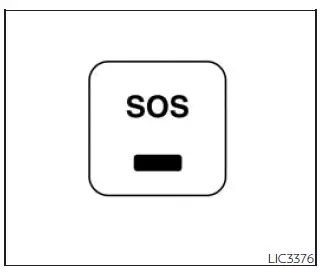
Nissan Frontier Emergency Call SOS button near overhead map lights

Making an emergency call

The Emergency Call (SOS) button in the Nissan Frontier is located near the overhead map lights for quick and convenient access during urgent situations.

1. Press the Emergency Call (SOS) button to initiate an emergency call.

2. Once the connection has been established, speak directly with the Response Specialist and provide any relevant information regarding the emergency.

If you decide to cancel the emergency call before the connection is completed, press and hold the Emergency Call (SOS) button for several seconds.

NOTE:

  • After pressing the Emergency Call (SOS) button, it may take some time for the Nissan Frontier system to establish a connection. Connection speed depends on network availability, signal strength, and whether the TCU (Telematics Control Unit) is currently being used by other services.
  • An indicator light on the Emergency Call (SOS) button displays the operational status of the emergency support system. If the light is not illuminated, pressing the button will not connect the vehicle to a Response Specialist. The indicator light flashes while communication with the NissanConnect Services Response Center is active.
  • Even when the indicator light is illuminated, connection to the NissanConnect Services Response Center may not always be possible. In a critical emergency, contact local emergency authorities using alternative communication methods if necessary.
  • To reduce the possibility of an interrupted connection, keep the engine running during an emergency call whenever it is safe and practical to do so.

By combining GPS location services, wireless communication technology, and trained emergency response personnel, NissanConnect Services provide Nissan Frontier drivers with an additional layer of confidence and support when unexpected situations occur.


next pagenext pageTow mode switchUSB charging portsnext pagenext page

Nissan Frontier 2022-2026 Owner's Manual

More Nissan Vehicles

More Nissan Manuals

More Owner's Manuals

© 2023-2026 - Nissan Frontier technical manuals - www.nifrontier.com/