Safety-Seats, seat belts and supplemental restraint system - Head restraints/headrests

In this manual: Safety-Seats, seat belts and supplemental restraint system - Head restraints/headrests
Air bags, seat belts and child restraints — 1Warning and indicator lights — 1Safety-Seats, seat belts and supplemental restraint system - Seats — 1Safety-Seats, seat belts and supplemental restraint system - Head restraints/headrests — 1Safety-Seats, seat belts and supplemental restraint system - Seat belts — 1Safety-Seats, seat belts and supplemental restraint system - Child safety — 1Safety-Seats, seat belts and supplemental restraint system - Child restraints — 1Safety-Seats, seat belts and supplemental restraint system - Supplemental Restraint System (SRS) — 1Instruments and controls - Instrument panel — 1Instruments and controls - Meters and gauges — 1Instruments and controls - Warning lights, indicator lights and audible reminders — 1Instruments and controls - Vehicle information display 7 inch (18 cm) Type A — 1Instruments and controls - Vehicle information display 12.3 inch (31 cm) Type B — 1Instruments and controls - Security systems — 1Instruments and controls - Wiper and washer switch — 1Instruments and controls - Headlight and turn signal switch — 1Instruments and controls - Climate controlled seat switches — 1Instruments and controls - Heated seat switches — 1Instruments and controls - Heated 2nd row seat switches — 1Instruments and controls - Hill descent control switch — 1Instruments and controls - Head Up Display (HUD) — 1Instruments and controls - Emergency call (SOS) button — 1Instruments and controls - Rear Door Alert — 1Instruments and controls - Power outlets — 1Instruments and controls - USB/iPod charging ports — 1Instruments and controls - Wireless charger — 1Instruments and controls - Storage — 1Instruments and controls - Windows — 1Instruments and controls - Power moonroof — 1Instruments and controls - Interior lights — 1Instruments and controls - HomeLink Universal Transceiver — 1Pre-driving checks and adjustments - Keys — 1Pre-driving checks and adjustments - Doors — 1Pre-driving checks and adjustments - NISSAN Intelligent Key system — 1Pre-driving checks and adjustments - Remote Engine Start — 1Pre-driving checks and adjustments - Hood — 1Pre-driving checks and adjustments - Liftgate — 1Pre-driving checks and adjustments - Fuel-filler door — 1Pre-driving checks and adjustments - Steering wheel — 1Pre-driving checks and adjustments - Sun visors — 1Pre-driving checks and adjustments - Mirrors — 1Pre-driving checks and adjustments - Memory seat — 1Monitor, climate, audio, phone and voice recognition systems - NissanConnect Owner's Manual — 1Monitor, climate, audio, phone and voice recognition systems - RearView Monitor — 1Monitor, climate, audio, phone and voice recognition systems - Intelligent Around View Monitor — 1Monitor, climate, audio, phone and voice recognition systems - Camera aiding sonar (parking sensor) — 1Monitor, climate, audio, phone and voice recognition systems - Moving Object Detection (MOD) — 1Monitor, climate, audio, phone and voice recognition systems - Heater and air conditioner (automatic) — 1Monitor, climate, audio, phone and voice recognition systems - Servicing air conditioner — 1Monitor, climate, audio, phone and voice recognition systems - Car phone or CB radio — 1Starting and driving - Precautions when starting and driving — 1Starting and driving - Push-button ignition switch — 1Starting and driving - Starting the engine — 1Starting and driving - Driving the vehicle — 1Starting and driving - Parking brake — 1Starting and driving - Automatic brake hold — 1Starting and driving - Drive Mode Selector — 1Starting and driving - Traffic Sign Recognition (TSR) — 1Starting and driving - Lane Departure Warning (LDW) — 1Starting and driving - Intelligent Lane Intervention (I-LI) — 1Starting and driving - Blind Spot Warning (BSW) — 1Starting and driving - Intelligent Blind Spot Intervention (I-BSI) — 1Starting and driving - Rear Cross Traffic Alert (RCTA) — 1Starting and driving - Cruise control — 1Starting and driving - ProPILOT Assist — 1Starting and driving - Rear Automatic Braking (RAB) — 1Starting and driving - Automatic Emergency Braking (AEB) with Pedestrian Detection — 1Starting and driving - Intelligent Forward Collision Warning (I-FCW) — 1Starting and driving - Intelligent Driver Alertness (I-DA) — 1Starting and driving - Fuel efficient driving tips — 1Starting and driving - Intelligent 4X4 (I-4X4) — 1Starting and driving - Parking/parking on hills — 1Starting and driving - Power steering — 1Starting and driving - Brake system — 1Starting and driving - Vehicle Dynamic Control (VDC) system — 1Starting and driving - Active Brake Limited Slip (ABLS) system — 1Starting and driving - Chassis control — 1Starting and driving - Hill descent control system — 1Starting and driving - Hill start assist system — 1Starting and driving - Front and Rear Sonar System — 1Starting and driving - Idling Stop System — 1Starting and driving - Cold weather driving — 1In case of emergency - Hazard warning flasher switch — 1In case of emergency - Flat tire — 1In case of emergency - Jump starting — 1In case of emergency - If your vehicle overheats — 1In case of emergency - Towing your vehicle — 1Appearance and care - Cleaning exterior — 1Appearance and care - Cleaning interior — 1Appearance and care - Corrosion protection — 1Do-it-yourself - Maintenance precautions — 1Do-it-yourself - Engine compartment check locations — 1Do-it-yourself - Engine oil — 1Do-it-yourself - Automatic Transmission Fluid (ATF) — 1Do-it-yourself - Windshield-washer fluid — 1Do-it-yourself - Battery — 1Do-it-yourself - Variable voltage control system — 1Do-it-yourself - Drive belt — 1Do-it-yourself - Spark plugs — 1Do-it-yourself - Air cleaner — 1Do-it-yourself - Windshield wiper blades — 1Do-it-yourself - Brakes — 1Do-it-yourself - Fuses — 1Do-it-yourself - Battery replacement — 1Do-it-yourself - Lights — 1Do-it-yourself - Wheels and tires — 1Maintenance and schedules - Maintenance requirements — 1Maintenance and schedules - General maintenance — 1Maintenance and schedules - Explanation of scheduled maintenance items — 1Maintenance and schedules - Maintenance schedules — 1Technical and consumer information - Recommended fluids/lubricants and capacities — 1Technical and consumer information - Specifications — 1Technical and consumer information - Vehicle identification — 1Technical and consumer information - Vehicle loading information — 1Technical and consumer information - Towing a trailer — 1Technical and consumer information - Flat towing your vehicle — 1Technical and consumer information - Uniform tire quality grading — 1Technical and consumer information - Reporting safety defects — 1Technical and consumer information - Readiness for Inspection/Maintenance (I/M) test — 1Technical and consumer information - Event Data Recorders (EDR) — 1
8steps
~48min
2/5difficulty
Done 0 of 8
  • Basic Information
  • Adjustable head restraint/headrest components

Basic Information Nissan Pathfinder Fifth generation

WARNING

Head restraints/headrests supplement the other vehicle safety systems. They may provide additional protection against injury in certain rear end collisions.

Adjustable head restraints/ headrests must be adjusted properly, as specified in this section. Check the adjustment after someone else uses the seat. Do not attach anything to the head restraint/headrest stalk, except for Genuine NISSAN accessories specifically tested for use with the vehicle's head restraint/headrest stalk. Do not remove the head restraint/headrest.

Do not use the seat if the head restraint/headrest has been removed.

If the head restraint/headrest was removed, reinstall and properly adjust the head restraint/headrest before an occupant uses the seating position.

Failure to follow these instructions can reduce the effectiveness of the head restraints/headrests. This may increase the risk of serious injury or death in a collision.
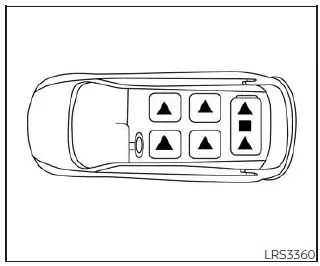
Nissan Pathfinder. Head restraints/headrests
Captain's chair (if so equipped)

The illustration shows the seating positions equipped with head restraints/headrests.

Indicates the seating position is equipped with a head restraint.

Indicates the seating position is equipped with a headrest.

  • Adjustable head restraints/headrests have multiple notches along the stalk(s) to lock them in a desired adjustment position.
  • The non-adjustable head restraints/ headrests have a single locking notch to secure them to the seat frame.
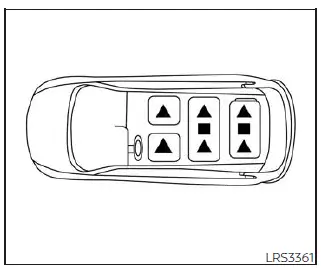
Nissan Pathfinder. Head restraints/headrests
Bench seats (if so equipped)

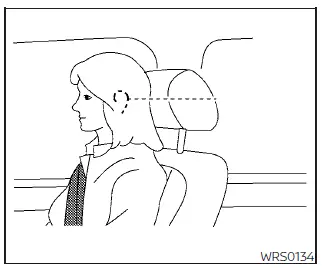
  • Proper Adjustment:
    • For the adjustable type, align the head restraint/headrest so the center of your ear is approximately level with the center of the head restraint/headrest.
    • If your ear position is still higher than the recommended alignment, place the head restraint/headrest at the highest position.
  • If the head restraint/headrest has been removed, ensure that it is reinstalled and locked in place before riding in that designated seating position.

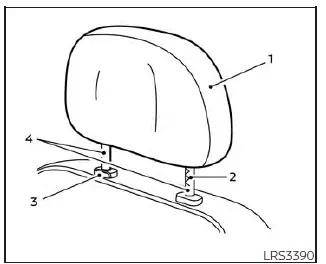
Adjustable head restraint/headrest components Nissan Pathfinder R53
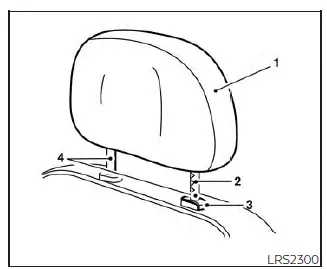
Nissan Pathfinder. Head restraints/headrests
Type A (if so equipped)

  1. Removable head restraint/headrest
  2. Multiple notches
  3. Lock knob
  4. Stalks

Nissan Pathfinder. Head restraints/headrests
Type B (if so equipped)

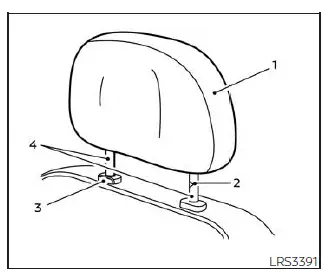
Non-adjustable head restraint/ headrest components
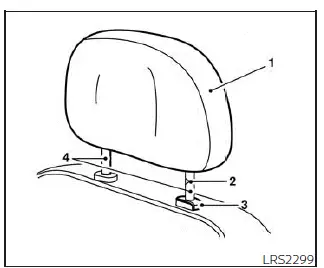
Nissan Pathfinder. Head restraints/headrests
Type A (if so equipped)

  1. Removable head restraint/headrest
  2. Single notch
  3. Lock knob
  4. Stalks

Nissan Pathfinder. Head restraints/headrests
Type B (if so equipped)

Remove

Nissan Pathfinder. Head restraints/headrests

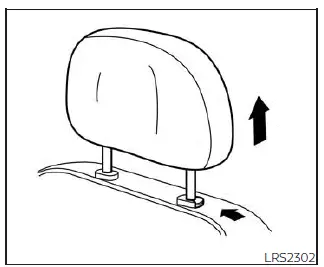
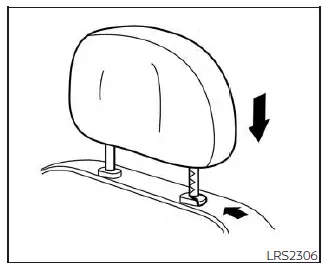
Use the following procedure to remove the head restraint/headrest:

1. Pull the head restraint/headrest up to the highest position.

2. Push and hold the lock knob.

3. Remove the head restraint/headrest from the seat.

4. Store the head restraint/headrest properly in a secure place so it is not loose in the vehicle.
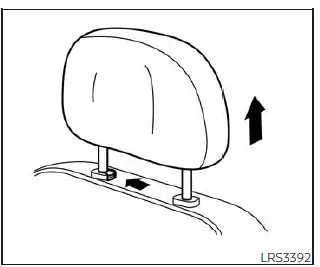
Nissan Pathfinder. Head restraints/headrests
Type B (if so equipped)

5. Reinstall and properly adjust the head restraint/headrest before an occupant uses the seating position.

Install
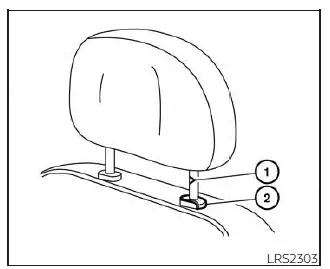
Nissan Pathfinder. Head restraints/headrests
Type A (if so equipped)

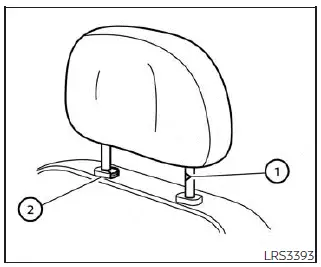
1. Align the head restraint/headrest stalks with the holes in the seat. Make sure that the head restraint/headrest is facing the correct direction. The stalk with the notch (notches) 1 must be installed in the hole with the lock knob 2.

2. Push and hold the lock knob and push the head restraint/headrest down.

3. Properly adjust the head restraint/ headrest before an occupant uses the seating position.
Nissan Pathfinder. Head restraints/headrests
Type B (if so equipped)

Adjust

Nissan Pathfinder. Head restraints/headrests

Basic Information

For adjustable head restraint/headrest

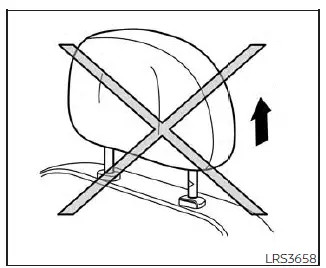
Adjust the head restraint/headrest so the center is level with the center of your ears.

If your ear position is still higher than the recommended alignment, place the head restraint/headrest at the highest position.
Nissan Pathfinder. Head restraints/headrests

For non-adjustable head restraint/headrest

Make sure the head restraint/headrest is positioned so the lock knob is engaged in the notch before riding in that designated seating position.
Nissan Pathfinder. Head restraints/headrests
Type A (if so equipped)

Raise

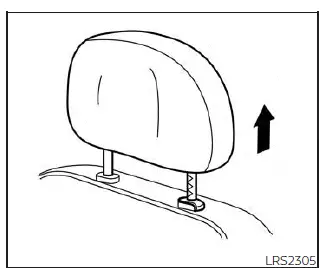
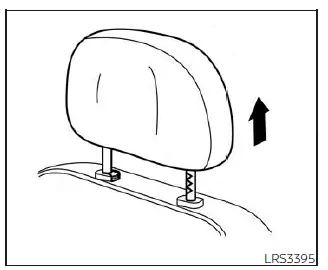
To raise the head restraint/headrest, pull it up.

Make sure the head restraint/headrest is positioned so the lock knob is engaged in the notch before riding in that designated seating position.
Nissan Pathfinder. Head restraints/headrests
Type B (if so equipped)

Nissan Pathfinder. Head restraints/headrests
Type A (if so equipped)

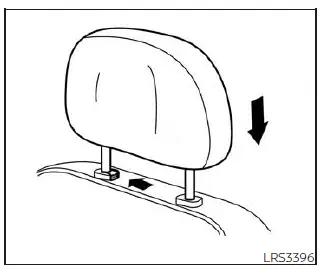
Lower

To lower, push and hold the lock knob and push the head restraint/headrest down.

Make sure the head restraint/headrest is positioned so the lock knob is engaged in the notch before riding in that designated seating position.
Nissan Pathfinder. Head restraints/headrests
Type B (if so equipped)

Nissan Pathfinder. Head restraints/headrests

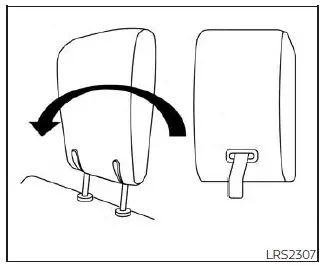
Folding head restraint/headrest

To fold the head restraint/headrest, pull the strap located on the rear of the head restraint/headrest.

If the head restraint/headrest has been folded, make sure that it is returned to the upright position.

Make sure the head restraint/headrest is positioned so the lock knobs are engaged in the notches before riding in that designated seating position.

WARNING

When the seat is returned to the normal seating position, the head restraint/ headrest must be returned to the upright position to properly protect vehicle occupants.