Starting and driving - Idling Stop System
- Basic information
- Retrograde movement control function
Basic information Nissan Pathfinder SUV
The Idling Stop System activates to prevent unnecessary fuel consumption, exhaust emissions and noise.
- When you stop the vehicle, the engine is turned off automatically.
- When you release the brake pedal to begin moving again, the engine is turned on automatically.
WARNING The engine restarts if the vehicle moves at approximately 2 km/h or more (on a downhill grade, etc.) while the engine is turned off by the Idling Stop System. Depress the brake pedal immediately to stop the vehicle to prevent an accident.
CAUTION At the end of the journey the engine must be stopped and ignition switch be pushed off. Lock the vehicle as normal.
Pushing the ignition switch off will shut down all electrical systems. Failure to do this may result in a discharged battery.
NOTE: The Idling Stop System will not activate under the following conditions:
- When the vehicle is in TOW mode.
- When the engine is kept idling without the vehicle being driven after the engine is turned on.
- When the engine coolant temperature is low.
- When the battery capacity is low.
- When the battery temperature is low.
- When the vehicle is moving.
- When a negative pressure booster decreases.
- When the engine hood is opened with the engine running.
- When the engine is turned on with the engine hood open.
- When the driver's seat belt is not fastened.
- When the driver's door is open.
- When the steering wheel is operated.
- When the Idling Stop System indicator blinks at a low speed.
- When the fan speed control is in any position other than "OFF," (0) while the air flow control is in the front defroster position.
- When the front defroster switch is on.
- When the rear window defroster switch is on.
- When the temperature inside the vehicle is lower than approximately 68ºF (20ºC), unless the Air Conditioning ECO customize option is selected, and the ECO driving mode is on.
- When the temperature inside the vehicle is higher than approximately 86ºF (30ºC), unless the Air Conditioning ECO customize option is selected, and the ECO driving mode is on. (When the air conditioner is off, the Idling Stop System will operate.)
- When the fan speed of the air conditioner is set to the maximum speed, unless the Air Conditioning ECO customize option is selected, and the ECO driving mode is on.
- When the Idling Stop OFF switch is turned on.
- When the power consumption is large.
- When the altitude is high.
- When the accelerator pedal is depressed.
- When the shift lever is in any range other than D (Drive).
- When the brake pedal is not firmly depressed.
- When stopping the vehicle on steep sloping roads.
NOTE: The Idling Stop System may not activate when the Intelligent Key is not in the vehicle and you open/close any door.
The engine will not restart even if the brake pedal is released while the Idling Stop System is activated under the following conditions: (The engine may restart under other conditions.)
- When the automatic brake hold system is activated.
- When the engine hood is opened.
NOTE: It may take some time until the Idling Stop System activates under the following conditions:
- When the battery is discharged.
- When the outside temperature is low or high.
- When the battery is replaced or the battery terminal is disconnected for extended periods and then reconnected.
NOTE: When the Idling Stop System indicator light illuminates, the engine starts running automatically under at least one of the following conditions:
- The vacuum pressure for the brake system is not enough as the brake pedal is repeatedly depressed.
- The driver's seat belt is unfastened, or the driver's door is open.
- The battery voltage becomes low (due to electrical load from other vehicle systems like headlights, heaters, etc., or auxiliary devices connected to the 12 volt socket inside the vehicle).
- The vehicle speed is above about 2 km/h.
- When the rear window defroster is operated.
- When the temperature inside the vehicle is lower than approximately 68ºF (20ºC), unless the Air Conditioning ECO customize option is selected, and the ECO driving mode is on.
- When the temperature inside the vehicle is higher than approximately 86ºF (30ºC), unless the Air Conditioning ECO customize option is selected, and the ECO driving mode is on. (When the air conditioner is off, the Idling Stop System will operate.)
- When the front defroster is turned on.
- When more than 3 minutes have elapsed since the Idling Stop System was active.
- When the accelerator pedal is depressed.
- When the steering wheel is operated.
(The steering wheel operation may become heavy, but this is not a malfunction.)
- When the battery capacity is low.
- When the power consumption is high.
- When the shift lever is in any range other than D (Drive).
- When the Idling Stop OFF switch is pushed.
- When the negative pressure of the brake system is not sufficiently applied by depressing the brake pedal several times.
NOTE: The Idling Stop System may not activate when the Intelligent Key is not in the vehicle and you open/close any door.
NOTE: The following condition will prevent the Idling Stop System from automatically restarting the engine. Starting the engine with the ignition switch operation is then necessary:
- The hood is open.
Use this system while waiting at a stop light, etc. When the vehicle is stopped for long periods of time, turn off the engine.
When the engine is stopped by the Idling Stop System, heating, cooling and dehumidifying functions will be deactivated. To avoid the air conditioning functions from being deactivated, turn off the Idling Stop System by pushing the Idling Stop OFF switch.
Retrograde movement control function Nissan Pathfinder SUV
This system is designed to reduce the retrograde movement that occurs while the driver's foot changes from depressing the brake pedal to the accelerator pedal when moving the vehicle while the Idling Stop System is active on a hilly road.
Idling Stop System display
The status of the Idling Stop System can be checked in the vehicle information display.
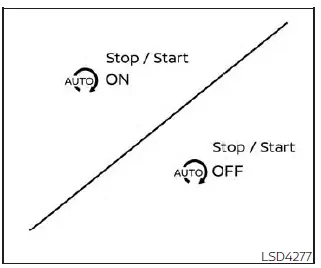
Idling Stop System ON or OFF
If the Idling Stop System is activated or deactivated using the Idling Stop OFF switch, the message is shown.
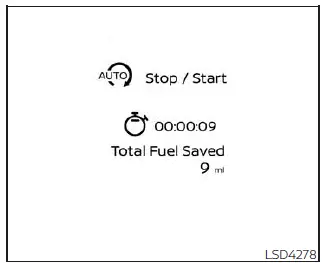
Fuel saved and engine stop time
The fuel saved and the engine stop time mode shows the following items:
- The fuel saved shows the estimated quantity of fuel that was saved by the Idling Stop System every time the engine is automatically stopped.
- The engine stop time shows the time that the engine has been stopped for by the Idling Stop System.
The total fuel saved and the engine stop time can also be checked in the vehicle information display.
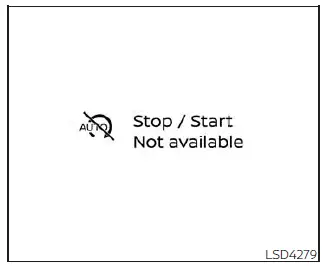
Auto start deactivation
If the engine stops when the Idling Stop System is activated and will not start automatically, the message is shown.
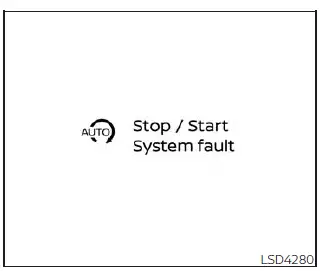
System fault
This message is displayed when the Idling Stop System is malfunctioning.
It is recommended that you have the system checked. It is recommended that you visit a NISSAN dealer for this service.
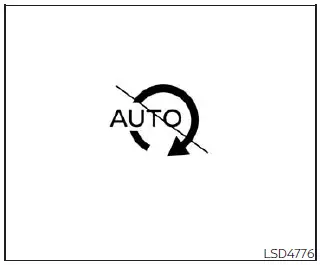
Idling Stop inhibition
This indicator is displayed when the vehicle is stopped if the engine is prevented from automatically stopping by the Idling Stop system under the inhibition conditions.
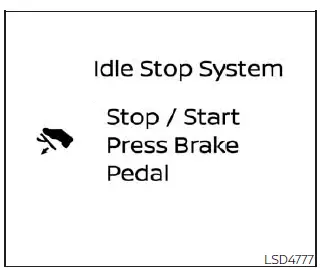
Idling Stop guidance display (further depressing the brake pedal)
When the vehicle is stopped, and the ISS screen is shown in the vehicle information display, the guidance is displayed if the Idling Stop system is deactivated due to not fully depressing the brake pedal.
If you wish to activate the Idling Stop system, further depress the brake pedal.
The display appears when Fuel saved and engine stop time is selected on the vehicle information display.
The display disappears under the following conditions:
- The Idling Stop system is activated.
- The vehicle starts running.
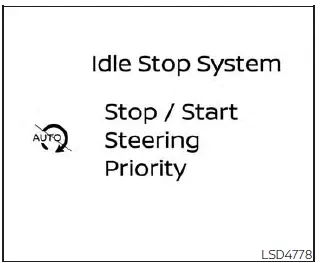
Idling Stop guidance display (detection of the steering operation)
When the vehicle is stopped, and the ISS screen is shown in the vehicle information display, the guidance is displayed if the Idling Stop system is deactivated since the steering operation is detected.
The Idling Stop system is deactivated due to steering operation being detected.
The display appears when Fuel saved and engine stop time is selected on the vehicle information display.
The display disappears under the following conditions:
- The Idling Stop system is activated.
- The vehicle starts running.
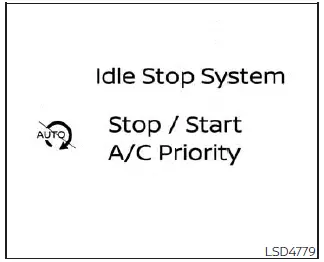
Idling Stop guidance display (placing priority on the air conditioner)
When the vehicle is stopped, and the ISS screen is shown in the vehicle information display, the guidance is displayed if the Idling Stop system is deactivated since the air conditioner (cooling, heating or dehumidifying functions) is given priority.
The Idling Stop system is deactivated since the air conditioner is given priority.
The display appears when Fuel saved and engine stop time is selected on the vehicle information display.
The display disappears under the following conditions:
- The Idling Stop system is activated.
- The vehicle starts running.
Idling Stop OFF switch
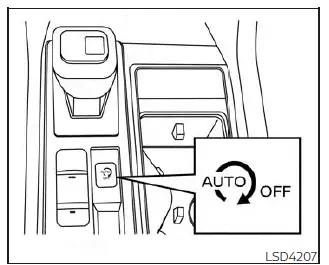
The system can be temporarily deactivated by pushing the Idling Stop OFF switch. Pushing the switch again or restarting the engine by using the ignition switch will reactivate the Idling Stop System.
- When the Idling Stop System is deactivated while the engine is running, the engine is prevented from automatically stopping.
- When the Idling Stop System is deactivated after the engine has been automatically stopped by the Idling Stop System, the engine will immediately restart if suitable conditions are present. The engine will then be prevented from automatically stopping during the same journey.
NOTE:
- The Idling Stop System ON or OFF message is displayed for a few seconds in the vehicle information display when the Idling Stop System OFF switch is pushed.
- The Idling Stop System resets to ON every time the ignition switch is switched from the OFF position to the ON position.
- It is best to disable the ISS system when towing a trailer. You can do this by either pushing the Idling Stop OFF switch, or by selecting TOW mode with the Drive Mode Selector.