Electronic Stability Programme (ESC)
The Electronic Stability Programme includes the following systems:
- Anti-lock Braking System (ABS) and Electronic Brakeforce Distribution (EBD).
- Emergency Brake Assist (EBA).
- Traction Control (ASR).
- Dynamic Stability Control (DSC).
- Intelligent Traction Control.
- Trailer Stability Management (TSM).
Anti-lock Braking System (ABS) / Electronic Brakeforce Distribution (EBD)
These systems improve vehicle stability and handling during braking and help provide better control when cornering, especially on degraded or slippery surfaces.
The ABS system prevents the wheels from locking during emergency braking.
Electronic Brakeforce Distribution manages the brake pressure wheel by wheel.
► In an emergency braking situation, press the brake pedal very firmly and never release the pressure.
Normal operation of the ABS system may be felt as slight vibrations through the brake pedal.
 A fixed warning lamp indicates a malfunction of the ABS system.
The vehicle retains standard braking.
Drive carefully at a moderate speed.
Have it checked by a CITROËN dealer or a qualified workshop.
 This warning lamp, together with the STOP and ABS lamps, illuminating with a message and an audible signal, indicates a malfunction of the Electronic Brakeforce Distribution system.
Stop the vehicle immediately.
Park in the safest possible conditions and switch off the ignition.
Contact a CITROËN dealer or a qualified workshop.
When changing wheels (tyres and rims), make sure they are approved for the vehicle.
After an impact
Have it checked by a CITROËN dealer or a qualified workshop.
Emergency Brake Assist (EBA)
This system reduces stopping distance in an emergency by optimising brake pressure.
It is triggered according to the speed at which the brake pedal is pressed. This results in lower pedal resistance and more effective braking.
Traction Control (ASR) / Dynamic Stability Control (DSC)
Traction control optimises grip by acting on the brakes of the driven wheels and on the engine, to prevent one or more wheels from spinning. It also improves the vehicle's directional stability.
If the vehicle's path differs from the path intended by the driver, Dynamic Stability Control automatically acts on the brake of one or more wheels and on the engine to bring the vehicle back onto the intended path, within the limits of physics.
These systems are automatically activated each time the vehicle starts.
 When a grip or path problem occurs, these systems come into operation (confirmed by this warning lamp flashing in the instrument panel).
Deactivation / Reactivation
In exceptional conditions (starting the vehicle when stuck in mud or snow, or on soft ground), it may be useful to deactivate the systems so that the wheels can spin freely and regain grip.
Deactivation is possible up to 30 km/h.
As soon as grip conditions allow, reactivate the systems.
 Settings are made via the Driving/Vehicle menu on the touchscreen.
 Deactivation is indicated by this warning lamp illuminating in the instrument panel and a message being displayed.
The systems reactivate automatically after each ignition cut-off or when the speed reaches 50 km/h.
Below 50 km/h, reactivate them manually.
Malfunction
In the event of a malfunction, this warning lamp illuminates in the instrument panel, with a message and an audible signal.
Have it checked by a CITROËN dealer or a qualified workshop.
ASR / DSC
These systems provide additional safety during normal driving, but they must not encourage the driver to take extra risks or drive at excessive speeds.
The risk of losing grip increases when grip conditions decrease (rain, snow, ice). It is therefore essential for your safety to keep these systems switched on in all conditions, especially when conditions are difficult.
These systems operate correctly only if the Manufacturer's recommendations are followed, concerning the wheels (tyres and rims), the braking components, the electronic components, and the fitting and servicing procedures of the CITROËN network.
To benefit from the effectiveness of these systems in winter conditions, it is recommended to use snow or all-season tyres. All four wheels must then be fitted with tyres approved for the vehicle.
All tyre specifications are listed on the tyre / paint label. For more information on Identification elements, refer to the corresponding section.
Intelligent Traction Control ("Snow motion")
(Depending on version)
Intelligent Traction Control is a traction assistance system for snow conditions.
This system detects low-grip situations that may make it difficult to start and drive the vehicle in deep fresh snow or on compacted snow.
In these situations, the system regulates front wheel spin to optimise traction and the vehicle's tracking.
On roads with low grip, the use of winter tyres is strongly recommended.
Trailer Stability Management (TSM)
When towing a trailer, this system reduces the risk of the vehicle and trailer swaying.
Operation
The system is automatically activated when the ignition is switched on.
The Electronic Stability Control (ESC) must not be malfunctioning.
The vehicle speed must be between 60 km/h and 160 km/h.
When trailer sway is detected, the system applies the brakes to stabilise the trailer and, if necessary, reduces engine power to slow the vehicle (confirmed by this warning lamp flashing in the instrument cluster and the brake lights coming on).
For towing weights and loads, refer to the section Engine specifications and towing capacities or to the vehicle registration certificate.
To drive safely with a towing device, refer to the corresponding section.
Malfunction
In the event of a malfunction, this warning lamp illuminates in the instrument panel, with a message and an audible signal.
To continue towing a trailer, reduce your speed and drive carefully! Have the system checked by a CITROËN dealer or a qualified workshop.
The Trailer Stability Control system provides additional safety during normal driving, provided the trailer usage recommendations and the legislation in force in the country are followed. It must not encourage the driver to take additional risks, such as using a trailer in degraded operating conditions (e.g. overloading, not respecting the nose weight, worn or under-inflated tyres, faulty braking system) or driving at excessive speeds.
In some cases, trailer sway may not be detected by the system, particularly with a lightweight trailer.
When driving on slippery or poor road surfaces, the system may not prevent a sudden trailer swerve.
Advanced Grip Control
This patented traction control system improves traction in snow, mud and sand.
For optimum grip in snow, it is recommended to fit winter tyres to the vehicle.
For optimum system performance, consult a CITROËN dealer to choose the most suitable tyres.
Activation / Deactivation
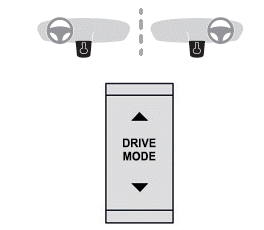
► Press the DRIVE MODE button; the available modes are shown in the instrument cluster.
► Select "Snow", "Mud" or "Sand" depending on the conditions.
The selected mode remains displayed in the instrument cluster.
► To deactivate, select the "Normal" mode or another driving mode.
The system is automatically deactivated when the ignition is switched off.
Operating modes
Snow
This mode continuously adjusts the wheel slip level to provide maximum traction according to snow conditions (considerable slip in deep snow; very little on ice). Slip also adapts to conditions encountered when driving uphill, optimising vehicle acceleration.
(mode active up to 80 km/h)
Mud
When pulling away, this mode allows considerable slip on the wheel with less grip to help clear mud and regain grip. At the same time, the wheel with more grip is managed so as to transmit as much traction torque as possible.
Once the vehicle is moving, the system optimises wheel slip to best respond to the driver's inputs.
(mode active up to 50 km/h)
Sand
This mode allows a small amount of simultaneous slip on both driven wheels to keep the vehicle moving and limit the risk of getting stuck in sand.
(mode active up to 120 km/h)
On sand, do not use the other modes, as this may cause the vehicle to get stuck.
Recommendations
The vehicle is mainly designed for driving on paved roads, but it may occasionally use other less well-maintained tracks.
However, it is not suitable for off-road driving:
- Driving on terrain that could damage the underbody or tear off components (e.g. fuel pipe, fuel cooler) due to obstacles or stones in particular.
- Driving on steep slopes with reduced grip.
- Crossing watercourses.
Test yourself
A quick Citroen C5 Aircross quiz: every answer comes with an explanation and a link to the manual page.