Diagnostic Trouble Code (DTC) Troubleshooting - DTC P0115/P0116/P0117/P0118

DESCRIPTION AND OPERATION
The Engine Coolant Temperature (ECT) sensor is installed in the coolant passage of the cylinder head.
The sensor is a thermistor that changes its resistance depending on the temperature of the engine coolant flowing around it. When the coolant temperature is low, the sensor resistance is high. When the coolant temperature is high, the sensor resistance is low.
The ECM checks the ECT sensor signal voltage and, based on the sensor signal, adjusts the fuel injector pulse width and ignition timing. If the coolant temperature is very low, the ECM enriches the air-fuel mixture (increases the injector pulse width) and advances the ignition timing (sets earlier ignition). If the coolant temperature rises, the ECM decreases the injector pulse width and retards the ignition timing (sets later ignition).
DTC SET CONDITIONS
The ECM will store DTC P0116 and illuminate the MIL if, for 0.2 seconds during two driving cycles, the ECT sensor signal waveform calculated from its actual operating characteristics differs by more than 20 °C lower than the normal waveform calculated by the ECM from other parameters (fuel delivery, ambient air temperature and engine running time). This code indicates an abnormal (incorrect) coolant temperature characteristic measured by the ECT sensor or the ECM.
The ECM will store DTC P0117 and illuminate the MIL if the ECT sensor indicates a temperature below −45 °C for 0.2 seconds during two driving cycles. The ECM will store DTC P0118 and illuminate the MIL if the ECT sensor indicates a temperature above 140 °C for 0.2 seconds during two driving cycles.
The ECT sensor resistance changes with temperature as follows:
Resistance Temperature • 5900 Ohm 0 °C • 2500 Ohm 20 °C • 300 Ohm 80 °C
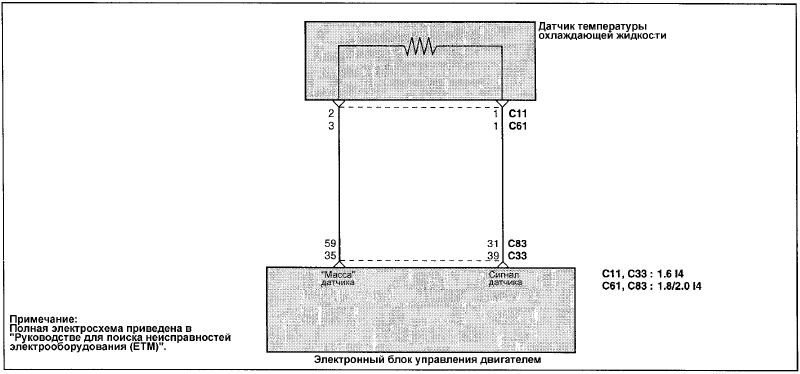
WIRING DIAGRAM
INSPECTION PROCEDURE
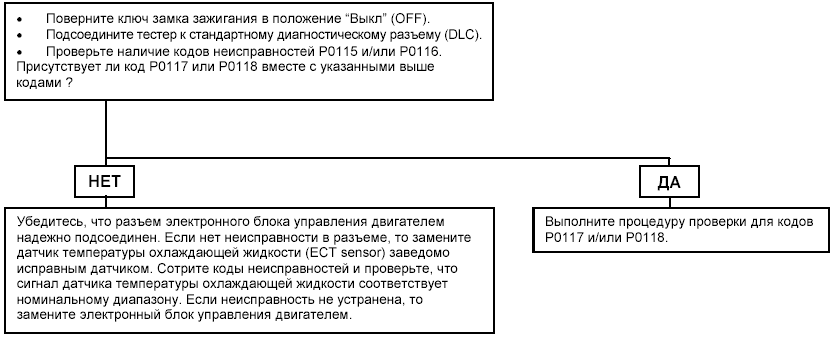
INSPECTION PROCEDURE
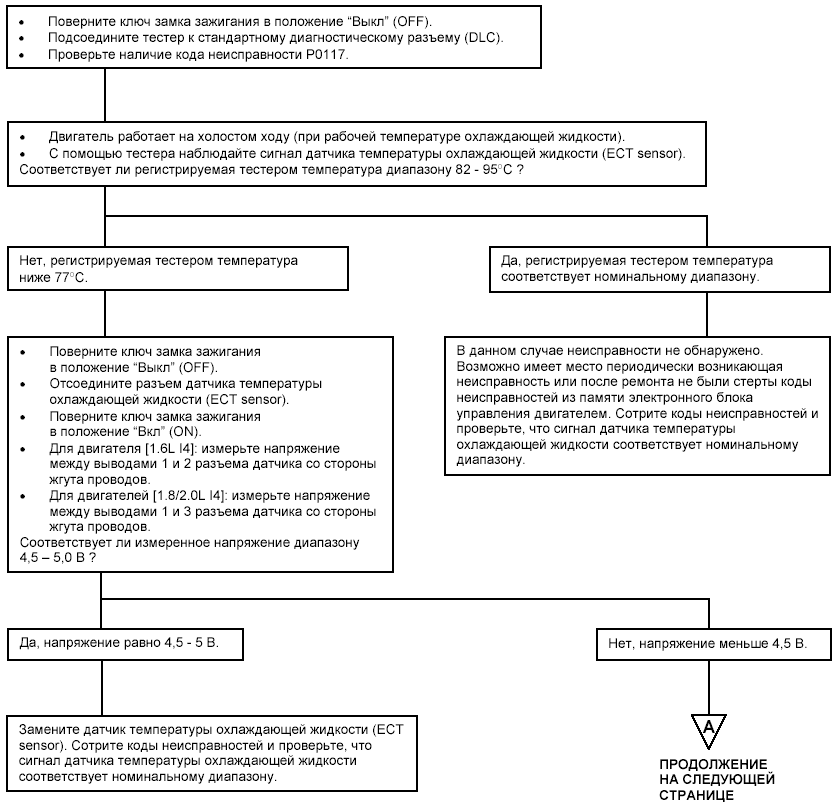
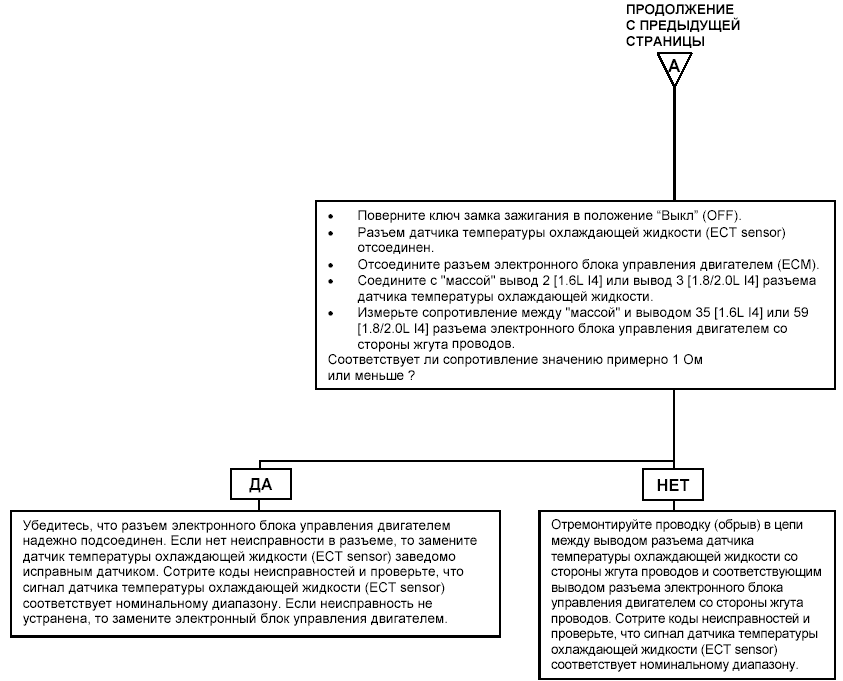
INSPECTION PROCEDURE
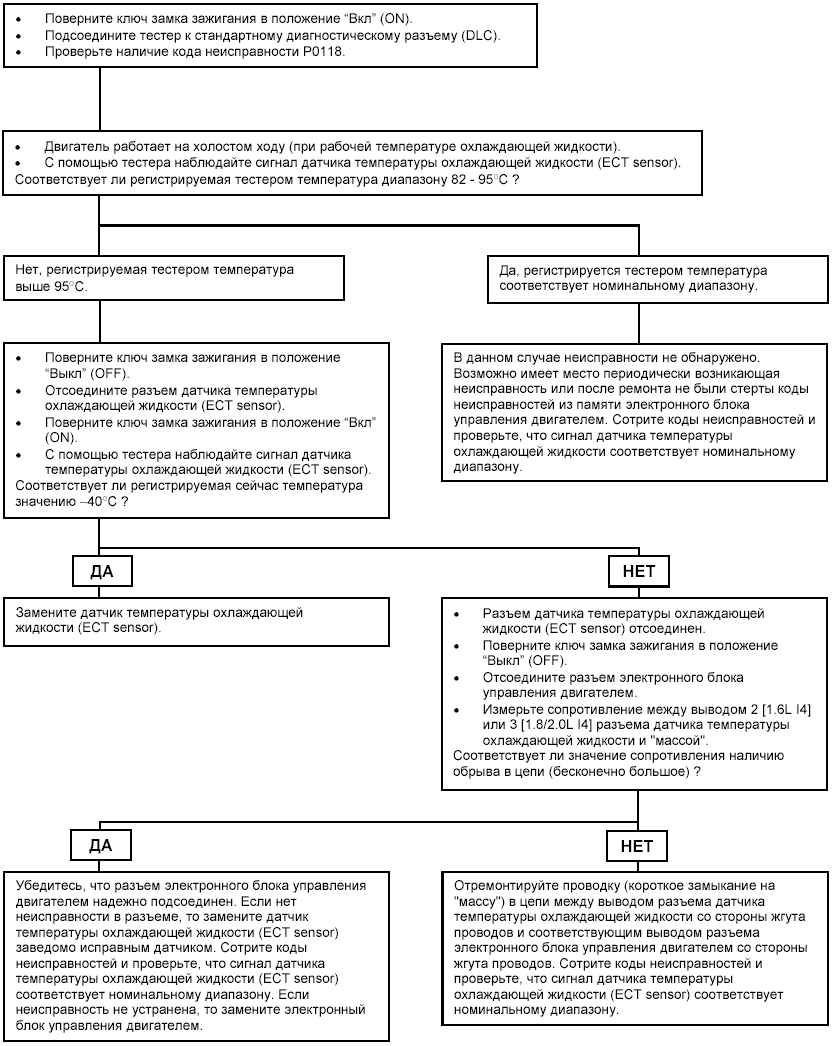
INSPECTION PROCEDURE
Test yourself
A quick Hyundai Elantra CN7 quiz: every answer comes with an explanation and a link to the manual page.