Recommended Cold Tire Pressure
Always check tire pressure (including the spare tire) when the tires are cold. This means the vehicle has been driven less than 1.6 km (1 mile) during the last 3 hours.
Recommended pressures must be observed to ensure optimum ride comfort, vehicle handling, and minimum tire wear. For information on correct tire pressure, refer to "Tires and Wheels" in chapter 8.
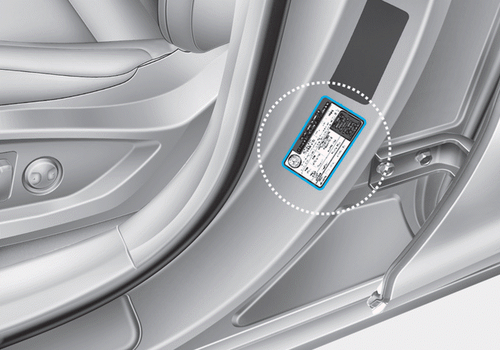
■ Left-Hand Drive
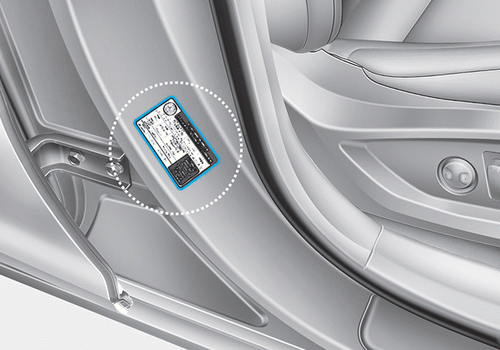
■ Right-Hand Drive
All specifications (sizes and pressures) are listed on the label attached to the vehicle.
 WARNING
Low Tire Pressure
Significant tire underinflation (70 kPa (10 psi) or more) can cause a rapid rise in tire temperature, which may lead to tire failure, tread separation, or other malfunctions that may result in loss of vehicle control and serious injury or death. This risk is significantly higher in hot weather or after prolonged high-speed driving.
 WARNING
- Insufficient tire pressure also leads to excessive tire wear, loss of vehicle control and reduced fuel economy. Wheel deformation may also occur. Always maintain proper tire inflation pressure. If a tire requires frequent inflation, we recommend having it checked by an authorized HYUNDAI dealer.
- Overinflation results in a harsher ride, excessive wear at the center of the tread, and an increased risk of damage from road conditions.
WARNING
- Generally, hot tire pressure is 28–41 kPa (4 to 6 psi) higher than the recommended cold pressure. Do not release air from hot tires to adjust the pressure. The tires will eventually be underinflated.
- Be sure to reinstall the tire valve caps. Without these caps, dirt and moisture may enter the valve and cause air leakage. If a cap is missing, replace it as soon as possible.
WARNING
Tire Inflation
Insufficient or excessive tire pressure can affect tire life and vehicle handling and may cause sudden tire failure. It may lead to loss of vehicle control and injury.
WARNING
Tire Pressure
Always observe the following recommendations:
- Check the cold tire pressure. (The vehicle should be parked for at least 3 hours or driven no more than 1.6 km (1 mile) before checking.)
- Check the spare tire pressure each time you check the tire pressure.
- Do not overload your vehicle. Be careful not to overload the roof rack, if equipped.
- Worn tires can cause an accident. Replace tires if they are damaged or if the tread is severely worn.
Test yourself
A quick Hyundai Tucson quiz: every answer comes with an explanation and a link to the manual page.