System Limitations
The FCA system is a driver assistance system for certain dangerous road situations. However, it does not take responsibility for all hazards arising from driving conditions. FCA monitors the traffic situation using the radar sensor and camera.
Therefore, FCA may not work correctly for events outside the detection range. As a driver, you must pay particular attention in the following situations, as FCA functions may be limited.
Vehicle detection
- The radar sensor or camera is dirty.
- Heavy rain or snowfall.
- Electromagnetic interference waves are present.
- The radar function is affected by strong interfering reflections.
- The vehicle ahead has a narrow cross-section (motorcycle and bicycle).
- Rear reflections, light reflections, or darkness affect the driver's view.
- The camera cannot capture a full image of the vehicle ahead.
- The vehicle ahead is a special vehicle, such as a heavily loaded truck or trailer. The vehicle ahead has no lights or lights are off, or the taillights are asymmetric or angled.
- The ambient brightness changes significantly, e.g., when entering or exiting a tunnel.
- The vehicle is unstable while driving.
- The detection capability of the radar/camera sensor is limited.
- Driving on unpaved or uneven roads or when the gradient changes suddenly.
- At construction sites or railway crossings, or when metal objects are on the road.
- Driving in buildings such as underground parking garages.
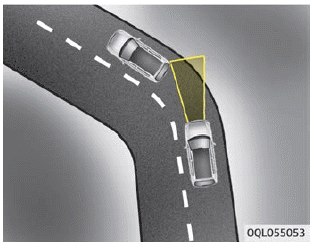
- Curves
On curves, FCA performance is limited. FCA may or may not detect a vehicle ahead if it is in the same lane. Unnecessary warnings and warning signals may be generated, or no warnings or warning signals may be generated.
Be especially careful on curves and press the brake pedal when necessary.
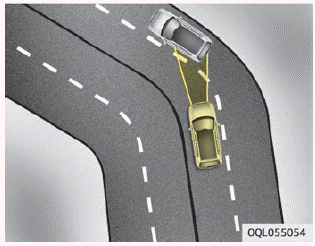
- FCA may detect a vehicle ahead in an adjacent lane on curves. Drive carefully and press the brake pedal when necessary. If necessary, press the accelerator pedal to maintain driving speed. Always check the traffic situation around your vehicle for your safety.
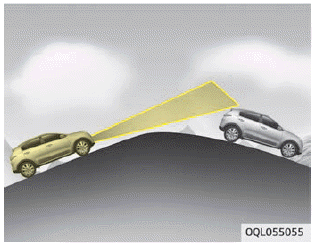
- Driving on hills
When driving uphill or downhill, FCA performance is limited, so the vehicle ahead may not be recognized if it is in the same lane. Unnecessary warnings and warning signals may be generated, or no warnings or warning signals may be generated at all.
If FCA suddenly recognizes a vehicle ahead while driving uphill, strong braking intervention may occur. Do not fall behind on uphill slopes. Always keep the road ahead within view when driving downhill and press the brake pedal when necessary.
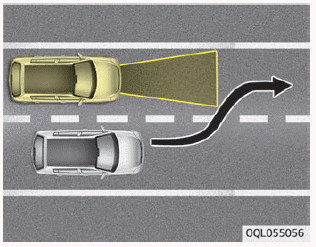
- Lane change
When a vehicle from an adjacent lane moves into your lane, it may not be recognized by FCA until it is within the FCA detection range. When a vehicle in an adjacent lane makes a sudden lane-change maneuver into your lane, it is especially likely not to be recognized. Always drive very carefully.
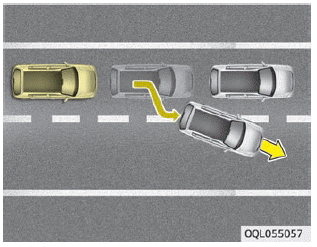
- When a stopped vehicle ahead pulls away from you and leaves the lane, FCA may not recognize it. Always drive very carefully.
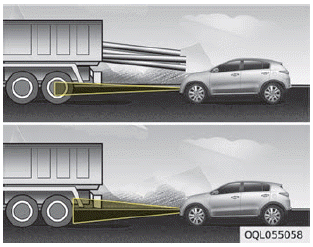
- Vehicle detection
When the vehicle ahead has a high ground clearance or its cargo extends rearward, a dangerous situation may occur.
Test yourself
A quick Kia Stonic quiz: every answer comes with an explanation and a link to the manual page.