Headlight switch
The headlight switch in the Toyota Prius controls various lighting functions to ensure visibility and safety while driving. Typically located on the left-hand side of the steering column, it allows drivers to activate and adjust headlights, parking lights, and turn signals. Modern Prius models often include automatic headlight controls that adjust brightness based on ambient light levels, enhancing convenience and safety during day and night driving.
The headlights can be operated manually or automatically
Turning on the headlights
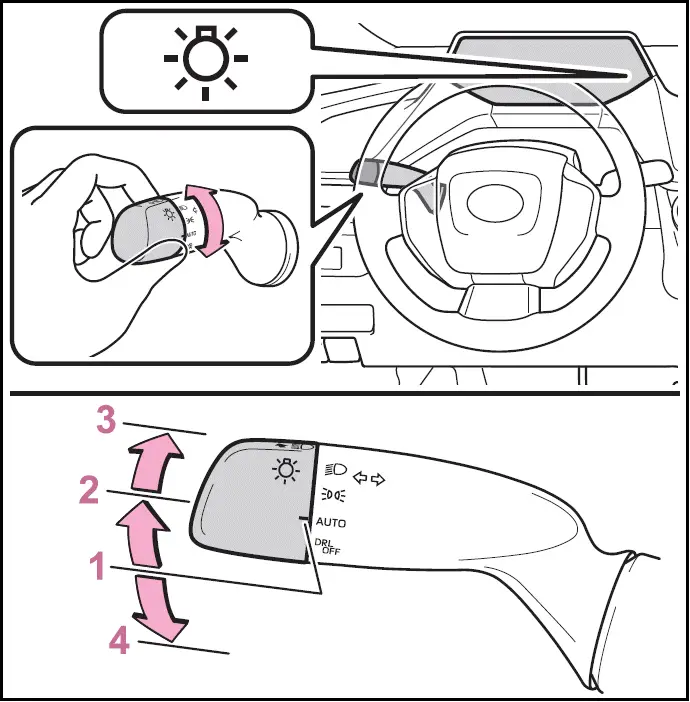
Operating the  switch turns on the lights as follows:
- U.S.A. (type A)

 The daytime running lights turn on.
 The side marker, parking, tail, license plate, instrument panel lights, and daytime running lights turn on.
 The headlights and all lights listed above (except daytime running lights) turn on.
 Off
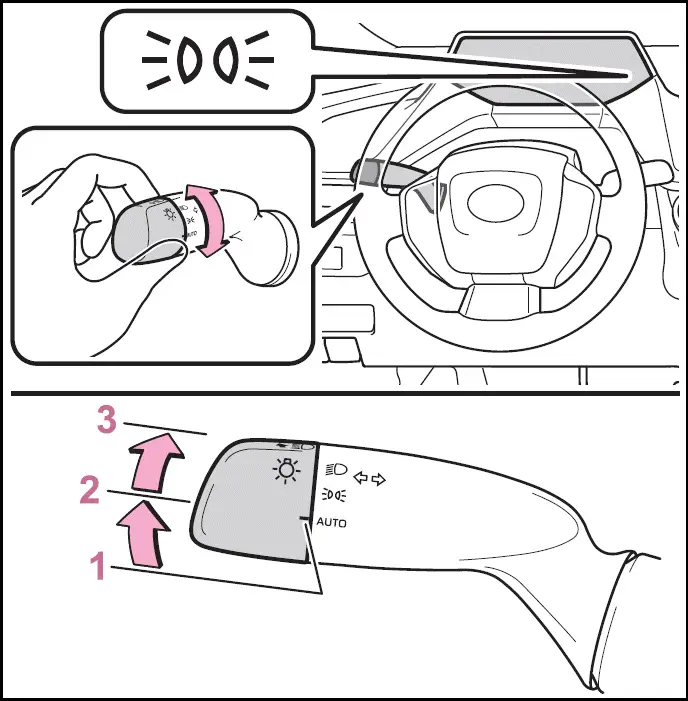
- U.S.A. (type B)
 The headlights, side marker, parking, LED accessories lamp, daytime running lights and so on turn on and off automatically.
 The side marker, parking, LED accessories lamp, tail, license plate, instrument panel lights, and daytime running lights turn on.
 The headlights and all lights listed above (except daytime running lights) turn on.
 The daytime running lights turn off.
Canada
 The headlights, side marker, parking, LED accessories lamp, daytime running lights and so on turn on and off automatically.
 The side marker, parking, LED accessories lamp, tail, license plate, instrument panel lights, and daytime running lights turn on.
 The headlights and all lights listed above (except daytime running lights) turn on.
AUTO mode can be used when
The power switch is in ON.
Daytime running light system
- Vehicles without LED accessories lamp: The daytime running lights illuminate using the same lights as the low beam headlights, and illuminate dimmer than the low beam headlights.
- Vehicles with LED accessories lamp: The daytime running lights illuminate using the same lights asthe parking lights, and illuminate brighter than the parking lights.
- To make your vehicle more visible to other drivers during daytime driving, the daytime running lights turn on automatically when all of the following conditions are met.
(The daytime running lights are not designed for use at night.)
- The hybrid system is operating
- The parking brake is released
- The headlight switch is in the
 ,
 or * position
*: When the surroundings are bright
The daytime running lights remain on after they illuminate, even if the parking brake is set again.
- For the U.S.A.: Daytime running lights can be turned off by operating the switch.
- Compared to turning on the headlights, the daytime running light system offers greater durability and consumes less electricity, so it can help improve fuel economy.
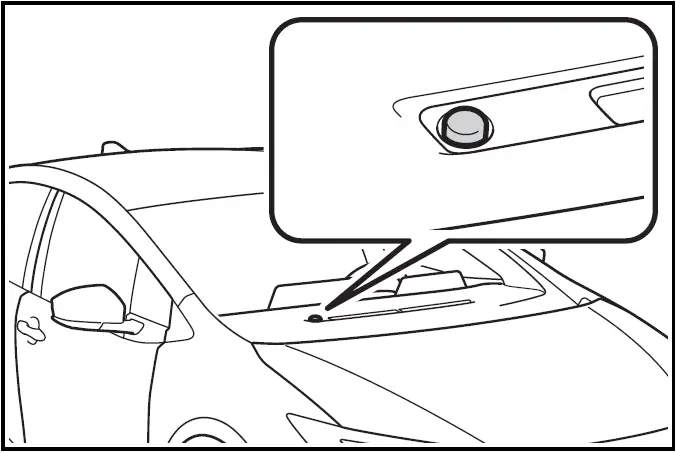
Headlight control sensor (if equipped)
The sensor may not function properly if an object is placed on the sensor, or anything that blocks the sensor is affixed to the windshield.
Doing so interferes with the sensor detecting the level of ambient light and may cause the automatic headlight system to malfunction.
Automatic light off system
- When the headlights are on: The lights turn off 30 seconds after the power switch is turned to OFF and a door is opened and closed. (The lights turn off immediately if
 on the key is pressed after all the doors are closed.)
- When only the tail lights are on: The tail lights turn off automatically if the power switch is turned to OFF and the driver's door is opened.
To turn the lights on again, turn the power switch to ON, or turn the light switch to the  ,
 or position once and then back to the
 or
 position.
Light reminder buzzer
A buzzer sounds when the driver's door is opened while the lights are turned on with the power switch in OFF (except when the automatic light off system is operated).
12-volt battery-saving function
In order to prevent the 12-volt battery of the vehicle from discharging, if the headlights and/or tail lights are on when the power switch is turned to OFF, the battery saving function will operate and automatically turn off all the lights after approximately 20 minutes.
When any of the following are performed, the 12-volt battery-saving function is canceled once and then reactivated. All the lights will turn off automatically 20 minutes after the 12-volt battery-saving function has been reactivated:
- When the headlight switch is operated
- When a door is opened or closed
Windshield wiper linked headlight illumination (if equipped)
When driving during daytime with the headlight switch is in the  position, if the windshield wipers are used, the headlights will turn on automatically after several seconds to help enhance the visibility of your vehicle.
If "Headlight System Malfunction Visit Your Dealer" is displayed on the multi-information display
The system may be malfunctioning.
Have the vehicle inspected by your Toyota dealer.
Customization
Settings (e.g. light sensor sensitivity) can be changed.
NOTICE
To prevent 12-volt battery discharge
Do not leave the lights on longer than necessary when the hybrid system is not operating.
Turning on the high beam headlights
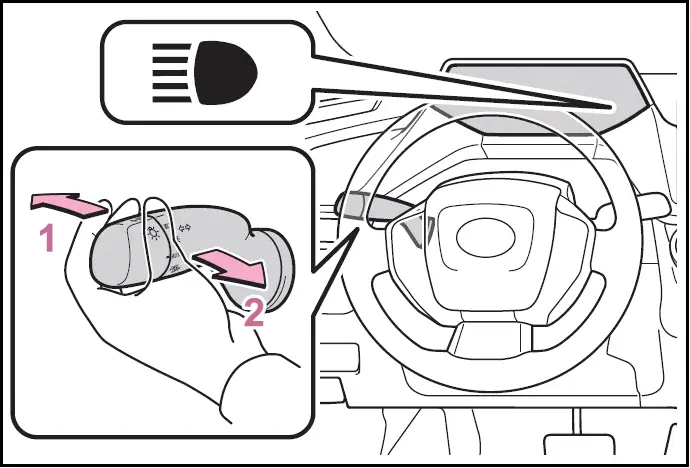
- With the headlights on, push the lever away from you to turn on the high beams.
Pull the lever toward you to the center position to turn the high beams off.
- Pull the lever toward you and release it to flash the high beams once.
You can flash the high beams with the headlights on or off.