Rear seats

In this manual: Rear seats
Instrument panel — 1Switches — 1Toyota Prius Interior — 1What to do if... — 1Before driving — 1Seat belts — 1SRS airbags — 1Toyota Prius Front passenger occupant classification system — 1Exhaust gas precautions — 1Child safety — 1Riding with children — 1Child restraint systems — 1Emergency assistance — 1System components — 1Safety Connect LED light Indicators — 1Safety information for Safety Connect — 1Hybrid system — 1Hybrid system features — 1Hybrid system precautions — 1Theft deterrent system — 1Warning lights and indicators — 1Warning lights — 1Indicators — 1Gauges and meters — 1Multi-information display — 1Display contents — 1Driving information display — 1Driving support system information display — 1Settings display — 1Energy monitor / consumption screen — 1System components — 1Consumption screen — 1Key information — 1Keys — 1Digital Key — 1Opening, closing and locking the doors — 1Side doors — 1Back door — 1Smart key system — 1Adjusting the seats — 1Front seats — 1Rear seats — 1Head restraints — 1Adjusting the steering wheel and mirrors — 1Steering wheel — 1Inside rear view mirror — 1Digital Rear-view Mirror — 1Outside rear view mirrors — 1Opening, closing the windows — 1Driving position memory — 1My Settings — 1Driving the vehicle — 1Cargo and luggage — 1Vehicle load limits — 1Power (ignition) switch — 1Toyota Prius EV drive mode — 1Transmission — 1Turn signal lever — 1Parking brake — 1Brake Hold — 1Operating the lights and wipers — 1Headlight switch — 1AHB (Automatic High Beam) — 1Windshield wipers and washer — 1Refueling — 1Using the driving support systems — 1Toyota Safety Sense 3.0 software update — 1Toyota Safety Sense 3.0215 — 1PCS (Pre-Collision System) — 1LTA (Lane Tracing Assist) — 1LCA (Lane Change Assist) — 1LDA (Lane Departure Alert) — 1PDA (Proactive driving assist) — 1FCTA (Front Cross Traffic Alert) — 1RSA (Road Sign Assist) — 1Dynamic radar cruise control — 1Cruise control — 1Emergency Driving Stop System — 1BSM (Blind Spot Monitor) — 1Safe Exit Assist — 1Intuitive parking assist — 1RCTA (Rear Cross Traffic Alert) function — 1RCD (Rear Camera Detection) function — 1PKSB (Parking Support Brake) — 1Parking Support Brake function (static objects to the front and rear/static objects around the vehicle) — 1Parking Support Brake function (rear-crossing vehicles) — 1Parking Support Brake function (rear pedestrians) — 1Toyota Teammate Advanced Park — 1Driving mode select switch — 1Driving assist systems — 1Driving tips — 1Hybrid Electric Vehicle driving tips — 1Winter driving tips — 1Using the air conditioning system and defogger — 1Automatic air conditioning system — 1Heated steering wheel/seat heaters/seat ventilators — 1Using the interior lights — 1Location of the interior lights — 1Operating the personal lights — 1List of storage features — 1Luggage compartment features — 1Other interior features — 1Garage door opener — 1Cleaning and protecting the vehicle exterior — 1Cleaning and protecting the vehicle interior — 1Maintenance requirements — 1General maintenance — 1Emission inspection and maintenance (I/M) programs — 1Do-it-yourself maintenance — 1Do-it-yourself service precautions — 1Hood — 1Positioning a floor jack — 1Engine compartment Toyota Prius 2024-2025 — 112-volt battery — 1Tire pressure warning system — 1Air conditioning filter — 1Cleaning the hybrid battery (traction battery) air intake vent — 1Electronic key battery — 1Checking and replacing fuses — 1Headlight aim — 1Emergency flashers — 1If your vehicle has to be stopped in an emergency — 1If the vehicle is submerged or water on the road is rising — 1If your vehicle needs to be towed — 1If a warning light turns on or a warning buzzer sounds — 1If a warning message is displayed — 1If you have a flat tire (vehicles without spare tire) — 1If you have a flat tire (vehicles with spare tire) — 1If the hybrid system will not start — 1If the electronic key does not operate properly — 1If the 12-volt battery is discharged — 1If your vehicle overheats — 1If the vehicle becomes stuck — 1Maintenance data (fuel, oil level, etc.) — 1Fuel information — 1Customization — 1
2steps
~12min
1/5difficulty
Done 0 of 2

Folding the seatbacks can be done with lever operation

Folding down the rear seatbacks

Before folding down the seatbacks

  1. Park the vehicle in a safe place.

Apply the parking brake and shift the shift position

  1. Adjust the position of the front seat and the angle of the seatback

Depending on the position of the front seat, if the seatback is folded backward, it may interfere with the operation of the rear seat

  1. Lower the head restraint of the rear outboard seat.
  2. Vehicles with armrest: Stow the armrest of the rear seat if it is pulled out

This step is not necessary when operating the left side seat only.

Folding down the seatbacks

While pulling the seatback angle adjustment lever , fold the seatback down.
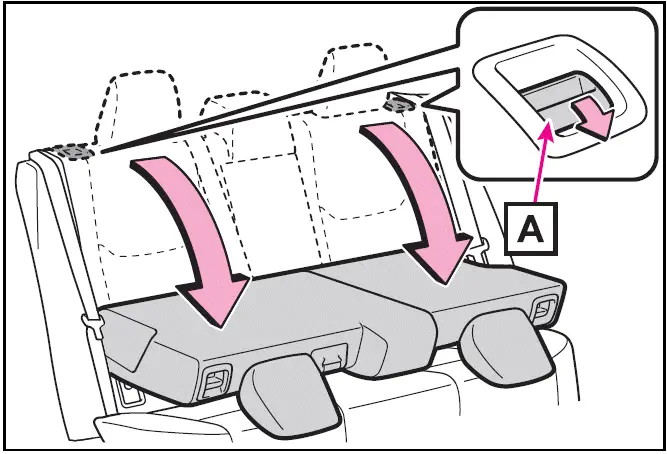
Folding down the seatbacks - Toyota Prius

Returning the rear seatbacks

To prevent the seat belt from becoming trapped between the seat and the interior of the vehicle, it's important to route the seat belt outside of the seat belt guide before securely returning the seatback to its locked position. This ensures that the seat belt remains properly aligned and accessible, reducing the risk of it getting caught or causing discomfort for occupants. Following this guideline helps maintain safety and comfort for everyone in the Toyota Prius by ensuring that seat belts are used effectively and securely.

Returning the rear seatbacks - Toyota Prius - 2024

WARNING

Observe the following precautions.

Failure to do so may result in death or serious injury.

When folding the rear seatbacks down

  • Do not fold the seatbacks down while driving.
  • Stop the vehicle on level ground, set the parking brake and shift the shift position to P.
  • Do not allow anyone to sit on a folded seatback or in the luggage compartment while driving.
  • Do not allow children to enter the luggage compartment.
  • Do not operate the rear seat if it is occupied.
  • Be careful not to get feet or hands caught in the moving parts or joints of the seats during operation.
  • Do not allow children to operate the seat.

After returning the rear seatback to the upright position

Make sure that the seatback is securely locked in position by lightly pushing it back and forth.

If the seatback is not securely locked, the red marking will be visible on the seatback lock release lever. Make sure that the red marking is not visible.
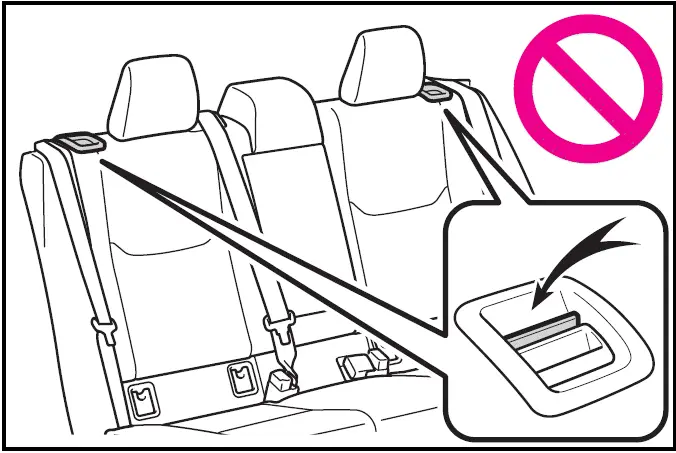
After returning the rear seatback to the upright position - Prius 2024
  • Check that the seat belts are not twisted or caught in the seatback.