Inspection of Clutch Assembly Components
PROCEDURE
1. Most often, clutch malfunction is related to wear of the clutch disc friction facings. Nevertheless, carefully inspect the condition of all other clutch components.
2. Inspect the flywheel friction surface for cracks, signs of overheating, grooves and other damage. Minor defects can be corrected by resurfacing at an automotive repair shop (resurfacing is recommended regardless of the surface condition). For flywheel removal and installation procedures, refer to the corresponding section in the Engine chapter.
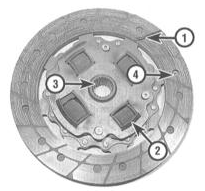
3. Evaluate the wear of the clutch disc friction facings. The facing surface must be at least 1.6 mm above the rivet heads. Make sure all rivets are tight, and inspect the torsion springs/dampers for cracks, deformation and other mechanical damage. As mentioned above, it is advisable to replace clutch components each time the assembly is removed, so pay attention to even minor defects.
4. The release bearing is always replaced together with the clutch disc (refer to Release Bearing and Release Fork Inspection and Installation section).
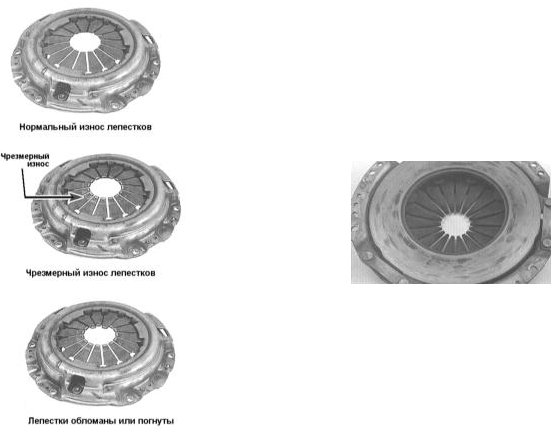
5. Evaluate the condition of the machined surfaces and the diaphragm spring fingers of the pressure plate. If defects are found, replace the clutch cover assembly. Light polishing marks can be removed with fine-grit sandpaper. Reconditioned clutch assemblies can be obtained on an exchange basis at authorized Honda service stations.
Test yourself
A quick Honda Accord quiz: every answer comes with an explanation and a link to the manual page.