Maintenance
Recommended inflation pressure (cold tyres)
In this manual: Maintenance
~2min read
Inflation pressures (including the spare tyre) must be checked when the tyres are cold. "Cold tyres" means the vehicle has not been driven for at least three hours or for less than 1.6 km (1 mile).
The recommended pressures must be maintained to obtain the best ride and handling and the lowest tyre wear.
For the recommended inflation pressures, refer to "Wheels and Tyres" in section 8.
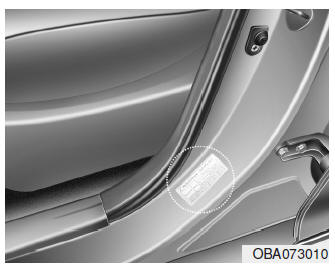
All specifications (sizes and pressures) are shown on a label attached to the vehicle.
WARNING - Underinflated tyres Underinflation can cause excessive heat build-up, resulting in tyre blow-outs, tread separation and other tyre failures that may lead to loss of vehicle control, serious injury or death. This risk is much higher on hot days and when driving long distances at high speed. NOTICE - Underinflation can also cause excessive wear, poor handling and increased fuel consumption. Tyre deformation may also occur. Keep the pressure at the correct level. If a tyre needs to be inflated frequently, it is recommended that the system be checked by an authorised HYUNDAI dealer. - Overinflation causes harsh riding, excessive wear in the centre of the tread and a greater risk of damage from road hazards. NOTICE - Hot tyres normally exceed the cold tyre pressure by a value between 28 and 41 kPa (4 to 6 psi). Do not release air from hot tyres to adjust the pressure, otherwise the tyres will be underinflated. - Refit the valve caps. Without the cap, dirt or moisture can enter the valve and cause air leaks. If a cap is missing, fit a new one as soon as possible.Test yourself
A quick Hyundai i10 quiz: every answer comes with an explanation and a link to the manual page.
Was this page helpful?