Maintenance and owner do-it-yourself
Battery
In this manual: Maintenance and owner do-it-yourself
2steps
~12min
1/5difficulty
Done 0 of 2
- Keep the battery surface clean and dry at all times. Clean the battery with a solution of baking soda and water.
- Make sure the terminal connections are clean and tight.
- If you do not plan to use your vehicle for 30 days or more, disconnect the negative battery cable from the battery terminal to prevent the battery from discharging.
NOTE:
Avoid as much as possible situations that may cause the battery to discharge and conditions that may prevent starting, such as:
- Installing or using electronic accessories that draw battery power for extended periods while the engine is off (phone chargers, GPS units, DVD players, etc.).
- The vehicle is not driven regularly or is only driven short distances. In these cases, the battery may need to be recharged to preserve its service life.
WARNING
- Hydrogen released by the battery is an explosive gas. Batteries release explosive gases that can cause injury or blindness. Avoid any contact of electrolyte with your eyes, skin, clothing or the painted surfaces of the vehicle. Sulfuric acid can cause blindness or serious injury. Avoid rubbing your eyes if you have handled a battery or battery cap. Wash your hands thoroughly. If electrolyte contacts your eyes, skin or clothing, immediately flush the affected area with water for at least 15 minutes and consult a doctor.
- Do not drive your vehicle if the electrolyte level is low. A low electrolyte level can increase the load on the battery, generating heat, reducing battery service life and, in some cases, causing an explosion.
- Always wear safety glasses and remove all jewelry when working on or near the battery.
- Battery cable ends and terminals and related accessories contain lead and lead compounds. Wash your hands after handling them.
- Keep the battery out of the reach of children.
- Take care not to tip the battery over. Keep the vent caps tight and maintain the battery fluid level.
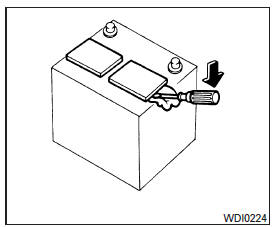
- Remove the vent caps using a screwdriver, as illustrated. Use a rag to protect the battery case.
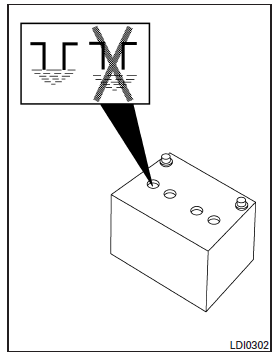
- Check the fluid level in each battery cell. If fluid must be added, use only distilled water to bring the level up to the bottom of the filler opening. Do not exceed this level. Reinstall the vent caps.
Check the battery electrolyte level frequently if you drive your vehicle in very hot weather or under severe conditions.
Jump Starting
If a jump start is required, refer to the "Jump Starting" section of the "In Case of Emergency" chapter of this manual. If the engine still fails to start after using this method, the battery may need to be replaced. Contact a NISSAN dealer.
Test yourself
A quick Nissan Altima quiz: every answer comes with an explanation and a link to the manual page.
Was this page helpful?