Fuel System Depressurization Procedure
* Gasoline is a highly flammable liquid, so exercise particular caution when working on any part of the fuel system. Smoking, open flames, and lighting without a protective guard are prohibited in the work area. Do not perform work in a garage equipped with water heaters, dryers, or natural gas-fired lighting. Gasoline is a carcinogenic substance, so wear latex gloves when working in situations where gasoline may unavoidably spill onto your hands. If gasoline contacts the skin, wash the affected area immediately with soap and water.
Wipe up spilled gasoline immediately. Do not store gasoline-soaked rags in places where they could ignite. The fuel system is constantly under pressure. Therefore, before disconnecting fuel line hoses, depressurize the system. When performing any work, wear protective glasses and keep a Class B fire extinguisher ready.
PROCEDURE
1. Before starting work on any fuel system component, be sure to release the fuel pressure to prevent fire and personal injury.
2. Remove the fuel filler cap. This releases residual pressure in the tank.
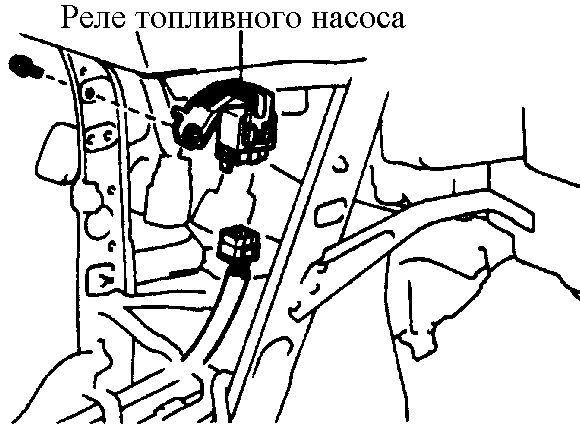
3. Disconnect the connector from the fuel pump relay. To access the relay, remove the receiver (refer to subsection 12.11) and remove the relay cover holder.
4. Start the engine, wait until it stops, and turn the ignition switch off.
5. After performing these steps, there is no pressure remaining in the fuel system.
* Before loosening the hose clamp or unscrewing the fuel line fitting, place a rag underneath to prevent spilled gasoline from reaching the engine.
6. Before starting work, disconnect the battery negative cable.
Test yourself
A quick Toyota Corolla quiz: every answer comes with an explanation and a link to the manual page.